
Trees
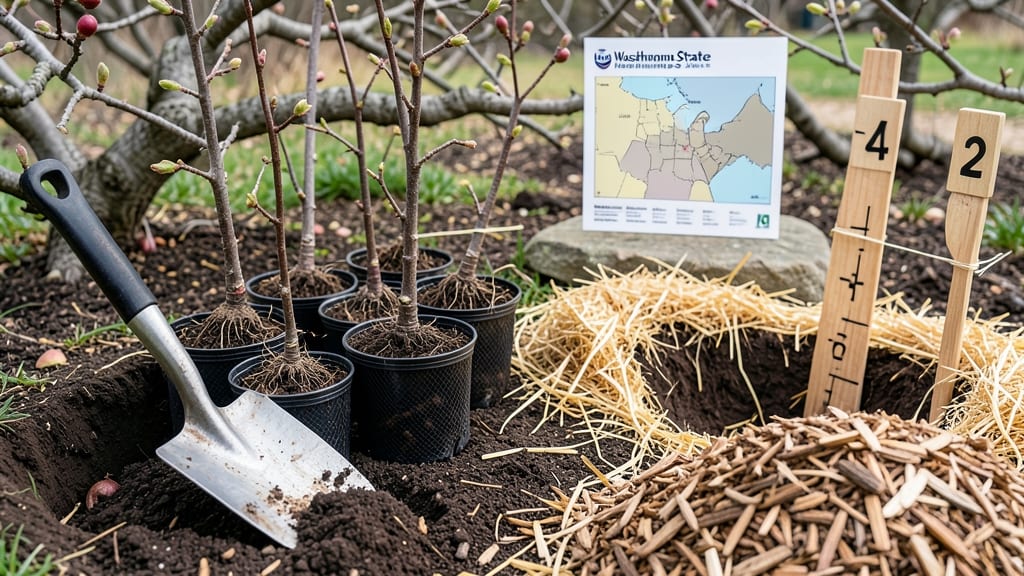
Planting fruit trees in Washington State at the wrong time could mean the difference between a bountiful harvest of 🍎 Honeycrisp apples and struggling trees that never bear fruit.
The key isn’t just picking a month—it’s understanding how your region’s chill-hour needs align with Washington’s diverse microclimates, from the rainy Pacific Northwest to the drier inland valleys.
Whether you’re in Zone 6b’s Eastern WA or Zone 8a’s Western WA, timing matters. Late winter to early spring (February–April) is ideal for bare-root trees, while early fall (September–October) works for container-grown varieties.
But here’s the catch: some fruit trees, like peaches, need 400+ chill hours, while others, like figs, thrive with just 200—and Washington’s frost dates vary wildly by location.
I’ll break down the best planting windows for your specific zone, plus how to match your tree’s chill-hour requirements to Washington’s climate. Skip this step, and you might end up with trees that flower but never fruit—or worse, ones that die before they even take root.
Ready to plant with confidence? Let’s dive into the exact months, varieties, and pro tips to ensure your fruit trees grow strong and productive for years to come.
Best planting months for Washington fruit trees by region (chill-hour zones explained)
Washington State’s varied climate means your fruit tree planting window depends on whether you’re in the rainy Pacific Northwest or the drier inland valleys. Western WA’s USDA Zones 7-8 offer milder winters, while Eastern WA’s Zones 5-6 face harsher frosts.
Aligning your planting with these zones—and your tree’s chill-hour needs—is key to survival and productivity.
For bare-root trees, the best time is late winter to early spring (February–April), when trees are dormant but soil is workable. Container-grown trees can go in early fall (September–October), giving roots time to establish before winter.
Both windows avoid extreme heat or frost risks, which can shock young roots.
Here’s how to match your region, chill hours, and planting window for success:
In Western WA’s milder zones (7-8), you can plant low-chill varieties like ‘Satsuma’ mandarins (300 hours) or ‘Anna’ apples (400 hours). But in Eastern WA’s colder zones (5-6), opt for high-chill trees like ‘Honeycrisp’ apples (800+ hours) or ‘Lapins’ cherries (600+ hours).
Planting at the wrong time—like late spring—risks frost damage to new growth.
Soil prep is non-negotiable. Western WA’s clay soils need compost or sand to improve drainage, while Eastern WA’s rocky soils benefit from organic matter to retain moisture.
Always dig a hole twice as wide as the root ball and avoid burying the graft union (check your tree’s label for depth markers).
After planting, water deeply to eliminate air pockets and mulch with wood chips (3–4 inches) to protect roots. In Eastern WA, add extra mulch for winter insulation against freeze-thaw cycles. Monitor for early signs of stress, like yellowing leaves or wilting, which signal over- or under-watering.
Pro tip: Use a chill-hour calculator (like the one from WSU Extension) to input your ZIP code and find exact chill-hour data for your microclimate. This ensures you pick varieties that bloom and fruit reliably each year.
For example, Wenatchee’s 600+ chill hours suit peaches and plums, while Seattle’s 400–600 hours work for apples and pears.
Timing also affects first-year growth. Trees planted in early spring (March–April) often outperform those planted in fall, thanks to longer root establishment before summer heat. However, fall planting (September) is ideal for container-grown trees in Western WA, as cooler temps reduce transplant shock.
Remember: Frost dates vary wildly. Use your local Cooperative Extension Service frost maps to avoid planting too early in Eastern WA (where March frosts are common) or too late in Western WA (where April frosts can still occur).
When in doubt, err on the side of earlier planting—your tree’s roots will thank you.
How to choose fruit tree varieties based on chill-hours (Washington’s top picks)
Washington’s climate offers a perfect blend for fruit trees—but only if you pick the right chill-hour varieties. Chill hours measure how many hours below 45°F a tree needs to break dormancy and fruit properly.
In Western WA (Zones 7-8), you’ll struggle with high-chill apples like ‘Granny Smith’ (800+ hours), but low-chill peaches (300-500 hours) thrive. Eastern WA (Zones 5-6) handles mid-chill varieties like ‘Honeycrisp’ apples (400-600 hours) with ease.
Start by checking your local chill-hour data—tools like the USDA Plant Hardiness Zone Map or AgWeatherNet provide exact numbers for your area. For example, Pullman (Zone 6b) averages 600-800 chill hours, while Seattle (Zone 8a) gets only 300-500.
Matching your tree’s needs to your location avoids wasted money and poor harvests.
Here’s a quick guide to Washington’s best fruit tree varieties by chill-hour range:
For low-chill areas like Western WA, consider figs, persimmons, or ‘Satsuma’ mandarins—they fruit reliably with fewer than 400 chill hours. Meanwhile, Eastern WA growers can plant high-chill varieties like ‘Granny Smith’ apples (800+ hours) or ‘Montmorency’ cherries (600+ hours).
Always cross-reference with your local chill-hour data—a miscalculation could mean no fruit for years!
Pro tip: If you’re unsure, start with dwarf or semi-dwarf trees—they’re easier to move if you realize the chill hours don’t match your zone. And remember, rootstock matters too!
Some rootstocks (like M9 for apples) are more cold-hardy than others, giving your tree a better shot at surviving WA’s winter swings.
Once you’ve picked the right variety, plant in early fall (September-October) for established roots before winter. For bare-root trees, late winter (February-March) works best—just don’t wait until buds swell, or you’ll stress the tree.
With the right chill-hour match, you’ll be picking fruit in 3-5 years instead of waiting a decade for a mismatched tree to (finally) bear.