
Trees
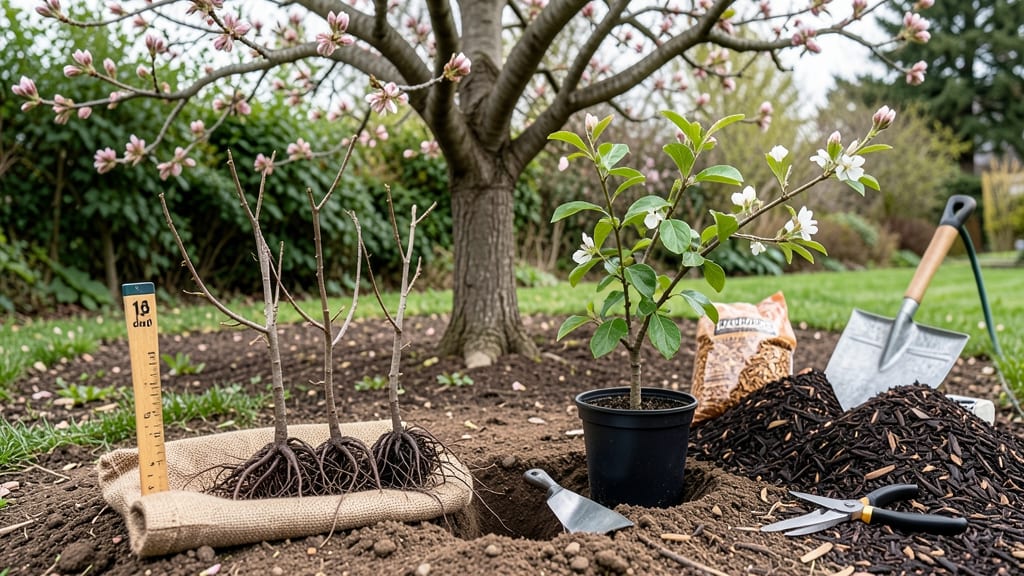
Best planting months in washington based on chill-hours and climate zones
Washington’s diverse climate means the best time to plant fruit trees varies dramatically between regions. In the Eastern WA zones (like Spokane or Wenatchee), where winters are colder and chill-hours exceed 1,000, late fall (November) is ideal for bare-root trees.
Meanwhile, Western WA’s milder coastal areas (Seattle, Olympia) favor early spring planting (March-April) to avoid wet soil conditions.
Timing matters because fruit trees need dormancy periods to set buds properly. Planting too early in spring can stress trees, while late fall planting risks frost damage before roots establish. Washington’s USDA Zones 6-8 complicate things further—each zone has unique frost dates and chill-hour needs.
For container-grown trees, you have a slightly wider window (February-May), but bare-root varieties must go in during dormancy—typically November through February. This ensures roots can absorb moisture before spring growth begins.
Here’s the key: Chill-hours (cold exposure needed for blooming) dictate variety selection. For example, ‘Honeycrisp’ apples need 800-1,000 chill-hours, while ‘Lapins’ cherries thrive with 400-600 hours. Planting outside these ranges risks poor fruit set or tree stress.
🌱
🌳 Washington Fruit Tree Planting Guide by Region
| Region | Best Planting Window | Chill-Hours Needed | Top Varieties |
|---|---|---|---|
| Eastern WA (Spokane, Wenatchee) | Late November–February | 900–1,200 hours | ‘Gala’ apples, ‘Starking’ pears |
| Western WA (Seattle, Olympia) | March–April | 400–800 hours | ‘Honeycrisp’ apples, ‘Lapins’ cherries |
| Puget Sound (Bellingham, Tacoma) | February–March | 500–900 hours | ‘Rainier’ cherries, ‘Bosc’ pears |
| Cascade Foothills (Yakima, Wenatchee) | November–January | 1,000–1,200 hours | ‘Granny Smith’ apples, ‘Bing’ cherries |
💡 Pro Tip: Use local frost-free date guides (e.g., WA State University Extension) to fine-tune timing.
In Eastern WA, where winters are harsh, planting in late fall lets roots establish before spring thaw. The soil stays workable longer, and trees avoid summer drought stress. For Western WA’s wetter climates, spring planting prevents waterlogged soil, which can rot roots.
If you’re in a microclimate (like a sheltered valley or urban heat island), adjust by 2–4 weeks. For example, Spokane’s inland areas can plant 2 weeks earlier than Seattle’s coastal zones. Always check last frost dates—planting too early risks frost damage to new growth.
For container-grown trees, the window extends to May, but bare-root trees must go in during dormancy. If you miss the fall window, early spring (March) is your next best bet—just ensure soil temperatures exceed 40°F to prevent shock.
🌿
One common mistake? Planting peach or nectarine trees in Western WA without checking chill-hours. These varieties need 600+ hours—often not met in Zone 8 coastal areas. Instead, opt for low-chill varieties like ‘Springcrest’ peaches (300–400 hours) or ‘Skeena’ cherries (450 hours).
Finally, soil prep is critical. Amend heavy clay (common in Eastern WA) with compost, while sandy soils (like in Western WA’s Puget Sound) benefit from organic matter to retain moisture. A pH of 6.0–7.0 is ideal for most fruit trees.
✂️
How chill-hours determine fruit tree success in washington’s growing zones
Washington’s diverse climate means chill-hours (the number of hours below 45°F) are critical for fruit trees. Most varieties need 200–1,200 chill-hours to bloom properly—too few, and your tree might not fruit at all.
For example, ‘Honeycrisp’ apples thrive in zones with 800–1,000 chill-hours, while ‘Lapins’ cherries need 900–1,200 chill-hours. Planting outside these ranges can lead to poor fruit set or stressed trees.
In Eastern Washington, where winters are colder, most fruit trees meet their chill-hour needs naturally. But in Western Washington, milder winters (especially near the coast) may require low-chill varieties like ‘GoldRush’ apples (only 200–300 chill-hours) or ‘Stella’ pears (300–500 chill-hours).
Always check your USDA Zone and local chill-hour data before choosing varieties.
Here’s how to match trees to your location: Use a chill-hour map (available from WSU Extension) to identify your area’s range. For instance, Spokane (Zone 6) averages 1,000+ chill-hours, while Seattle (Zone 8) often falls short of 800 chill-hours.
If you’re in a low-chill zone, opt for heat-tolerant, low-chill varieties like ‘Zestar!’ apples or ‘Sweetheart’ cherries.
| Variety | Chill-Hours Needed | Best WA Zones | Notes |
|---|---|---|---|
| Honeycrisp Apple | 800–1,000 | 5–7 | Classic choice for Eastern WA |
| Lapins Cherry | 900–1,200 | 5–6 | Needs cold winters; avoid coastal areas |
| GoldRush Apple | 200–300 | 7–9 | Ideal for Puget Sound |
| Stella Pear | 300–500 | 6–8 | Drought-tolerant; great for Western WA |
If you plant a high-chill variety in a low-chill zone, your tree may still grow but won’t produce fruit. For example, a ‘Bing’ cherry (requiring 900+ chill-hours) planted in Olympia (Zone 8)fail to bloom.
To fix this, consider artificial chilling (like a cold storage unit) for potted trees or choose low-chill alternatives.
Pro tip: Use WSU’s Chill-Hour Calculator (available online) to input your zip code and see which varieties will thrive. This tool accounts for microclimates, like urban heat islands or windy coastal areas, ensuring you pick the right tree for your specific spot.
Always verify with a local nursery—they know which varieties perform best in your area!
Remember, chill-hours aren’t the only factor. Sunlight, soil drainage, and water access also play roles. But nailing the chill-hour match is your first step to a fruitful harvest every season. 🌳