
Plants
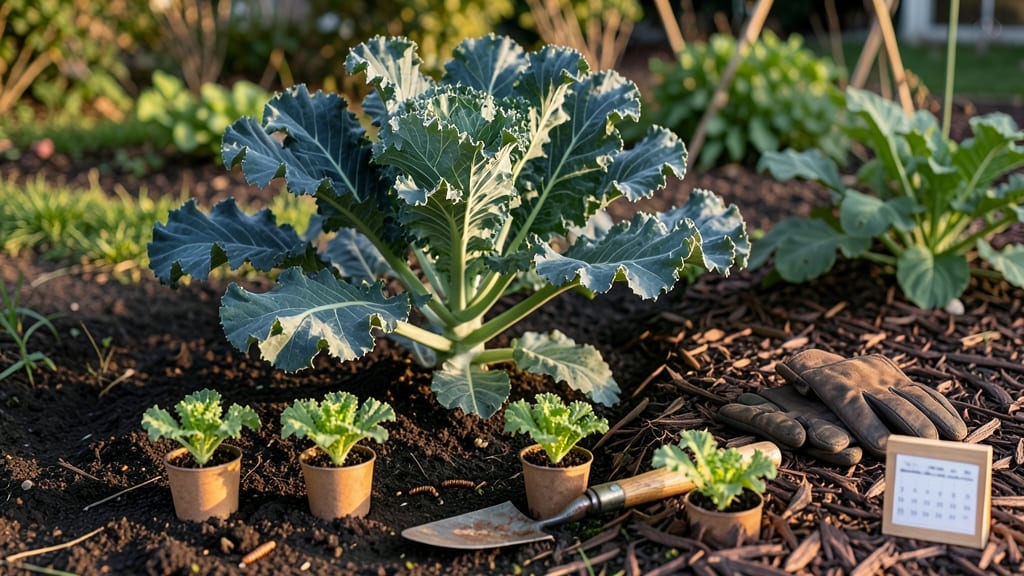
Timing your 🥬 kale planting in Northern California isn’t one-size-fits-all—coastal fog can delay frost while inland valleys bake early. Miss the window, and you’ll either wait months for harvests or watch your plants bolt in summer heat.
I’ve grown kale in USDA zones 8a-9b for years, and the key is knowing your microclimate. Whether you’re in San Francisco’s chilly coastal strip or Sacramento’s hotter interior, the right planting schedule means bigger harvests and fewer wasted seeds.
Here’s what you need to know: The ideal time to plant 🥬 kale in Northern California is late summer (August–September) for fall harvests or early spring (February–March) for spring crops.
But with first frosts creeping in by November and last frosts lingering into January, your exact window depends on where you live.
Let’s break down the frost-free windows, variety choices, and microclimate tweaks so you can plant with confidence—and enjoy fresh, homegrown greens year-round.
Northern California kale planting calendar by USDA zone (with frost dates)
Northern California’s USDA zones 7b–10a create wildly different kale-growing conditions. Coastal areas like San Francisco (Zone 9b) enjoy year-round growing potential, while inland valleys such as Sacramento (Zone 9a) face earlier frosts.
Understanding your frost-free window is key to timing kale for fall and spring harvests without bolting or freezing.
Kale thrives in cool weather (50–75°F) and avoids summer heat. In most of Northern California, the ideal planting windows are late summer (August–September) for fall harvests and early spring (February–March) for spring crops. However, coastal zones can stretch this to year-round planting with proper protection.
Below is a breakdown of frost dates and planting windows by zone, including adjustments for early vs. late varieties. Use this as your guide to align your kale’s growth with Northern California’s unpredictable microclimates.
| USDA Zone | Avg. Last Frost | Avg. First Frost | Fall Planting Window | Spring Planting Window | Notes |
|---|---|---|---|---|---|
| 7b (e.g., Mount Shasta) | May 15 | October 1 | July 15–August 15 | March 1–April 15 | Short season; use cold-hardy varieties like Winterbor. |
| 8a (e.g., Redding) | April 1 | November 1 | July 1–August 30 | February 15–March 30 | Ideal for succession planting; protect from late frosts. |
| 9a (e.g., Sacramento) | February 15 | December 1 | July 15–September 15 | February 1–March 15 | Longer season; can plant heat-tolerant varieties like Red Russian. |
| 9b (e.g., San Francisco) | January 1 | January 15 | August 1–October 15 | January 15–March 1 | Nearly year-round growing; use shade cloth in summer. |
| 10a (e.g., Santa Barbara) | December 1 | December 15 | July 1–November 1 | January 1–April 1 | Extreme heat tolerance; plant in partial shade in summer. |
For coastal areas (Zones 9b–10a), the longer frost-free window means you can plant kale in late summer (August) for a fall harvest and again in early winter (January) for a spring crop.
Inland zones like Sacramento (Zone 9a) should focus on August–September for fall and February–March for spring to avoid heat stress.
Pro tip: Use shade cloth (30–50%) in summer to prevent bolting
3 Microclimate adjustments that change your kale planting window
Northern California’s microclimates can shift your kale planting window by up to 4 months. Coastal areas like San Francisco stay milder year-round, while inland valleys like Sacramento experience hotter summers and colder winters. Understanding these 3 key factors helps you pinpoint the perfect planting time for your location.
First, elevation plays a huge role. Mountain regions like Napa Valley (100–1,000 ft) have cooler nights and earlier frosts than sea-level areas. This means you can plant 4–6 weeks earlier in higher elevations to avoid late-season bolting.
For example, if your first frost hits November 1 in the valley, it might arrive by October 15 in the foothills.
Ocean proximity creates another critical shift. Coastal zones (within 10 miles of the Pacific) enjoy milder winters and less extreme heat in summer. In Santa Barbara, you can plant Red Russian kale as early as late August for a fall harvest, while inland areas like Fresno should wait until early September to avoid heat stress.
Urban heat islands in cities like Sacramento or Oakland can raise soil temperatures by 5–10°F, making summer planting risky. Use shade cloth (30–50% coverage) to protect seedlings from bolting if you’re planting in July or August. Even a 10-foot-tall building nearby can create enough heat to push your planting window 2–3 weeks later than rural areas.
- Elevation: Plant 4–6 weeks earlier in mountain regions (e.g., Napa foothills) to avoid early frosts.
- Coastal zones: Start late August for fall harvests; inland areas wait until early September.
- Urban heat: Use shade cloth in cities to delay summer planting by 2–3 weeks.
- Local data: Check NOAA frost maps for your exact first/last frost dates.
- Soil temp: Aim for 45–85°F soil temps; use a soil thermometer if unsure.
To fine-tune your schedule, consult NOAA frost maps or local Cooperative Extension data. For example, San Francisco’s average first frost is November 15, but Santa Rosa’s is October 30—just 15 days earlier.
Plant 6 weeks before your local first frost date for a fall harvest, or 8 weeks before for a winter harvest if using cold-hardy varieties like Winterbor.
Pro tip: If you’re in a transition zone (e.g., Sonoma Coast), split your planting. Start half your seeds in August for a fall crop and the other half in September for winter. This succession planting strategy ensures continuous harvests and reduces risk from unexpected late frosts.
Remember, microclimates aren’t just about frost—they also affect pest pressure and disease risk. Coastal areas may see more slugs, while inland zones might struggle with aphids. Adjust your planting window to align with these local challenges for healthier kale.