
Plants
Timing your grass seed planting in the Northeast can mean the difference between a lush, green lawn and months of patchy disappointment. With USDA Zones 5a-7b bringing unpredictable frost dates, knowing exactly when to plant your 🌱 is the key to success.
Early spring or early fall are your best bets, but getting it wrong could leave your seed exposed to harsh conditions or wasted efforts.
I’ve seen firsthand how a single week too early or late can throw off germination, especially when soil temperatures fluctuate. The right window ensures your seed gets the moisture and warmth it needs without battling extreme heat or frost.
Whether you’re prepping for spring or planning ahead for fall, understanding your local microclimate—coastal vs. inland—makes all the difference.
In this guide, I’ll break down the exact deadlines for planting in your zone, from soil temperature thresholds to frost risk analysis. You’ll learn how to prepare your lawn, choose the right seed blend, and avoid common mistakes that Northeast gardeners often overlook.
Let’s get your lawn off to the best possible start.
Ready to transform your patchy yard into a vibrant carpet of green? The first step is knowing when to plant—and I’ve got the zone-specific insights you need to make it happen.
Northeast grass seed planting deadlines by USDA Zone (3-7)
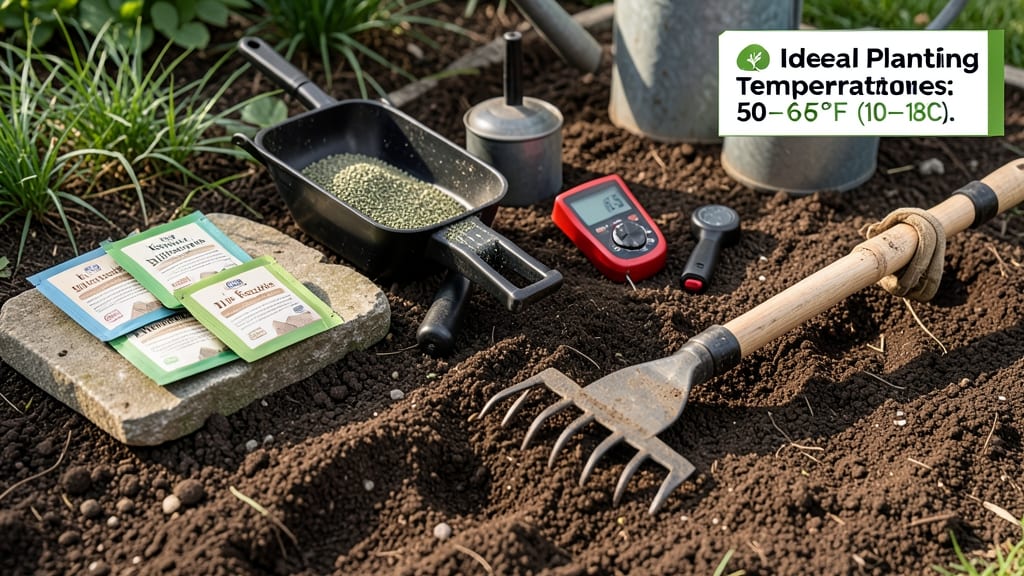
Getting your grass seed timing right in the Northeast is all about avoiding frost and soil temperature. Cool-season grasses like Kentucky Bluegrass and Tall Fescue thrive when soil temps sit between 50°F and 65°F.
Plant too early, and frost will kill tender sprouts; too late, and weeds take over before your lawn establishes. The Northeast's microclimates mean deadlines shift from Zone 3 to Zone 7, so let’s break it down by region.
Most gardeners in the Northeast swear by early fall planting (late August to early October) because cooler temps reduce water stress and weed competition.
Spring planting (March to early May) works too, but you’ll need to act fast before summer heat sets in. Zone 3 gardeners have the tightest windows—just 4-6 weeks before the first frost—while Zone 7 has more flexibility with milder winters.
Here’s how to align your planting with local frost dates and soil warmth for each USDA Zone:
| USDA Zone | Ideal Planting Window | Soil Temp for Germination | Last Frost Date | First Frost Date |
|---|---|---|---|---|
| Zone 3 | Late April–early June or late August–early Sept | 50°F–60°F | May 1–15 | Sept 15–Oct 1 |
| Zone 4 | Early April–mid May or mid Sept–early Oct | 50°F–65°F | April 15–May 1 | Oct 1–15 |
| Zone 5 | Mid March–early May or early Sept–mid Oct | 55°F–65°F | April 15–May 1 | Oct 15–Nov 1 |
| Zone 6 | Late Feb–early May or late Aug–early Nov | 55°F–70°F | April 1–May 15 | Nov 1–15 |
| Zone 7 | Early March–early June or mid Sept–late Oct | 60°F–70°F | March 15–April 15 | Nov 15–Dec 1 |
For Zone 3 gardeners, early fall is your best bet—seedlings establish before winter sets in. In Zone 7, you can push planting into early November if soil stays above 50°F.
Always check your local frost dates using the USDA Plant Hardiness Zone Map or a microclimate tool like Almanac’s Frost Calculator for precise timing.
Pro tip: Use a soil thermometer to confirm temps before planting. If soil is below 50°F, wait—cold soil slows germination and invites disease. Aim for consistent moisture (1 inch per week) until your lawn is 2/3 established, usually 4-6 weeks after seeding.
In coastal areas (e.g., Maine, New Jersey), milder winters may let you plant 2 weeks later than inland zones. Monitor rainfall patterns too—drought in late summer can stress new seedlings, making fall planting riskier in some years.
Always have a backup plan like straw mulch to retain moisture if dry spells hit.
One common mistake is planting warm-season grasses (like Bermuda) in the Northeast—they’ll brown out in winter. Stick to cool-season blends
How to prepare your Northeast lawn for spring vs. fall planting
Preparing your lawn for grass seed in the Northeast isn’t just about timing—it’s about creating the perfect foundation for germination and root establishment. Whether you’re planting in spring or fall, the steps differ slightly due to soil conditions and weather risks.
Spring prep focuses on revitalizing tired grass, while fall prep leans into strengthening roots before winter. Let’s break down the essential steps for each season to ensure your seed takes hold.
First, test your soil pH—most Northeast lawns thrive in a 6.0 to 7.0 range. Cool-season grasses like Kentucky Bluegrass and Fine Fescue prefer slightly acidic soil, so adjust with lime (to raise pH) or sulfur (to lower it) 4-6 weeks before planting.
A soil test kit from your local extension office costs just $15 and saves you from guesswork. If your soil is compacted, aerate in early spring or early fall to let roots breathe and water penetrate.
- 🌱 Spring Prep: Aerate in March-April to break up compacted soil; apply compost or topsoil for nutrients.
- 💧 Water deeply 2-3 days before seeding to settle soil and encourage root contact.
- ✂️ Mow existing grass short (1-1.5 inches) to reduce competition, but avoid scalping.
- 🌡️ Wait for soil temps to hit 55°F+ (use a soil thermometer to confirm).
- 🌿 Choose a cool-season blend (e.g., Tall Fescue + Perennial Ryegrass) for faster germination.
- 🍂 Fall Prep: Aerate in September to improve drainage before winter; add organic matter like composted leaves.
- 🌧️ Seed 4-6 weeks before frost to allow roots to establish before cold sets in.
- 🌡️ Target soil temps of 50°F-65°F—ideal for fall germination without heat stress.
- 🪴 Use straw mulch (not hay) to retain moisture and protect seedlings from late-season heat.
- 🌱 Apply a light fertilizer (e.g., 10-10-10) at seeding to kickstart growth before winter dormancy.
For spring planting, focus on removing debris like leaves or thatch, which can smother new seedlings. Rake lightly to create a fine, level surface—this helps seed make direct contact with soil.
If your lawn has bare patches, overseed those areas first, then spread seed evenly across the entire yard. Use a broadcast spreader for large areas or a hand spreader for small sections, and walk in two perpendicular directions to ensure uniform coverage.
In fall, prioritize weed control before seeding—apply a pre-emergent herbicide in early September to prevent crabgrass and other weeds from competing with your new grass. After seeding, lightly rake the area to press seed into the soil without burying it (aim for ¼-inch depth).
Fall is also the time to adjust your mower height—leave grass slightly taller (2.5-3 inches) to shade out weeds and retain moisture.
One critical step often overlooked is watering strategy. In spring, water lightly but frequently (2-3 times daily for 5-10 minutes) to keep the top ½-inch of soil moist. In fall, you can water less often (every other day) since cooler temps reduce evaporation.
Always water in the early morning to minimize fungal diseases like brown patch, which thrive in damp, warm conditions.
Finally, protect your new lawn from pests and wildlife. In spring, birds and squirrels may snack on your seed—cover freshly seeded areas with straw mulch or a lightweight netting until germination (about 2-3 weeks).
In fall, deer and rabbits become more active; consider temporary fencing if these critters are a problem in your area. With the right prep, your Northeast lawn will germinate quickly and thrive through the growing season.