
Plants
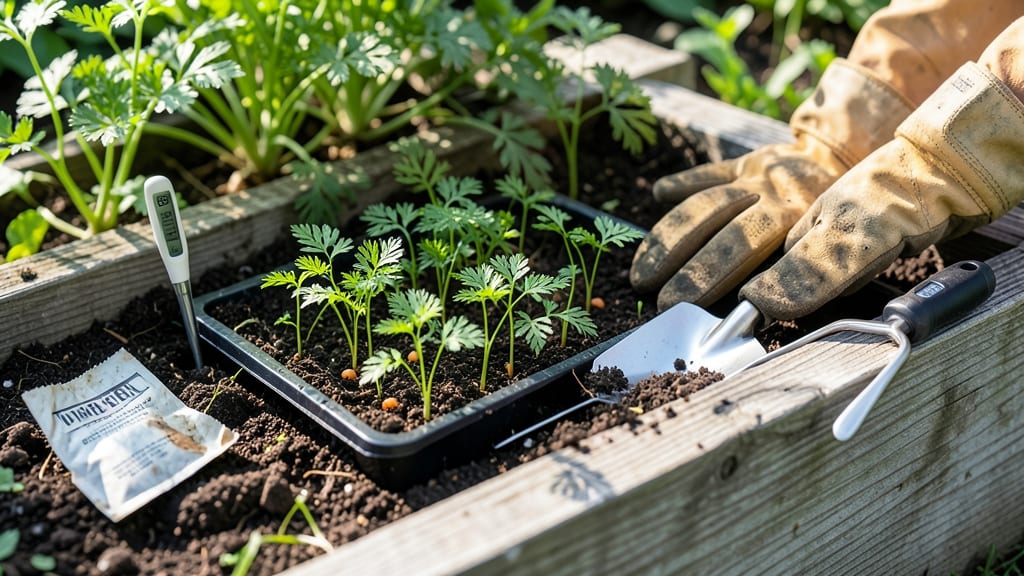
Timing your 🥕 carrot planting in Montana isn’t just about following a calendar—it’s about outsmarting the state’s unpredictable frost dates and rocky soil to grow roots that stay sweet and crisp.
With USDA zones 4-7 and a growing season that can shift dramatically from one valley to the next, planting too early risks frost damage, while waiting too long means bolting before harvest.
Most gardeners in Montana swear by two key windows: spring (April-June) and early fall (July-August), but the real secret lies in knowing your last frost date—typically between late April and early June.
Whether you’re starting seeds indoors or sowing directly, getting this right means the difference between a bountiful harvest and a patch of bitter, stunted roots.
I’ve tested the best varieties for Montana’s climate—from cold-hardy Danvers to vibrant Purple Haze—and mastered techniques like succession planting and row covers to stretch your growing season.
If you’ve ever struggled with carrots that fork or rot before harvest, this guide will show you exactly how to avoid those mistakes and grow carrots that rival the ones at the grocery store—only better.
Ready to dig in? Let’s break down the exact planting deadlines for your zone, the soil prep tricks that make all the difference, and how to protect your crop from Montana’s infamous late frosts. Your crisp, homegrown carrots are just a few weeks away.
Montana’s carrot planting zones: when to start indoors vs. direct sowing
Montana’s diverse climate—spanning USDA Zones 4-7—means your carrot planting strategy must adapt to last frost dates that vary by region. In Zone 4 (northern Montana), the average last frost date is May 15, while Zone 7 (southwest Montana) sees frost-free conditions by April 15.
These differences dictate whether you’ll need to start seeds indoors or sow directly outdoors.
For Zone 4 gardeners, begin indoor seed-starting 6-8 weeks before your last frost—typically around March 15. This gives seedlings a head start before transplanting outdoors in late April to early May.
Meanwhile, Zone 7 gardeners can often skip indoor starting and direct-sow seeds as early as March 20, taking advantage of Montana’s earlier spring thaw.
Direct sowing outdoors is the preferred method for most Montana growers because carrots hate transplanting and develop better roots when sown directly. The ideal window for direct sowing is 2-3 weeks after your last frost, ensuring soil temperatures reach at least 50°F—usually April 30 to May 15 in most regions.
| USDA Zone | Last Frost Date | Indoor Start Date | Direct Sow Window | Harvest Window |
|---|---|---|---|---|
| Zone 4 (Glacier, Missoula) | May 15 | March 15-April 1 | May 1-15 | July-September |
| Zone 5 (Bozeman, Helena) | May 1 | March 1-April 1 | April 15-May 1 | June-August |
| Zone 6 (Billings, Great Falls) | April 20 | February 28-March 15 | April 1-May 1 | May-July |
| Zone 7 (Butte, Miles City) | April 15 | February 15-March 1 | March 20-April 15 | May-June |
Montana’s short growing season also allows for a fall planting window. For late-summer sowing, aim to plant seeds 8-10 weeks before your first frost—typically July 15-August 1 in most zones.
This ensures carrots mature before hard frosts arrive in September. Use row covers or cold frames to extend the season if needed.
One critical factor in Montana is soil temperature. Carrot seeds won’t germinate below 50°F, so always check soil temps before planting. In Zone 4, wait until soil warms to 55°F—often late May—to avoid slow germination.
Use a soil thermometer to monitor conditions, especially in high-altitude areas like Missoula or Bozeman.
For succession planting, sow new seeds every 2-3 weeks from April to July to ensure a continuous harvest. This staggered approach works especially well in Zone 6 and 7, where the growing season is slightly longer.
In Zone 4, focus on one or two plantings to avoid bolting from heat stress.
If you’re in Zone 5 or below, consider using black plastic mulch to warm the soil faster and create a microclimate for earlier planting. This technique can push your direct-sowing window back by 2-3 weeks, giving you more flexibility in Montana’s unpredictable spring weather.
Always check your local Almanac frost dates for your specific town, as microclimates can shift planting windows by 1-2 weeks. For example, Bozeman’s valley warms faster than nearby mountains, so adjust timelines accordingly.
Best carrot varieties for Montana’s climate and how to extend the growing season
Montana’s short growing season and unpredictable weather make choosing the right carrot varieties critical for success. Opt for cold-hardy types like ‘Danvers Half Long’ or ‘Nantes’, which tolerate cooler temperatures and Montana’s alkaline soils.
These varieties also resist forking—a common issue in rocky Montana soil—while delivering sweet, crisp roots.
For color variety, try ‘Purple Haze’, a deep-purple heirloom that thrives in Montana’s USDA Zones 4-7. Its rich hue indicates high antioxidant levels, perfect for adding visual and nutritional appeal to your garden. Always prioritize short-season varieties (50-70 days to maturity) to maximize harvests before the first frost.
🌱
🥕 Best Carrot Varieties for Montana
✅ Cold-hardy, 60-70 days, great for storage
✅ Smooth roots, 65-75 days, ideal for sandy soil
✅ Antioxidant-rich, 70-80 days, colorful
✅ Sweet, 60-70 days, great for fresh eating
💡 Pro Tip: Plant succession crops every 2 weeks in May-June to extend harvests.
To push your growing season further, use row covers or cold frames to protect seedlings from late spring frosts. These tools add 2-4 weeks of growing time, letting you plant carrots as early as mid-April in most of Montana.
For fall planting, start seeds by mid-July to ensure roots mature before the first frost in late September.
Another trick is interplanting carrots with radishes or lettuce, which mature faster and mark carrot rows without crowding. Radishes also help loosen soil, improving carrot growth. Just be sure to harvest radishes first to avoid competition for nutrients.
For high-altitude areas (like Zone 4), focus on early-maturing varieties like ‘Early Nantes’ (50 days) and use black plastic mulch to warm the soil. This method can shave off 10-14 days from the growing season, letting you squeeze in an extra harvest before frost.
Finally, save seeds from your best-performing varieties to adapt to Montana’s unique conditions. Over time, you’ll develop locally adapted carrots that thrive in your specific microclimate—whether it’s a sunny valley or a shaded mountain garden.