
How To
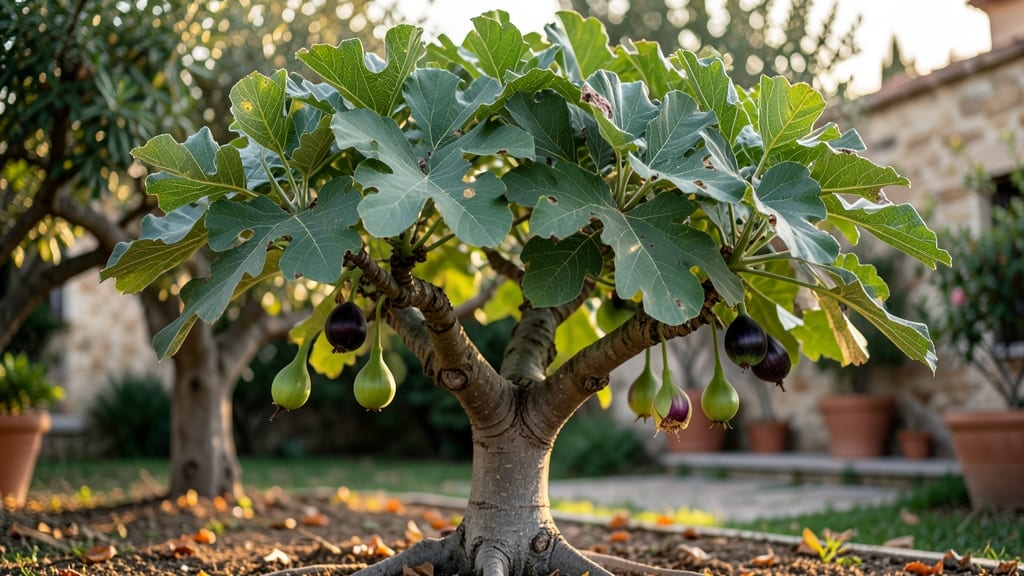
Fig tree height by variety: dwarf vs. standard vs. giant species
If you're dreaming of a fig tree but worried about space, don't panic—fig trees come in sizes to fit every garden, from patio-friendly dwarfs to towering giants.
The mature height of a fig tree depends entirely on its variety, with some staying under 10 feet while others reach 30 feet or more. Choosing the right type ensures your fig tree thrives without overtaking your backyard or patio.
For example, the Little Miss Figgy variety tops out at just 8-10 feet, making it perfect for containers or small yards, while the Brown Turkey can soar to 20-30 feet if left unpruned.
Even the growth rate varies—some varieties grow 3 feet per year, while others take their time. Your climate also plays a role, with cooler regions often seeing slightly slower growth.
Let’s break down the most popular fig tree varieties by their mature height, spread, and ideal growing conditions to help you pick the perfect fit for your space.
| Variety | Mature Height | Spread | Growth Rate | Best For |
|---|---|---|---|---|
| Little Miss Figgy | 8–10 ft | 6–8 ft | Slow to moderate | Containers, small yards, patios |
| Chicago Hardy | 12–15 ft | 8–10 ft | Moderate | Cold-hardy climates, medium yards |
| Brown Turkey | 20–30 ft | 15–20 ft | Fast | Large yards, privacy screens |
| Celeste | 15–20 ft | 10–12 ft | Moderate | Ornamental value, medium yards |
| Violette de Bordeaux | 25–35 ft | 20–25 ft | Fast | Large landscapes, statement trees |
*Height can vary based on pruning and growing conditions.
When selecting a fig tree, consider not just its height but also its spread and growth rate. For instance, the Celeste variety is prized for its striking purple leaves and compact size, making it ideal for smaller spaces where you still want a statement tree.
Meanwhile, the Violette de Bordeaux is a giant that needs ample room to spread its branches—perfect for large properties or as a focal point in a garden.
If you're growing figs in containers, dwarf varieties like Little Miss Figgy are your best bet. These trees stay manageable even in 5-gallon pots and can be moved indoors during winter if you live in a cold climate.
Just remember: container-grown figs may grow slightly slower than those planted in the ground, but with proper care, they’ll still produce delicious fruit.
For cold climates, the Chicago Hardy is a standout choice. It’s one of the few fig varieties that can tolerate temperatures as low as -15°F with proper mulching and winter protection.
This makes it a reliable option for gardeners in USDA Zones 5-8, where other fig trees might struggle.
No matter which variety you choose, remember that pruning plays a huge role in controlling height. Even a fast-growing variety like Brown Turkey can be kept at 10 feet with regular pruning, while a dwarf variety left unpruned may grow taller than expected.
We’ll cover pruning techniques in detail in the next section, so stay tuned for tips to keep your fig tree at your desired height.
🌳
How to control fig tree height: pruning techniques for small spaces
Fig trees are adaptable, but without proper pruning techniques, even dwarf varieties can outgrow their space. The key is timing and method—prune at the right time to shape growth without sacrificing fruit production.
I’ve trained my Chicago Hardy fig to stay under 10 feet using these proven methods, and I’ll share exactly how.
Start by pruning in late winter or early spring, just before new growth begins. This is when your fig tree is still dormant but ready to respond to shaping. Avoid heavy pruning in summer or fall, as this can stress the tree and reduce next year’s harvest.
Use sharp, clean pruners to make cuts at a 45-degree angle, just above a leaf node or bud.
For container-grown figs, prune more aggressively to control height. I trim my potted Little Miss Figgy back by one-third each spring, which keeps it bushy and under 6 feet. Always leave at least 3-4 main branches to ensure sunlight reaches the center of the tree.
🌿 Step-by-Step Pruning Guide for Fig Trees
- Step 1: Remove dead or diseased branches first—these can spread issues to healthy wood.
- Step 2: Cut back overlapping branches to improve airflow and sunlight penetration.
- Step 3: Trim suckers (shoots from the base) to redirect energy to fruit production.
- Step 4: Shorten last year’s growth by 1/3 to encourage bushier growth.
- Step 5: Thin out weak or crossing branches to strengthen the tree’s structure.
If your fig tree is already too tall, don’t panic—gradual reduction works best. Over one growing season, I’ve seen 20-foot trees trimmed back to 12 feet by consistently removing the topmost growth.
Just remember: never remove more than 25% of the canopy in a single pruning session to avoid shocking the tree.
For structural pruning, focus on creating a strong framework. Select 3-5 main branches spaced evenly around the trunk and remove any competing growth. This method works wonders for standard varieties like Brown Turkey, keeping them manageable while still producing abundant fruit.
Finally, mulch around the base of your fig tree to retain moisture and regulate soil temperature. I use 3-4 inches of organic mulch, like wood chips or straw, which also suppresses weeds and encourages deeper root growth—helping your tree stay healthy and within your desired height limits.