
How To
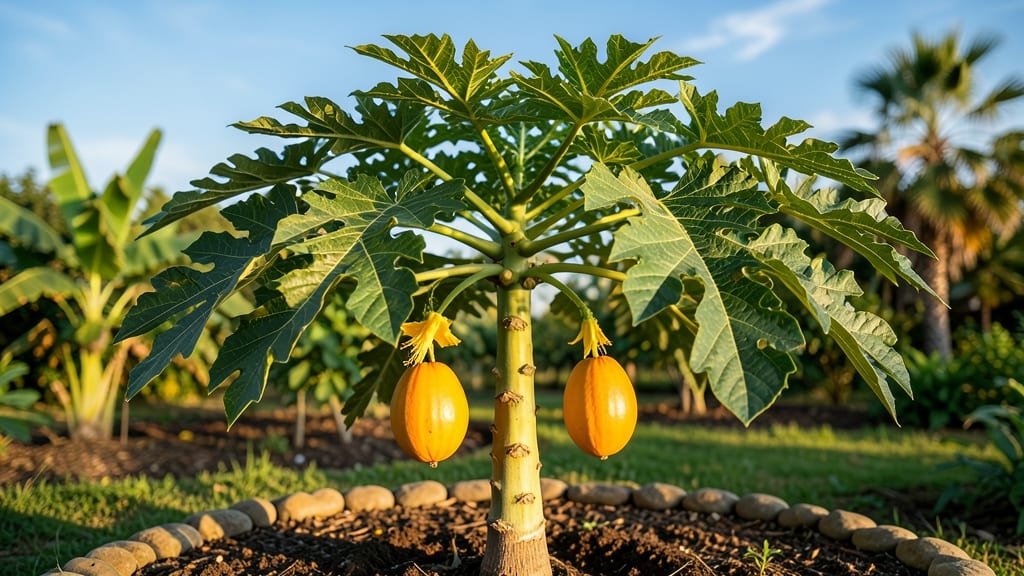
If you’ve ever dreamed of growing your own tropical fruit but worried about space, understanding how tall a papaya tree grows is the first step to making it work—even in small gardens.
These vibrant 🌴 trees can shoot up to 30 feet in ideal conditions, but many varieties stay perfectly manageable with the right care.
The key to success lies in choosing the right variety for your space. Some papaya trees mature at a modest 10 feet, while others reach towering heights that require careful planning.
Whether you’re a backyard gardener or a container enthusiast, knowing these growth ranges helps you pick the perfect fit for your setup.
Beyond variety, factors like pruning, sunlight, and soil quality play huge roles in controlling height. I’ll show you how to keep your tree at your desired size without sacrificing fruit production—because the best part? A well-managed papaya tree can bear fruit in as little as 6 months.
Ready to turn your sunny corner into a tropical fruit oasis? Let’s dive into the exact height ranges, growth stages, and pro tips to help you grow a papaya tree that thrives—no matter how much space you have.


Papaya tree height by variety: from dwarf to giant growth ranges
If you’re dreaming of a papaya tree in your garden, the first question is almost always: how tall will it grow? The answer depends entirely on the variety you choose, with some reaching towering heights of 30 feet while others stay manageable for containers.
Let’s explore the exact height ranges for popular papaya varieties so you can pick the perfect fit for your space.
Most papaya trees fall into two main categories: standard varieties (10–30 feet) and dwarf or semi-dwarf types (though true dwarf papayas are rare). The variety you select isn’t just about height—it also impacts fruit size, flavor, and even how quickly the tree matures.
For example, the Red Maradol variety can grow up to 25 feet but produces smaller, sweeter fruits, while the SunUp variety tops out around 15 feet with larger, seedless fruits.
Here’s a quick look at how these varieties stack up in terms of height and ideal growing conditions:
| Variety | Mature Height | Fruit Size | Best For |
|---|---|---|---|
| Solo | 10–15 ft | Medium (1–2 lbs) | Home gardens, containers |
| SunUp | 12–18 ft | Large (2–4 lbs) | Commercial growers, large yards |
| Red Maradol | 15–25 ft | Small (0.5–1 lb) | Tropical climates, ornamental value |
| Kapoho Solo | 12–20 ft | Medium (1.5–2.5 lbs) | Balcony gardens, urban areas |
| Golden | 20–30 ft | Large (3–5 lbs) | Large estates, tropical farms |
🌴 Height Tip: Choose Solo or Kapoho Solo for smaller spaces; Golden or Red Maradol for bold, tropical statements.
For gardeners with limited space, the Solo and Kapoho Solo varieties are my top recommendations. These stay under 15 feet and thrive in containers, making them perfect for patios or balconies.
If you’re in a tropical climate and have room to spare, the Golden variety’s 30-foot height is worth the space for its massive, seedless fruits.
One common misconception is that papaya trees grow uniformly in height. In reality, their growth is influenced by pruning, climate, and even soil quality.
For example, a SunUp papaya in a nutrient-rich, tropical climate might reach 18 feet in just two years, while the same variety in a cooler microclimate could take three years to hit 12 feet.
This variability is why understanding your local growing conditions is just as important as choosing the right variety.
If you’re growing papayas in containers, expect even more compact growth. Container-grown trees rarely exceed 8–10 feet, even for standard varieties, because their root systems are restricted. To maximize height in pots, use large containers (at least 20 gallons) and fertilize regularly to encourage vertical growth.
Just remember: the smaller the pot, the shorter (and potentially less fruitful) your tree will be.
Another factor to consider is the growth habit of the papaya tree. Unlike some fruit trees, papayas grow in a single-stemmed structure with large, palm-like leaves. This means they don’t naturally branch out like apple or citrus trees, which can make them feel even taller.
If you’re concerned about height, strategic pruning can help redirect energy toward fruit production rather than vertical growth.
For those in USDA Zones 10–12, papaya trees can grow year-round, but in cooler climates (like Zone 9), they may grow more slowly and stay shorter unless protected. In these areas, consider growing papayas as annuals or bringing potted trees indoors during winter.
Even in ideal conditions, most papaya trees reach 50% of their mature height within the first year, so planning for their eventual size
How papaya tree height changes through growth stages: seedling to fruit-bearing
Understanding how your papaya tree grows over time helps you anticipate space needs and care requirements. From a tiny seedling to a towering fruit-bearing giant, each stage brings dramatic height changes. Let’s explore the exact growth milestones so you can track progress and adjust your garden plan.
In the first 3 months, your papaya tree grows from a seedling (0-6 inches) to a sturdy sapling. This stage is all about establishing roots and developing the first true leaves.
Without proper care, growth can stall, but with ideal conditions—full sun and consistent moisture—your tree will shoot up quickly.
🌱
- Month 1-3: Seedling to 2 ft – Focus on root development and sturdy stems.
- Month 4-6: 2-6 ft – Rapid vertical growth begins; provide support if needed.
- Month 7-12: 6-12 ft – Critical flowering stage; prune to encourage fruit production.
- Year 2-3: 10-20 ft – Maximum height potential; harvest-ready fruit appears.
- Year 4+: 20-30 ft – Mature size; prune to control height and improve airflow.
Between 4 and 6 months, your papaya tree enters its fastest growth phase, reaching 2-6 feet tall. This is when you’ll notice the tree’s characteristic palm-like leaves and a sturdy trunk.
Without pruning, lateral branches can become dense, so consider selective pruning to maintain an open canopy and improve air circulation.
By 12 months, your papaya tree typically stands 6-12 feet tall and may even produce its first flowers. This stage is critical for fruit development, so ensure your tree receives balanced fertilization and regular watering. Overwatering or nutrient deficiencies can stunt growth or reduce fruit yield.
In years 2 and 3, papaya trees reach their prime fruiting stage and can grow 10-20 feet tall. This is when you’ll see the most dramatic height increases, especially in tropical climates with consistent warmth.
If space is limited, consider pruning techniques to manage height while still encouraging fruit production.
Once your papaya tree matures—typically by year 4—it can reach 20-30 feet tall, depending on the variety and growing conditions. At this stage, the tree’s height stabilizes, but regular pruning is essential to remove dead branches and maintain structural integrity.
Proper care ensures your tree remains healthy and productive for years.
🌳