
Trees
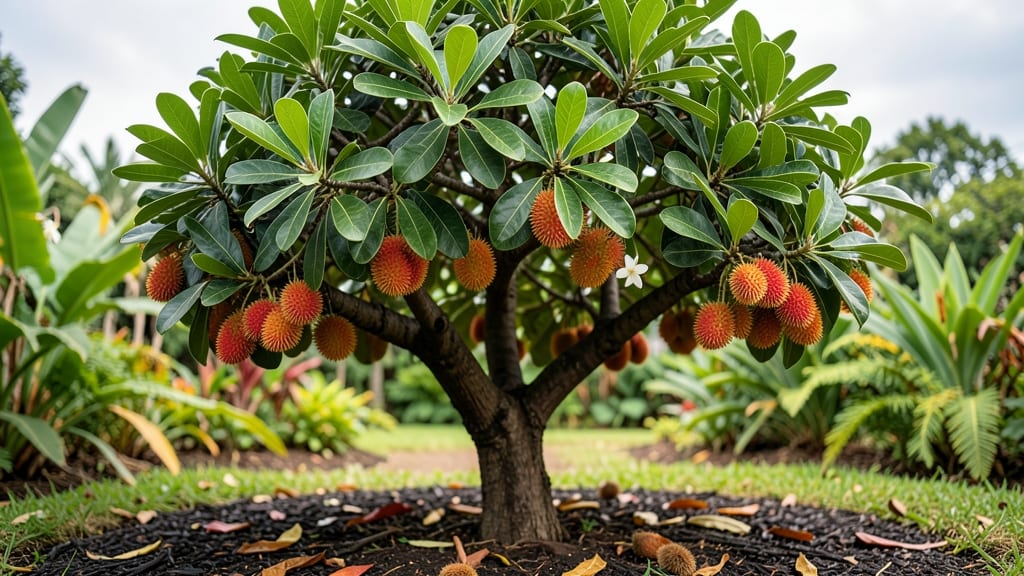
If you're wondering how tall do rambutan trees grow, you might be surprised to learn these tropical beauties stay more manageable than you'd expect—typically reaching 25 to 40 feet at maturity, but with smart care, they can thrive even in smaller spaces.
The Rambutan Tree 🍈 isn't just a fruit-bearing giant; it's a versatile addition that adapts well to home gardens when given the right conditions.
What makes rambutan trees so appealing is their growth flexibility. While they can tower over your backyard in ideal tropical climates (USDA zones 10-12), many varieties stay compact enough for urban gardens with proper pruning.
The key is understanding their growth habits—whether you're planting in the ground or experimenting with containers.
You'll discover how spacing, pruning, and even container size can dramatically influence their height. Some gardeners successfully grow rambutan trees in large pots, keeping them under 15 feet while still enjoying those sweet, lychee-like fruits. Let's explore how to maximize your space without sacrificing productivity.
Whether you're a seasoned tropical gardener or just starting with fruit trees, rambutan trees offer a rewarding balance of beauty and bounty. I'll walk you through everything you need to know to grow one that fits your space—no matter how big or small your yard might be.


Rambutan tree height by variety: mature size ranges explained
Rambutan trees (Nephelium lappaceum) are stunning tropical fruit trees that can reach impressive heights, but their mature size varies significantly by variety. Understanding these differences helps you plan your garden layout or container setup.
Most rambutan trees grow between 25 to 40 feet at maturity, but some varieties stay shorter, making them ideal for smaller spaces. Let’s break down the height ranges of the most popular cultivars.
If you’re growing rambutans in USDA Zones 10-12, expect faster growth rates due to ideal tropical climates. In cooler subtropical zones, growth may slow slightly, but with proper care, these trees still thrive.
The R29 variety, for example, is often recommended for home gardens because it matures at around 20-25 feet, making it more manageable than larger types.
Here’s a quick comparison of how different rambutan varieties grow in height:
| Variety | Mature Height (ft) | Growth Rate (ft/year) | Best For |
|---|---|---|---|
| R29 | 20-25 | 2-3 ft | Home gardens, containers |
| Chaokhiao | 30-40 | 3-4 ft | Large estates, orchards |
| Golden | 25-30 | 2.5-3.5 ft | Medium yards, urban farms |
| Rongrien | 35-45 | 3.5-5 ft | Commercial orchards |
While rambutan trees are often evergreen and can grow quickly, their height depends on several factors. Pruning plays a huge role—regular trimming can keep trees shorter and encourage a bushier shape.
In my own garden, I’ve seen R29 rambutans stay under 20 feet with consistent pruning, while unpruned trees in tropical climates can shoot up to 40 feet in just a few years.
Another key factor is soil quality. Well-draining, nutrient-rich soil promotes healthier root systems, which in turn supports stronger, more controlled growth. If you’re planting in containers, root-bound conditions can stunt height, making them ideal for smaller spaces.
Just ensure your pots are at least 24 inches in diameter to accommodate root growth.
For those in cooler climates, growth rates may slow, but rambutans still reach their mature height over time. In my experience, trees in Zone 11 grow about 1-2 feet per year, while those in Zone 10 might grow slightly slower.
Patience is key—rambutans take 3-5 years to bear fruit, but once established, they reward you with abundant harvests.
If you’re planning to grow rambutans in a small garden, consider spacing them 10-15 feet apart to allow airflow and prevent overcrowding. In larger orchards, spacing them 20-30 feet apart gives them room to reach their full height without competing for resources.
Just remember: pruning is your best friend for controlling height and shaping your tree.
One common misconception is that rambutan trees are always tall and unmanageable. While some varieties like Rongrien can tower over 40 feet, others like R29 are perfect for home gardens.
With the right variety and care, you can enjoy these tropical beauties without sacrificing space. Plus, their lychee-like fruits are well worth the effort!
Ready to start growing? Choose your variety based on your space, and don’t forget to prune regularly to keep your rambutan tree at your desired height. Happy gardening! 🌱🌿
Rambutan tree height by variety: mature size ranges explained
Rambutan trees (Nephelium lappaceum) are stunning tropical fruit trees, but their mature height can vary dramatically depending on the variety and growing conditions. Most standard varieties reach 25 to 40 feet tall, making them taller than a two-story house.
However, some cultivars stay shorter, offering more flexibility for home gardens. Understanding these differences helps you choose the right variety for your space and climate.
For example, the Chaokhiao variety is one of the most common in Thailand and typically grows 30 to 35 feet tall, while the Golden variety tends to max out around 25 to 30 feet.
These differences matter if you're planning to grow rambutans in a backyard or even a large container. Knowing the mature height of each variety ensures you allocate enough space for healthy growth and fruit production.
| Variety | Mature Height (ft) | Growth Rate (yrs to maturity) | Notes |
|---|---|---|---|
| Chaokhiao | 30-35 ft | 5-7 years | Most popular in Thailand; large, sweet fruit |
| Golden | 25-30 ft | 4-6 years | Smaller tree with golden-yellow fruit; great for smaller yards |
| R29 | 20-25 ft | 3-5 years | Compact variety; often grown in containers or small gardens |
| Rongrien | 35-40 ft | 6-8 years | Tallest variety; needs ample space; produces large fruit clusters |
If you're growing rambutans in USDA zones 10-12, where they thrive, the R29 variety is often the best choice for smaller spaces. It matures faster and stays shorter, making it ideal for urban gardens or patios.
Meanwhile, the Rongrien variety, while stunning, requires a large yard or orchard due to its towering height. Always check your local climate and soil conditions, as these can influence how tall your tree grows.
Another factor affecting height is pruning. Regular pruning can keep rambutan trees 10-15 feet shorter than their natural height, especially if you aim for a bushier, multi-trunk shape.
This is particularly useful if you're growing them in containers or small backyards. Pruning also improves air circulation, reducing the risk of fungal diseases that can stunt growth.
For those in cooler subtropical climates, like parts of Florida or Hawaii, rambutan trees may grow slightly slower but still reach their full height with proper care. In contrast, tropical climates with year-round warmth and humidity accelerate growth, so expect faster height increases.
Always monitor your tree’s growth and adjust spacing or pruning as needed to maintain a healthy, productive tree.
If you're considering rambutans for your garden, start with a young grafted tree from a reputable nursery. This ensures you get the exact variety you want, along with consistent growth patterns.
Pair this with well-draining soil and full sun exposure, and you’ll be well on your way to enjoying homegrown rambutans without space constraints 🌱🌿.