
How To
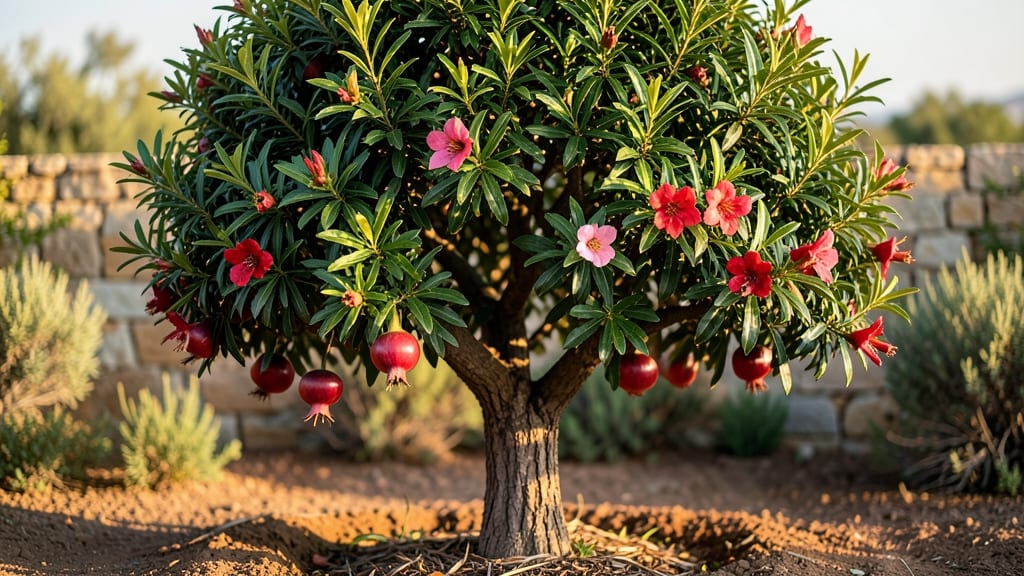
If you're dreaming of growing your own 🍇 pomegranate but worried it’ll take over your backyard, here’s the good news: how tall a pomegranate grows depends entirely on the variety you choose, with dwarf types staying as short as 4 feet while standard varieties can reach 15 feet or more.
That means whether you’re growing in a pot on your patio or planting in your garden’s corner, there’s a perfect fit for your space and style.
The height of a pomegranate tree depends entirely on the variety you choose, with dwarf types staying as short as 4 feet while standard varieties can reach 15 feet or more.
That means whether you’re growing in a pot on your patio or planting in your garden’s corner, there’s a perfect fit for your space and style.
But size isn’t the only factor—climate, pruning, and even soil conditions play a role in how tall (or compact) your 🍇 pomegranate grows.
With the right care, you can keep it at your ideal height, whether that means a manageable 6 feet or letting it grow wild like a backyard centerpiece.
Ready to pick the perfect variety for your garden? Let’s break down the options and tips to keep your pomegranate at the height you love—no matter how much (or little) space you’ve got.


Pomegranate tree height by variety: from dwarf to giant sizes
If you're dreaming of growing pomegranates but worried about space, don't fret! The height of a pomegranate tree can vary dramatically depending on the variety and growing conditions.
Some stay compact enough for containers, while others become towering backyard giants. Understanding these differences helps you choose the perfect fit for your garden.
Most pomegranate trees fall into three main height categories: dwarf (3-5 ft), semi-dwarf (6-10 ft), and standard (12-20 ft). Your climate, soil, and pruning habits can also push a tree taller or keep it shorter than its typical range.
For example, a Wonderful pomegranate—one of the most popular varieties—can reach 15 feet in ideal conditions but stays around 8-10 feet with regular pruning.
Here’s how to match your space and goals to the right size:
| Variety | Mature Height | Best For | Growth Notes |
|---|---|---|---|
| Dwarf Varieties | 3–5 ft | Containers, patios, small gardens | Slow-growing, ideal for pot culture; prune to encourage bushiness. |
| Semi-Dwarf Varieties | 6–10 ft | Small yards, urban gardens, espalier training | Balanced growth; great for fruit production without overwhelming space. |
| Standard Varieties | 12–20 ft | Large gardens, landscapes, orchards | Fast-growing; needs full sun and space to thrive. |
| Wonderful | 8–15 ft | Most popular; adaptable to pruning | Classic sweet-tart flavor; prune to control height. |
| Eversweet | 10–12 ft | Cold-hardy; great for northern climates | Tolerates USDA Zone 6; fewer pests. |
| Mini Marvel | 4–6 ft | Containers, balconies, small spaces | Dwarf hybrid; high-yielding for its size. |
Climate plays a surprising role in height. Pomegranates in hot, dry regions like Arizona or California often grow taller and faster due to ideal conditions. Meanwhile, in cooler climates like USDA Zone 7, growth slows, keeping trees more manageable.
For example, a Wonderful pomegranate in Phoenix might hit 15 feet, while the same tree in Portland could stay under 10 feet.
Soil drainage is another game-changer. Pomegranates hate soggy roots, so well-draining soil encourages healthier, more controlled growth. Amend heavy clay with compost or sand to prevent root rot, which can stunt a tree’s height or cause it to grow erratically.
I once saw a pomegranate in a backyard with poor drainage—it grew lopsided and only reached 6 feet after 5 years, despite being a standard variety.
Light exposure also influences height. While pomegranates thrive in full sun, partial shade can limit their growth. If you’re growing in a container, place it where it gets at least 6 hours of sunlight daily.
Without enough light, your tree may grow leggy and weak, struggling to reach its full potential height.
Age matters too! In their first year, pomegranates are tiny—just 1-2 feet tall. By year two, they’ll shoot up to 3-5 feet, and by year three, they’ll start resembling their mature size.
Patience is key: a dwarf variety might take 3 years to reach 4 feet, while a standard variety could add 3 feet annually in perfect conditions.
If you’re planning for a small space, consider espalier training or container gardening
Pomegranate tree height by variety: from dwarf to giant sizes
Pomegranate trees (Punica granatum) offer a stunning range of heights, from compact dwarf varieties perfect for containers to standard trees that reach small tree proportions. The mature height depends entirely on the cultivar—some stay under 5 feet, while others tower over 15 feet.
Understanding these differences helps you choose the right variety for your space, whether it's a balcony pot or a backyard orchard.
Climate, pruning habits, and soil conditions also play a role in how tall your pomegranate grows. In hot, dry climates like USDA Zones 7-10, trees naturally grow taller and fuller, while cooler regions may see slightly stunted growth.
Proper soil drainage and sunlight exposure (6+ hours daily) are non-negotiable for maximizing—or controlling—height potential.
| Variety | Mature Height | Best For | Notes |
|---|---|---|---|
| 'Mini Marvel' | 3-5 ft | Containers, patios | Dwarf variety; ideal for small spaces |
| 'Eversweet' | 6-8 ft | Small gardens, urban yards | Cold-hardy; sweet fruit |
| 'Wonderful' | 10-15 ft | Backyards, orchards | Standard size; best for fruit production |
| 'Sweetheart' | 8-10 ft | Medium gardens, containers (large) | Disease-resistant; prolific blooms |
If you're growing pomegranates in containers, root-bound conditions naturally stunt height growth. A 5-gallon pot might keep a dwarf variety like 'Mini Marvel' under 4 feet, while a 15-gallon container could accommodate a semi-dwarf like 'Eversweet' at 6-7 feet.
Always use a pot with drainage holes and well-draining soil to prevent root rot, which can further limit growth.
For standard varieties like 'Wonderful,' expect 10-15 feet of height and spread, requiring 10+ feet of clearance in all directions. These trees develop a spreading canopy and benefit from regular pruning to maintain shape and manage height.
In windy climates, staking young trees helps prevent toppling, which can also influence growth patterns.
One common misconception is that all pomegranates need full sun to reach their maximum height. While sunlight is critical, partial shade (3-4 hours of direct sun) can reduce height by 20-30% while still producing fruit.
If you're in a hotter climate, afternoon shade helps prevent sunburn on leaves, which can stress the tree and slow vertical growth.
To visualize height differences, imagine a standard basketball hoop (10 feet) next to your pomegranate. Dwarf varieties stay below this line, while standard trees will exceed it. For small-space gardening, prioritize dwarf or semi-dwarf varieties and prune aggressively in early spring to encourage bushier, more manageable growth.