
Trees
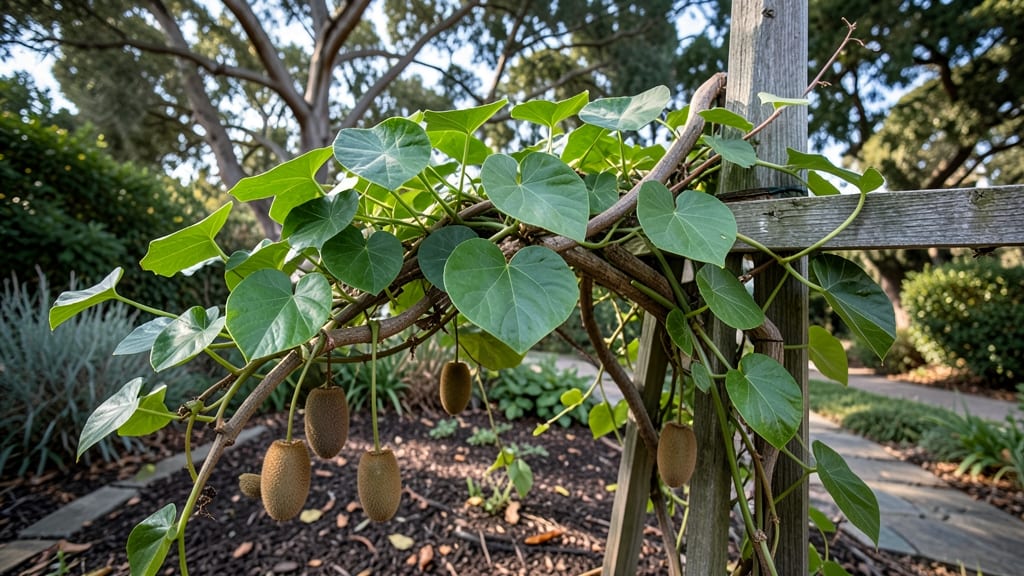
If you're planning a kiwi vine garden, the first question on your mind might be: how tall do kiwi trees grow?
These vigorous climbers can reach heights between 15 and 30 feet, depending on the variety and growing conditions—so knowing the right spacing and support is crucial before you plant.
The 🍈 kiwi vine isn't just a tree; it's a fast-growing, woody perennial that thrives when given room to climb. While some varieties stay more compact, others can quickly overtake fences or trellises if not properly managed.
Whether you're working with hardy kiwi (Actinidia arguta) or the classic fuzzy kiwi (Actinidia deliciosa), understanding their growth patterns will help you design a functional and productive garden layout.
In this guide, I'll break down the height differences between pole and bush varieties, explain how climate and pruning affect growth, and share practical tips for keeping your kiwi vines at a manageable size—even in smaller spaces.
You'll learn how to pair male and female plants for pollination while controlling their sprawling nature.
From trellis design to pruning schedules, we'll cover everything you need to know to grow healthy, productive kiwi vines without sacrificing your backyard space. Let's get started!


Kiwi tree height by variety: pole vs bush types explained
Kiwi vines—specifically Actinidia deliciosa (hardy kiwi) and Actinidia arguta (smooth kiwi)—can reach staggering heights, but their growth patterns depend entirely on whether you're growing male (pole) or female (bush) plants.
The male kiwi vine (pole) typically grows 20-30 feet tall, while the female kiwi vine (bush) can climb just as high but often sprawls wider. Understanding these differences is crucial for planning space and support systems.
Most backyard gardeners focus on Actinidia arguta, the hardy kiwi, because it thrives in cooler climates (USDA zones 4-8) and produces smooth-skinned fruit. These vines mature at 15-25 feet with proper training, making them slightly more manageable than their tropical cousins.
Meanwhile, Actinidia deliciosa (the fuzzy kiwi) needs warmer zones (7-9) and can surge to 30+ feet without control.
Here’s the key distinction: Male kiwi vines (poles) are non-fruiting but essential for pollination, while female kiwi vines (bushes) bear fruit. Both require 6+ hours of sunlight and a sturdy trellis, but their growth habits differ.
Males grow taller and straighter, while females develop thicker canes and more lateral branches for fruit production.
For small-space gardening, consider dwarfing techniques like heavy pruning or container growth. However, true dwarf kiwi varieties are rare—most "compact" options are simply young vines or heavily pruned mature plants. If you're limited to 10 feet of height, focus on Actinidia arguta and prune aggressively in winter.
Another critical factor is vine training. Untrained kiwi vines can sprawl 20+ feet wide, while a well-structured trellis keeps them contained to 10-15 feet horizontally. This is where vertical gardening shines—using T-posts, cables, or pergolas to guide growth upward rather than outward.
If you're planting a pair of kiwi vines (one male, one female), plan for at least 15 feet of vertical space and 10 feet of horizontal clearance between them.
For urban gardens, consider container-growing with Actinidia arguta, which tolerates pruning better than its tropical cousin. Just remember: kiwi vines are perennial—they’ll keep growing year
Kiwi tree height by variety: pole vs bush types explained
Kiwi vines grow dramatically in height, but their mature size depends entirely on the variety and growing method. The Actinidia deliciosa (hardy kiwi) typically reaches 20-30 feet when left unpruned, while Actinidia arguta (hardy kiwi) stays slightly shorter at 15-25 feet.
These differences matter if you're planning a backyard garden—some varieties need a two-story trellis!
Most kiwi plants are dioecious, meaning you need both male (pole) and female (bush) plants for fruit production. The male "pole" plants grow 10-20% taller than females, often reaching 25-30 feet when trained on a strong support system.
Female "bush" varieties typically max out at 15-25 feet, making them slightly more manageable for smaller spaces.
Here’s how the two main types compare in terms of height and growth habits:
| Variety | Type | Mature Height | Growth Rate | Space Needs |
|---|---|---|---|---|
| Actinidia deliciosa | Male (Pole) | 25-30 ft | Fast (10-15 ft/year) | 10-15 ft trellis |
| Actinidia deliciosa | Female (Bush) | 20-25 ft | Moderate (8-12 ft/year) | 8-12 ft trellis |
| Actinidia arguta | Male/Female | 15-25 ft | Slower (6-10 ft/year) | 6-10 ft trellis |
If you're working with limited space, Actinidia arguta varieties like 'Issai' are a game-changer—they’re self-pollinating and grow just 10-15 feet tall, making them perfect for container gardening or small urban yards. These compact vines still produce delicious, smooth-skinned kiwis, but without the need for a massive trellis.
For large rural properties, the classic Actinidia deliciosa varieties thrive when given 20+ feet of vertical space. Pair a male plant on a 30-foot trellis with a female plant on an adjacent 25-foot structure to ensure proper pollination.
The key is providing strong support early—kiwi vines can double in height each growing season if unchecked!
Regional climate also plays a role in vine height. In warmer USDA zones (8-10), kiwi vines grow faster and taller due to longer growing seasons, while in cooler zones (5-7), growth slows, often capping at 15-20 feet even for standard varieties.
Always check your local frost dates when planning your kiwi garden!
Pro tip: If you’re worried about height, prune aggressively in late winter to control growth. A well-trained kiwi vine can be kept at 10-15 feet with regular maintenance, making it far more manageable for suburban gardens. Just remember—less pruning means more fruit, but also more vertical space needed!