
Size
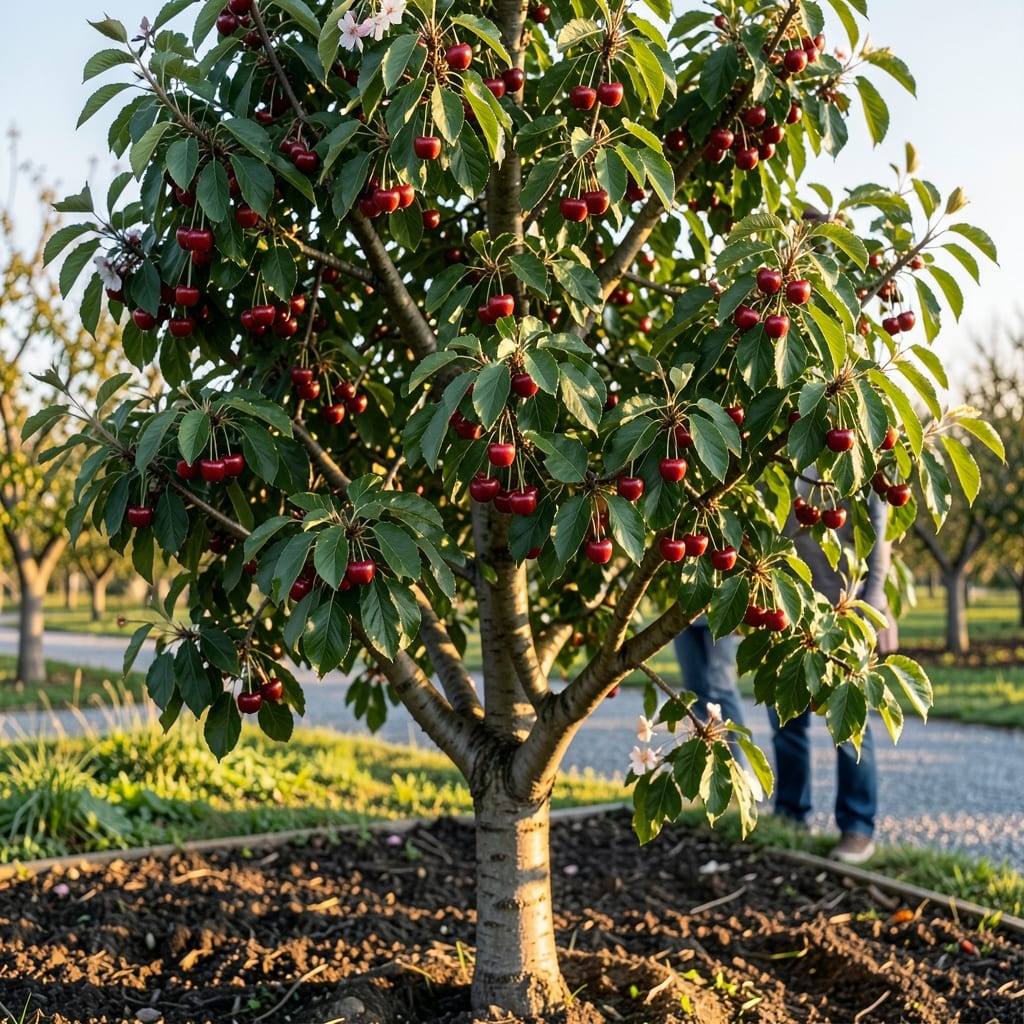
Wondering how tall do Bing cherry trees grow before you commit to planting one? These trees can reach heights of 15 to 25 feet—taller than most backyard fences—if left unchecked, so knowing their growth habits is key to planning your garden layout.
If you're dreaming of a 🍒 Bing cherry tree laden with sweet fruit, you’ll need to consider both space and pruning strategies. Standard varieties thrive in USDA Zone 6a and beyond, but their mature size means they’re best suited for larger yards or orchards. The good news? With the right pruning techniques, you can manage their height and even encourage more fruit production.
For those with limited space, dwarf Bing cherry varieties offer a practical alternative, staying between 6 to 12 feet tall. Whether you’re a seasoned gardener or just starting out, understanding how to control your tree’s growth will help you maximize your harvest without sacrificing your garden’s aesthetics.
In this guide, I’ll break down everything you need to know—from exact height expectations by variety to step-by-step pruning tips—so you can grow the perfect Bing cherry tree for your space. Let’s get started!

Bing cherry tree height by variety: exact growth expectations
If you’ve ever wondered how tall do Bing cherry trees grow, the answer depends entirely on the variety you choose. Standard Bing cherry trees can reach an impressive 15 to 25 feet tall, making them a statement piece in any landscape—but not everyone has the space for a two-story tree! Dwarf varieties, on the other hand, stay between 6 to 12 feet, perfect for smaller yards or container growing.
Understanding these height differences is critical because it directly impacts where you plant your tree, how much sunlight it receives, and even how much fruit you can expect. A standard Bing cherry tree in full sun will grow faster and taller, while a dwarf variety might need careful pruning to maintain its compact size. Let’s break down the exact expectations for each type so you can plan accordingly.
Here’s what you need to know about Bing cherry tree height by variety, including growth rates and space requirements for optimal fruit production:
Standard Bing cherry trees are the classic choice for orchards or large properties, but their 15–25 foot height means they’ll need plenty of space to thrive. These trees grow quickly—expect 1–3 feet per year—so plan accordingly if you’re planting near your home or fence. Their wide canopy also means they’ll cast significant shade, which can affect nearby plants.
For smaller spaces, dwarf Bing cherry varieties like 'Stella' or 'Compact Bing' are game-changers. These trees top out at 6–12 feet, making them ideal for suburban backyards, patios, or even large containers. While their fruit yield is smaller, they produce consistently and require less maintenance. Columnar varieties are another great option, offering a narrow, upright growth habit that fits into tight spaces without sacrificing fruit production.
One common misconception is that dwarf varieties produce less fruit. In reality, they often yield more efficiently per square foot of space, making them perfect for urban gardeners. Just be sure to choose a variety that’s been grafted onto a dwarfing rootstock—this ensures the tree stays small while still producing high-quality Bing cherries. Always check the rootstock type when purchasing your tree to avoid surprises down the road.
Regardless of the variety, soil quality and sunlight play a huge role in how tall your Bing cherry tree grows. These trees thrive in full sun (6+ hours daily) and well-draining soil. Poor soil or shade can stunt growth, leading to a smaller tree with fewer cherries. If your yard has heavy clay soil, consider amending it with compost or planting in a raised bed to encourage healthier growth and optimal height.
Another factor to consider is the age of your tree. In their first year, Bing cherry trees are tiny—just 2–4 feet tall. By year three, they’ll have grown to 12–18 feet, so it’s important to monitor their growth and prune regularly to shape them and prevent overcrowding. If you’re planting near power lines or structures, opt for a dwarf variety or plan for early pruning to keep the tree manageable.
For those with limited space but a big love for Bing cherries, container growing is a viable option—especially with dwarf varieties. A large pot (at least 24 inches in diameter) with drainage holes and quality potting mix can support a dwarf Bing cherry tree for several years. Just
In summary, the height of your Bing cherry tree is largely determined by the variety you choose. Standard trees reach 15–25 feet and need ample space, while dwarf and columnar varieties stay between 6–12 feet and are perfect for smaller gardens. By
How to control Bing cherry tree height with pruning techniques
Pruning isn’t just about keeping your Bing cherry tree from growing too tall—it’s also about boosting fruit production and maintaining tree health. Since standard Bing cherry trees can reach 15–25 feet, regular pruning is essential to manage their height while encouraging a strong structure. The key is timing, technique, and knowing which branches to cut. Whether you’re a beginner or a seasoned gardener, mastering these pruning methods will help you shape your tree for optimal growth and harvest.
Most Bing cherry trees should be pruned twice a year: once in late winter or early spring (before buds swell) and again in summer (after harvest). Winter pruning focuses on removing dead, diseased, or crossing branches, while summer pruning helps control height and improve air circulation. For dwarf varieties, you’ll prune less aggressively, but the principles remain the same. Always use sharp, clean pruners to avoid damaging the tree or spreading disease.
Here’s a step-by-step guide to pruning your Bing cherry tree for height control and better fruit yield:
-
Step 1: Assess the Tree
Inspect your tree for dead, diseased, or damaged branches. Remove these first—they drain energy and can spread problems. -
Step 2: Thin the Canopy
Focus on removing branches that cross or rub against each other. This improves airflow and reduces disease risk. -
Step 3: Prune for Height Control
To limit height, cut back upward-growing branches by 1/3 to 1/2 their length. Avoid cutting the leader (central stem) unless necessary. -
Step 4: Encourage Fruit Production
Prune to open the tree’s center by removing suckers (shoots from the base) and water sprouts (fast-growing vertical shoots). -
Step 5: Summer Pruning (Post-Harvest)
Lightly trim new growth to redirect energy to fruit production. Avoid heavy pruning in summer—it stresses the tree. -
Step 6: Clean Up
Remove all pruned branches and sterilize tools with rubbing alcohol to prevent disease spread.
One common mistake is pruning too late in the season, which can stimulate new growth that won’t harden off before winter. Always prune before buds break in spring to avoid this. For dwarf varieties, be even more cautious—over-pruning can stunt their growth further. If you’re unsure where to cut, aim for just above a bud or branch collar (the swollen area where the branch meets the trunk). This ensures the wound heals properly.
Another pro tip: Use hand pruners for small branches and a pruning saw for thicker branches. Never leave stubs—always cut cleanly to minimize damage. If your tree is young (under 3 years old), focus on shaping its structure rather than drastically reducing height. Older trees may need more aggressive pruning to control their size, but always remove no more than 25% of the canopy in a single session to avoid stressing the tree.
For those with limited space, escalade pruning (training branches along a trellis or fence) can help manage height while maximizing fruit exposure. This technique works especially well for dwarf and columnar Bing cherry varieties. Just ensure the support is sturdy enough to handle the tree’s weight as it grows. With the right pruning approach, you can keep your Bing cherry tree at a manageable height while still enjoying a bountiful harvest of sweet, juicy cherries.
Remember, pruning is an ongoing process—don’t expect miracles after just one session. Consistency is key to maintaining your tree’s health and size. Start with light pruning and adjust as you learn what works best for your specific variety and growing conditions. Happy pruning! 🪴