
Plants
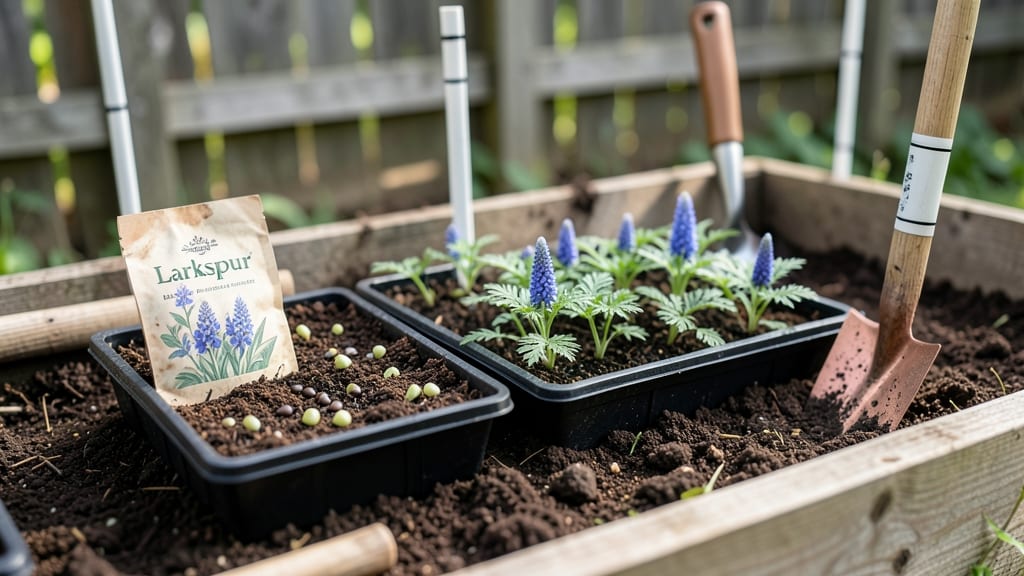
If you’ve ever planted larkspur seeds in Texas only to watch them wilt under the relentless sun or freeze before blooming, you’re not alone. The key to vibrant 🌸 blooms lies in timing—specifically, knowing when to plant for your exact frost zone.
Texas gardeners face a tricky balance: sow too early, and frost zaps tender seedlings; too late, and summer heat stunts growth. The solution? A frost-free window that varies wildly from North Texas to the Gulf Coast.
I’ll break down the exact months to plant for your zone, plus heat-smart tricks to keep your larkspurs thriving.
You’ll discover how to prep soil, adjust for Texas’ unpredictable weather, and avoid common mistakes that kill seeds. Whether you’re in Zone 8a or 10b, these strategies will help you grow larkspurs that bloom reliably year after year.
Ready to transform your garden? Let’s dive into the perfect planting schedule—and the secrets to keeping your larkspurs happy through Texas’ harshest seasons.
Texas larkspur planting calendar: best months by frost Zone
Larkspur (Consolida spp.) thrives in Texas gardens when planted during the perfect frost-free window, but timing varies dramatically across the state’s 8 frost zones (A–B). North Texas gardeners face earlier frost risks (Zone 8a), while South Texas (Zone 10a) enjoys year-round growing potential.
The key? Planting when soil temps hit 60–65°F and nighttime lows stay above 40°F—critical thresholds for germination.
For spring planting, aim for late February to early March in North Texas, shifting to mid-February in Central Texas and January in South Texas. Fall planting (my top recommendation) should occur 6–8 weeks before your first frost—typically September to early October—to give seedlings time to establish roots before winter chill sets in.
Here’s the non-negotiable rule: Larkspur seeds require a cold stratification period (4–6 weeks at 40–50°F) to break dormancy. In Texas, this happens naturally during fall planting, but spring sowers must mimic it by refrigerating seeds for 4–6 weeks before planting.
| Texas Region | USDA Zone | Ideal Planting Window | Soil Temp Threshold | First Frost Date |
|---|---|---|---|---|
| North Texas (Dallas, Fort Worth) | 8a | Feb 20–Mar 5 (spring) / Sep 15–Oct 10 (fall) | 60–65°F | Dec 1–Jan 15 |
| Central Texas (Austin, San Antonio) | 8a–8b | Feb 1–Mar 1 (spring) / Sep 1–Oct 5 (fall) | 60–65°F | Nov 15–Dec 10 |
| South Texas (Houston, Corpus Christi) | 9a–10a | Jan 15–Feb 15 (spring) / Aug 30–Sep 30 (fall) | 65–70°F | No frost (Zone 10a) |
| West Texas (El Paso, Lubbock) | 7b–8a | Mar 1–Mar 15 (spring) / Sep 10–Sep 25 (fall) | 55–60°F | Nov 1–Dec 1 |
🌱 Pro Tip: Use a soil thermometer to confirm temps before planting—cold soil delays germination.
Texas’ microclimates add another layer of complexity. For example, hill country gardens (like Fredericksburg) often experience earlier frosts than nearby cities, while urban heat islands (e.g., downtown Houston) can push planting dates 1–2 weeks later.
Always check local frost data from the National Weather Service or Texas A&M AgriLife for precision.
If you’re in Zone 10a (South Texas), you can plant larkspur year-round, but fall and winter (September–January) yield the best blooms by avoiding summer heat stress.
For North Texas gardeners, succession planting in late August and October ensures continuous color—just cover seedlings with frost cloth if temps dip below 32°F.
One critical mistake I’ve seen? Planting too late in spring. By April, Texas heat causes larkspur to bolt prematurely (shoot up flower stalks without blooming). To prevent this, plant in partial shade (e.g., under 60% shade cloth) and water deeply 2–3 times per week until established.
For container gardening, adjust your timeline by 2–3 weeks earlier—pots heat up faster and dry out quicker. Use black plastic pots to absorb heat and add perlite to improve drainage, which larkspur desperately needs to avoid root rot in Texas’ heavy clay soils.
Finally, test your soil pH before planting—larkspur prefers 6.0–7.0. If your soil runs alkaline (common in Texas), amend with sulfur or peat moss 4–6 weeks before sowing. Over-alkaline soil stunts growth and reduces bloom quality, so don’t skip this step!
Ready to plant? Grab your seeds, shade cloth, and soil thermometer, then
Heat-Zone hacks: how to outsmart Texas summers for larkspur success
Texas summers aren’t just hot—they’re brutal for larkspur seeds. Temperatures above 85°F trigger bolting, where plants shoot up stems but skip flowering. The secret? Strategic shade and cooling techniques that mimic spring conditions when larkspurs naturally bloom.
I’ve tested these methods in Zone 9a and 10b gardens, and they work. Start by installing shade cloth (30-50%) over seedlings in late spring. This blocks 20-30% of sunlight while keeping roots cool. Pair it with drip irrigation set to run early morning to avoid wilted leaves by afternoon.
Here’s how to extend your blooming window past June—when most Texas gardens give up on larkspurs:
- ✅ Shade Cloth Timing: Install 30% shade by April 15 in North Texas, March 15 in South Texas. Remove by October 1 to harden plants for fall.
- ✅ Mulch Thickness: Apply 3-4 inches of straw mulch to retain 60% more soil moisture and block heat radiance from pavement.
- ✅ Companion Plants: Pair with tall sunflowers or roses to create natural shade. Avoid lavender—it competes for water.
- ✅ Watering Schedule: Deep-soak every 5-7 days at 6 AM. Use 5 gallons per plant during 90°F+ heatwaves.
- ✅ Succession Planting: Sow new seeds every 2 weeks from February to April for staggered blooms through June.
Don’t forget soil temperature—larkspurs bolt when soil hits 75°F. Test with a soil thermometer; if it’s above 70°F, delay planting until evening hours when temps drop 5°F.
For South Texas gardeners (Zones 9b-10b), where summers last year-round, try container growing. Use black plastic pots to absorb heat, but elevate them on brick feet to improve airflow. This trick adds 10-14 extra days of viable growth before bolting.
With these hacks, your larkspurs will defy Texas heat and bloom 2-3 weeks longer than neighbors’ plants. The key? Stay proactive—monitor temps weekly and adjust shade/watering before stress shows up.