
Trees
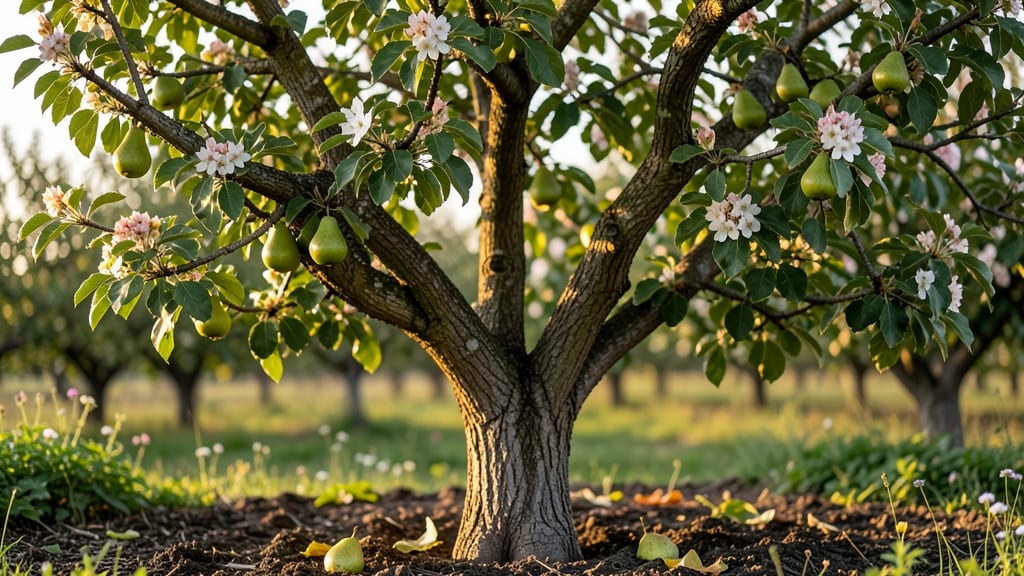
Pear tree height ranges by variety: dwarf to standard sizes explained
If you're planning to grow a pear tree in your garden, knowing its potential height is crucial for space planning. Some varieties stay compact enough for small yards, while others will need room to stretch their branches toward the sky.
The mature height of a pear tree depends entirely on its rootstock and cultivar, with dwarf varieties reaching just 6-10 feet and standard types towering over 30-50 feet.
Choosing the right size isn't just about aesthetics—it affects fruit production, maintenance ease, and even harvesting convenience. For example, a Bartlett pear tree on standard rootstock will dwarf your backyard, while the same cultivar grafted onto dwarfing rootstock stays manageable.
Let's explore the height ranges you can expect from popular pear tree varieties.
🍐 Visual Guide: Pear Tree Height Comparison
| Variety | Rootstock Type | Mature Height (ft) | Growth Habit | Best For |
|---|---|---|---|---|
| Bartlett (Williams) | Dwarf (Quaive, Old Home) | 6-10 ft | Upright, spreading | Small gardens, containers |
| Anjou | Semi-Dwarf (MM106) | 12-18 ft | Vigorous, rounded | Backyard orchards |
| Bosc | Standard (Seedling) | 30-50 ft | Tall, columnar | Large properties |
| Asian Pear (Korean) | Dwarf (Bartlett rootstock) | 8-12 ft | Compact, bushy | Urban gardens |
| Seckel | Semi-Dwarf (OHxF136) | 15-20 ft | Spreading, multi-trunk | Ornamental + fruit |
The rootstock is the foundation of your pear tree's height. Dwarfing rootstocks like Quaive or Old Home restrict growth to 6-10 feet, making them ideal for containers or small urban yards.
Semi-dwarf rootstocks (MM106) grow to 15-20 feet, perfect for suburban backyards, while standard seedling rootstock allows trees to reach their full 30-50 foot potential—think orchard-sized space.
For small-space gardening, consider espaliered pear trees. This training method keeps even standard varieties under 10 feet while maximizing fruit production. Just be prepared for annual pruning to maintain the shape.
If you're unsure which size to choose, start with a semi-dwarf—it offers a balance between manageable height and productive yields.
Remember, height isn't the only factor. The spread of a pear tree matters too. Many varieties develop a 15-20 foot canopy, so plant at least 15 feet from fences or structures.
For Bartlett pears on standard rootstock, you'll need 25+ feet of clearance all around. Always check the specific cultivar's growth habit before planting.
If you're growing pears for commercial purposes, standard-sized trees are often preferred for higher yields. However, dwarf varieties produce fruit earlier (as soon as 2-3 years after planting) compared to 5-7 years for standard trees. This makes them a great choice for patient home gardeners who want quick rewards.
One common mistake is underestimating mature size. Many gardeners plant standard
5 Factors that determine how tall your pear tree will grow
Your pear tree’s height isn’t just about the variety you choose—it’s also shaped by five key factors that can either encourage towering growth or keep your tree manageable. Understanding these will help you plan for the perfect fit in your garden or orchard.
First, the rootstock plays a massive role. Dwarfing rootstock like Quince C keeps trees under 12 feet, while standard rootstock like Seedling lets them reach 40+ feet. This is the foundation of height control, often overlooked by new growers.
Next, soil quality and drainage directly impact growth. Pear trees thrive in well-draining, slightly acidic soil (pH 6.0-7.0). Poor soil can stunt growth or encourage weak, leggy branches that stretch upward uncontrollably.
🌱Visual Guide: Key Factors Affecting Pear Tree Height
- 🌱 Rootstock: Dwarf (6-10 ft), Semi-Dwarf (15-20 ft), Standard (30-50 ft)
- 🌿 Soil: Well-draining, slightly acidic (pH 6.0-7.0) for optimal growth
- ☀️ Sunlight: <6 hours = stunted growth; 8+ hours = vigorous growth
- 🌡️ Climate: Warmer zones (USDA 6+) promote faster, taller growth
- ✂️ Pruning: Aggressive pruning = shorter; minimal pruning = taller
Sunlight exposure is another game-changer. Pear trees need 6-8 hours of full sun daily to grow strong and produce fruit. In shady spots, they’ll grow 20-30% slower and develop weak, upward-reaching branches that can make the tree appear taller than it should.
Your climate zone also matters. Trees in warmer USDA zones (7-9) grow faster and taller than those in cooler zones (5-6). For example, a Bartlett pear on standard rootstock might hit 40 feet in California but only 30 feet in the Pacific Northwest.
Finally, pruning habits are the most direct way to control height. Regular pruning keeps trees compact, while neglect can lead to unchecked vertical growth. Even standard varieties can be trained into espalier shapes to stay under 10 feet if pruned aggressively.
By mastering these five factors, you’ll have full control over whether your pear tree becomes a backyard giant or a neatly contained feature. Start with the right rootstock, then fine-tune with sunlight, soil, and pruning to get the perfect size for your space! 🪴