
How To
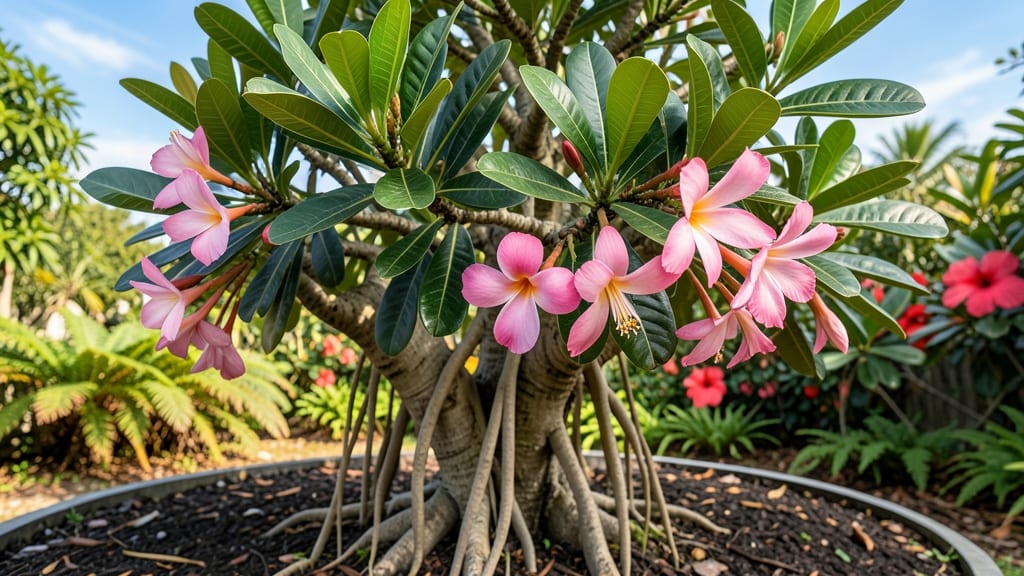
Wondering how tall does a plumeria tree grow before it becomes a towering presence in your garden? The answer might surprise you—this fragrant 🌺 beauty can range from a modest 3-foot dwarf to a majestic 20-foot giant, depending on its variety and growing conditions.
If you're dreaming of a plumeria that fits snugly on your patio or balcony, dwarf varieties like Plumeria pudica stay compact, while standard types like Plumeria rubra reach their full height over time. The key to controlling its size lies in understanding its growth habits and the right care techniques.
Whether you're in tropical USDA zones 10-12 or growing it as a potted plant in cooler climates, knowing how tall your plumeria will grow helps you plan its placement—whether it’s near your front door or tucked into a corner of your garden.
In this guide, I’ll break down the height ranges by variety, share tips for managing growth, and help you choose the perfect plumeria for your space—so you can enjoy its sweet scent without the unexpected overgrowth.


Plumeria tree height by variety: small, medium, and large species compared
Plumeria trees are stunning tropical plants, but their mature height can vary dramatically depending on the variety. Some grow as small as 3 feet—perfect for patios—while others reach towering 20 feet, making them statement pieces in large gardens.
Understanding these differences helps you choose the right plumeria for your space and climate, ensuring it thrives without overwhelming your landscape.
Most plumeria varieties fall into three height categories: dwarf (3-6 ft), semi-dwarf (8-12 ft), and standard (12-20 ft). Dwarf varieties are ideal for containers or small yards, while standard types need ample room to flourish.
Even within these categories, growth habits differ—some grow upright like trees, while others sprawl as shrubs. Let’s explore the most popular varieties and their mature heights.
| Variety | Mature Height | Growth Habit | Best For |
|---|---|---|---|
| Plumeria rubra 'Acutifolia' | 12-15 ft | Upright tree | Large gardens, tropical landscapes |
| Plumeria obtusa 'Singapore' | 8-12 ft | Semi-dwarf shrub | Medium yards, containers (large pots) |
| Plumeria pudica 'Mini Star' | 3-5 ft | Compact bush | Patios, balconies, small spaces |
| Plumeria alba 'White Frangipani' | 10-15 ft | Tall, spreading | Backyard borders, tropical entries |
| Plumeria 'Dwarf Snow' | 4-6 ft | Bushy, rounded | Containers, small gardens, fairy gardens |
The Plumeria rubra 'Acutifolia' is one of the tallest varieties, often reaching 12-15 feet in ideal conditions, making it a standout in tropical landscapes. Its upright growth habit and fragrant blooms make it a favorite for large gardens, but it requires plenty of space to avoid overcrowding nearby plants.
If you’re limited on space, opt for the Plumeria obtusa 'Singapore', which stays between 8-12 feet and has a more manageable shrub-like shape.
For smaller spaces, the Plumeria pudica 'Mini Star' is a game-changer. This dwarf variety tops out at just 3-5 feet, making it perfect for patios, balconies, or even large containers. Its compact size doesn’t mean sacrificing beauty—it produces abundant fragrant blooms in shades of pink, white, and yellow.
Similarly, the Plumeria 'Dwarf Snow' variety is another excellent choice for tight spaces, growing to 4-6 feet with a bushy, rounded form that’s ideal for containers or fairy gardens.
If you love the look of plumeria but want to keep it under control, consider the Plumeria alba 'White Frangipani'. While it can grow tall—10-15 feet—its spreading habit makes it great for creating a tropical canopy over patios or walkways.
With proper pruning, you can even encourage a more compact shape. The key to managing plumeria height lies in understanding its natural growth pattern and using techniques like pruning or grafting to tailor it to your needs.
Climate also plays a role in plumeria height. In USDA zones 10-12, plumeria trees grow year-round and reach their full potential. However, in cooler zones, potted plumeria may grow slower, staying smaller unless given optimal conditions like full sun and warm temperatures.
Even in pots, dwarf varieties like 'Mini Star' or 'Dwarf Snow' will remain compact, while larger varieties may need regular pruning to prevent them from becoming unmanageable.
When choosing a plumeria, think about your garden’s layout and your long-term vision. A 20-foot plumeria will dominate your landscape, while a 4-foot dwarf can add charm to a small balcony.
Both require the same care—full sun, well-draining soil, and minimal water—but their heights will dictate where they thrive best. For example, a 12-foot plumeria near a fence or wall can create a stunning vertical backdrop, while a 5-foot variety in a pot adds portability and versatility.
Pro tip: If you’re unsure about a variety’s mature height, ask your nursery for a grafted dwarf version of your favorite plumeria. Grafting can significantly reduce height while preserving
How to control plumeria tree height: pruning, training, and grafting techniques
If you’ve ever wondered how to keep your plumeria tree from growing into a towering giant, you’re not alone. With the right techniques, you can shape its growth to fit your space—whether that’s a 6-foot patio tree or a 12-foot backyard centerpiece.
The key lies in pruning, training, and even grafting for dwarf varieties. Let’s dive into how to manage your plumeria’s height like a pro.
Pruning is the most common way to control height, but timing and technique matter. Late winter or early spring is ideal—just before new growth begins. This ensures you’re not cutting back blooms or disrupting the tree’s energy reserves.
Use clean, sharp pruning shears to make cuts at a 45-degree angle just above a leaf node. This encourages healthy regrowth and prevents disease.
For a bushier, more compact plumeria, focus on pruning the top growth and inner branches. Remove any dead, crossing, or weak branches first, then trim back the main stems to your desired height.
Remember, plumeria trees grow faster in warm climates, so you may need to prune more frequently if you live in USDA Zones 10-12.
| Method | Best For | When to Do It | Tools Needed |
|---|---|---|---|
| Pruning | Reducing height, shaping tree | Late winter/early spring | Sharp pruning shears |
| Training | Guiding growth direction | Spring/summer (young trees) | Trellis or stake |
| Grafting | Creating dwarf varieties | Late winter (dormant season) | Grafting knife, grafting tape |
Training is another effective way to control height, especially for younger plumeria trees. Use a trellis or stake to guide the tree’s growth in a specific direction. This works well if you want a tall, vertical plumeria but don’t want it to spread outward.
Simply tie the main stems to the support as they grow, and the tree will follow your desired shape.
For those who want a dwarf plumeria without waiting years for natural growth, grafting is the answer. Grafting involves attaching a smaller variety onto the rootstock of a larger plumeria. This technique is best done in late winter when the tree is dormant.
While it requires some skill, the results—a compact, flowering plumeria—are well worth the effort for gardeners with limited space.
Finally, remember that potted plumeria trees grow slower than those planted in the ground, making them easier to manage. If you’re growing yours in a container, choose a dwarf variety and prune regularly to keep it at your desired height.
With these techniques, you’ll have a plumeria that’s the perfect size for your garden—without sacrificing its stunning blooms.