
Trees
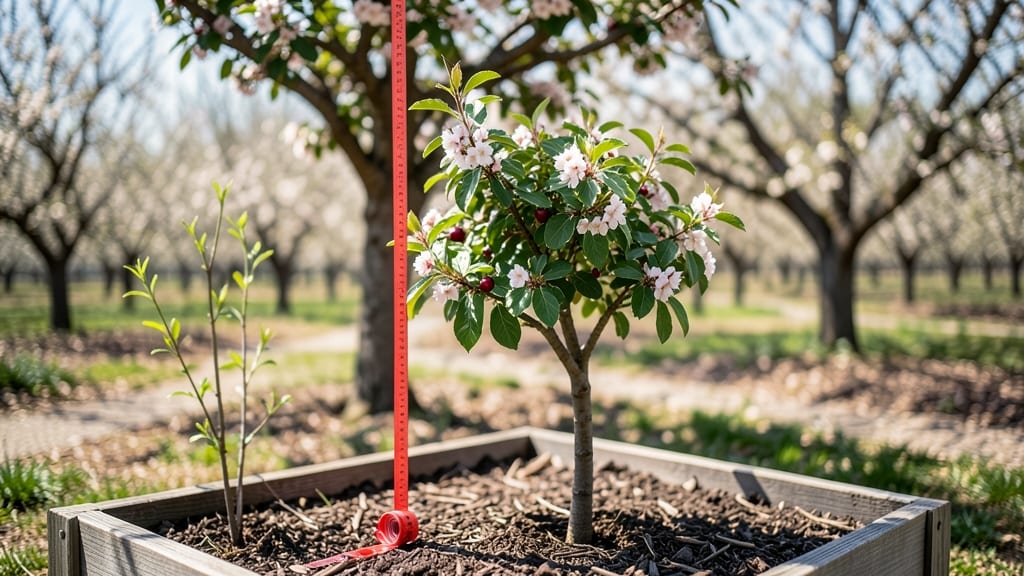
Dwarf cherry tree height: exact growth ranges by variety
Dwarf cherry trees are designed to stay compact, but their mature height varies significantly by variety. Most reach between 6 and 12 feet at maturity, making them perfect for small yards or containers.
Unlike their standard counterparts—20-30 feet tall—these space-savers deliver the same beauty and fruit without the towering presence. Let’s break down the most popular varieties and their growth expectations.
For example, the Stella® Dwarf Cherry typically maxes out around 8-10 feet, while the Lapins® Dwarf Cherry stays slightly shorter at 6-8 feet. The Meteor® Dwarf Cherry, known for its early fruit, also hovers around 8 feet.
These heights are ideal for patios, balconies, or even large pots, but growth rates can vary based on care and environment.
| Variety | Mature Height (ft) | Growth Rate (ft/year) | Best For |
|---|---|---|---|
| Stella® | 8-10 | 1-2 | Ornamental + fruit |
| Lapins® | 6-8 | 1 | Containers + small spaces |
| Meteor® | 8-10 | 1.5 | Early fruit harvest |
| Montmorency® | 6-9 | 1-1.5 | Sour cherries |
| Black Tartarian® | 8-12 | 1.5-2 | Sweet fruit + shade |
Understanding these growth ranges helps you plan your garden layout. For instance, if you’re growing Stella® in a container, expect it to reach 6-8 feet in 3-4 years, while ground-planted trees may grow slightly taller.
Always check the specific variety’s tag for precise expectations, as environmental factors like sunlight and soil quality can influence height.
One common misconception is that all dwarf cherry trees stay under 6 feet. While some varieties like Lapins® fit this description, others like Black Tartarian® can stretch toward 12 feet. This makes them better suited for larger patios or as focal points in small orchards.
If space is extremely limited, prioritize container-friendly varieties like Montmorency®, which thrive in 15-20 gallon pots.
Growth rates also vary by year. In their first year, dwarf cherry trees typically grow 2-4 feet, with 4-6 feet by year two. By year three, they often reach 60-70% of their mature height.
This gradual growth allows you to shape the tree early through pruning, ensuring it stays within your desired size limits. For example, if you want a 6-foot tree, aggressive pruning in the first two years can help control height.
Another key factor is the tree’s spreading habit. While height is often the focus, dwarf cherries also develop a 6-8 foot spread, so account for this when planting near fences, walls, or other structures.
Varieties like Meteor® are slightly narrower, making them ideal for tight spaces where width is a concern. Always leave 3-5 feet of clearance around the tree for airflow and maintenance.
If you’re comparing dwarf cherries to standard trees, the height difference is dramatic. A standard cherry tree can reach 20-30 feet, requiring significant yard space, while a dwarf variety fits neatly into a small urban garden or even a large container.
This makes them a game-changer for city dwellers or those with limited outdoor space. Just remember: even dwarf varieties need proper care to stay compact and healthy.
For visual reference, imagine a 6-foot dwarf cherry tree next to a 6-foot-tall person. It’s roughly the same height, making it easy to enjoy the blossoms and fruit without ladders or stretching.
This accessibility is one of the biggest advantages of dwarf varieties—year-round enjoyment without the maintenance of a full-sized tree.
When selecting a dwarf cherry tree, consider both height and your specific goals. Want stunning spring blossoms? Stella® is your best bet. Prefer early fruit?
Go for Meteor®. Need sour cherries for baking? Montmorency® delivers. Each variety offers unique benefits, so choose based on your priorities and space constraints.
Finally, always verify the mature height on the nursery tag or breeder’s website, as some "dwarf
Dwarf cherry tree height: exact growth ranges by variety
Dwarf cherry trees are a game-changer for gardeners with limited space, offering all the beauty and fruit of their larger counterparts in a fraction of the footprint. Most mature between 6 and 12 feet tall, making them perfect for patios, small yards, or even large containers.
But not all dwarf varieties grow the same—some stay as short as 6 feet, while others can reach 12 feet with proper care.
The key to predicting your tree’s height lies in its variety. For example, the Stella® cherry tree typically maxes out at 8–10 feet, while the Lapins® series can grow up to 12 feet if left unpruned.
Understanding these differences helps you choose the right tree for your space and goals, whether it’s fruit production, ornamental blossoms, or both.
Here’s a quick comparison to standard cherry trees, which can tower 20–30 feet tall. Dwarf varieties grow at about one-third the height of their full-sized relatives, but they still deliver the same stunning spring flowers, summer shade, and autumn foliage—just in a more manageable package.
| Variety | Mature Height | Growth Rate (Yearly) | Best For |
|---|---|---|---|
| Stella® | 8–10 ft | 12–18 in | Ornamental blossoms |
| Lapins® | 10–12 ft | 18–24 in | Sweet fruit, small orchards |
| Meteor® | 6–8 ft | 12–15 in | Early fruit production |
| Montmorency | 8–10 ft | 15–20 in | Sour cherries, pies |
If you’re planning for long-term growth, know that most dwarf cherry trees reach 50% of their mature height within 3 years. For example, a Stella® tree might hit 4–6 feet by its third year, while a Lapins® variety could be 6–8 feet tall at the same stage.
This predictable growth makes them ideal for gardeners who want to avoid surprises.
One common misconception is that all dwarf trees stay small without effort. In reality, their height is influenced by pruning, soil quality, and sunlight. For instance, a Meteor® cherry tree left unpruned could stretch toward 10 feet, while regular pruning keeps it at 6–8 feet.
We’ll dive deeper into these factors in the next section to help you maintain your tree’s ideal size.
For container gardening, choose varieties like Stella® or Meteor®, which thrive in large pots (at least 20-gallon capacity). Just remember: container-grown trees may grow slightly slower due to root restrictions, but they’re perfect for balconies or small urban spaces.