
Size
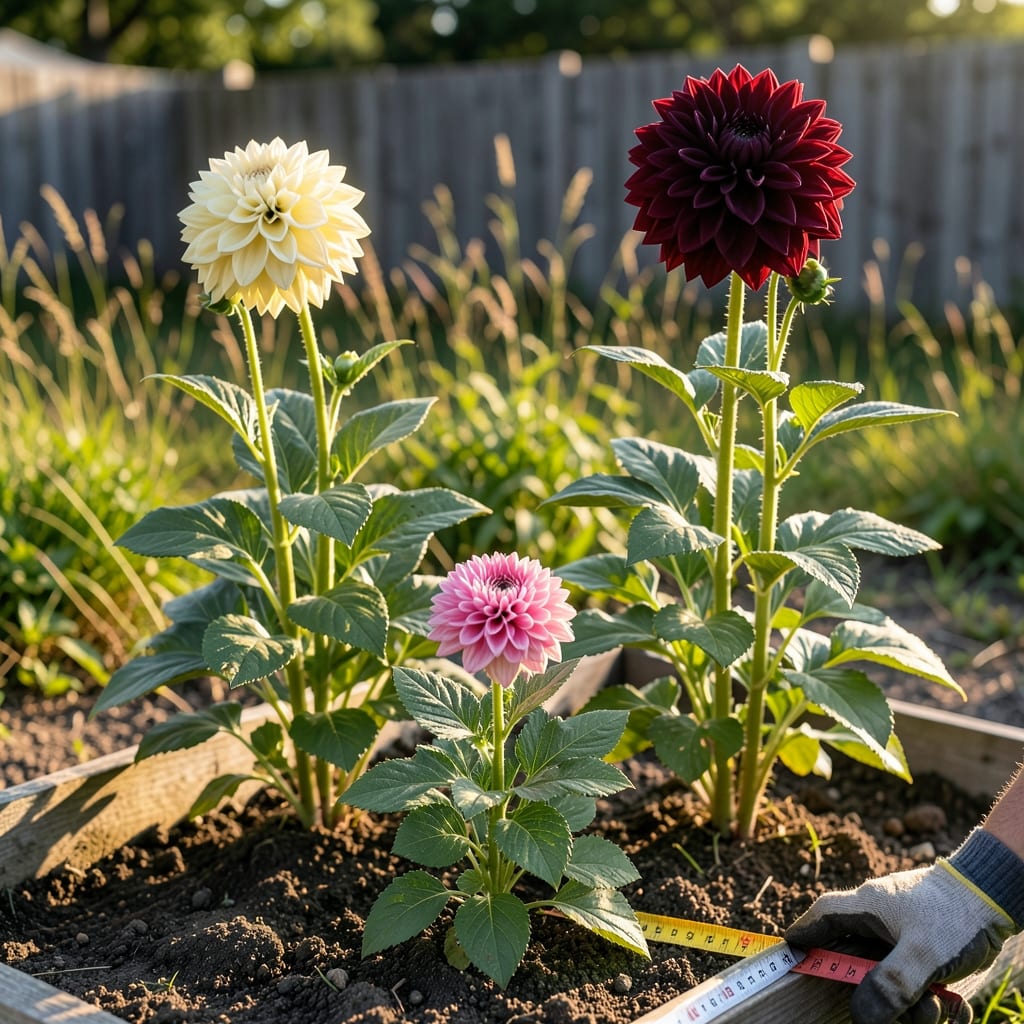
If you’ve ever wondered how tall your dahlias could grow—and whether those towering blooms in catalogs are realistic for your garden—you’re not alone. The truth is, dahlias 🌼 can range from compact 1-foot wonders to 7-foot giants, depending on the variety and care you provide.
For beginners, this height variation might feel overwhelming, but the good news is that even small spaces can accommodate dahlias. Whether you’re dreaming of a dramatic backyard centerpiece or just want a few cheerful blooms in containers, understanding the height potential of different varieties is the first step to success.
In this guide, I’ll break down exactly how tall dahlias grow by variety, share seasonal care tips to maximize their height, and reveal the common mistakes that keep them from reaching their full potential. By the end, you’ll know which types thrive in your garden—and how to give them the support they need to shine.
Let’s dive into the world of dahlias and discover how to grow them to their most stunning heights, regardless of your garden’s size or layout.

Dahlia height by variety: from compact to towering giants
When I first planted dahlias in my backyard, I was amazed by how dramatically their heights varied—some stayed as neat as a potted plant, while others shot up like small trees. The truth? Dahlias span an 8-inch to 7-foot height spectrum, making them incredibly versatile for any garden design. Their mature size depends entirely on the variety you choose, so let’s explore the spectrum from dwarf beauties to giant dinner-plate showstoppers.
For small-space gardens or container growing, dwarf varieties like 'Bishop' or 'Mignon' stay between 12–18 inches tall, perfect for window boxes or front-row borders. These compact types thrive in partial shade and produce abundant blooms without needing much support. If you’re working with limited vertical space, these are my go-to choices—they’re just as striking as their taller cousins but far easier to maintain.
Next up are semi-dwarf varieties (1.5–3 feet), like 'Café au Lait' or 'Thomas Edison', which strike a balance between manageability and drama. These varieties are ideal for mixed borders or mid-height garden beds, where they can anchor a display without overwhelming smaller plants. Their strong stems require minimal staking, making them a low-maintenance option for busy gardeners.
Now, let’s talk about the real giants: standard and giant varieties (3–7 feet tall). Types like 'Arabian Night' or 'Karma Choc' can reach head-height or taller, demanding strong support structures and spacious planting zones. These varieties are perfect for backyard focal points, cut-flower gardens, or dramatic container displays—just be prepared for heavy blooms that may need additional staking as they mature.
🌼
🌱 Dahlia Height Comparison by Variety
| Variety Type | Height Range | Best For | Care Notes |
|---|---|---|---|
| Dwarf | 8–18 inches | Containers, window boxes | Minimal staking, partial shade OK |
| Semi-Dwarf | 1.5–3 feet | Borders, mid-height beds | Light staking, full sun |
| Standard | 3–5 feet | Backyard focal points | Heavy-duty staking, rich soil |
| Giant | 5–7 feet | Cut flowers, dramatic displays | Strong support, deep watering |
Choosing the right dahlia variety for your garden isn’t just about height—it’s also about bloom size and growth habit. For example, 'Galaxy' (a semi-dwarf) produces large, pompon-style blooms on compact stems, while 'Black Narcissus' (a giant) delivers stunning, dinner-plate flowers but needs extra support to handle their weight. If you’re unsure where to start, mix heights in your garden for a layered, dynamic look—tall varieties in the back, medium in the middle, and dwarf types in the front.
One of my biggest lessons came when I planted 'Café au Lait' (a semi-dwarf) next to 'Arabian Night' (a giant) in the same bed. The giant variety needed individual stakes, while the semi-dwarf thrived with just light support. This taught me to plan spacing carefully—giant dahlias need at least 2 feet between plants, while dwarf types can tolerate 12 inches apart. Proper spacing ensures better airflow, reducing the risk of fungal diseases like powdery mildew.
For container growing, I’ve had great success with dwarf varieties in 12-inch pots, but even semi-dwarf types can work if you use large containers (18+ inches) and heavy-duty stakes. The key is balancing root space with above-ground growth—dahlias are hungry feeders, so containers need regular fertilization and deep watering to support their height potential.
If you’re aiming for maximum height, focus on giant varieties like 'Karma Choc' or 'Thomas Edison', but be prepared for seasonal adjustments. Early in the season, these types grow slowly, but by mid-summer, they can shoot up 2–3 feet in just a few weeks. To encourage strong, vertical growth, I pinch back the top sets of leaves in early summer, redirecting energy upward instead of outward.
🪴
Seasonal care secrets to maximize dahlia growth height
One of the most common questions I hear from gardeners is: "How can I get my dahlias to grow taller?" The answer lies in seasonal care, because height development isn’t just about the variety—it’s about timing. Dahlias grow in three distinct phases: early-season establishment, mid-summer vigor, and late-season maintenance. Each phase requires a different approach to pruning, staking, and nutrition to coax those stems toward the sky.
Let’s start with early-season prep, the foundation for tall dahlias. After planting tubers in spring (April–May), focus on root development before encouraging height. I avoid heavy pruning in the first 4–6 weeks—instead, I water deeply every 3–5 days and apply a light fertilizer (like 5-10-10) to build a strong root system. Weak roots = weak stems, and that’s a sure way to stunt height potential. Think of this phase as building a skyscraper’s foundation—rush it, and the whole structure collapses.
🌱
🌿 Step-by-Step Guide to Maximizing Dahlia Height
- Early Season (April–June): Water deeply 3x/week, avoid pruning, apply light fertilizer (5-10-10).
- Mid-Summer (July–August): Pinch back top sets of leaves to direct energy upward, stake tall varieties, fertilize every 4 weeks.
- Late Summer (September): Reduce watering, stop heavy feeding, remove spent blooms to prevent legginess.
- Fall Prep (October): Cut back stems to 6 inches, dig up tubers, store in dry peat moss for next year.
Mid-summer is when the magic happens—this is your window to direct growth upward. By July–August, dahlias enter their fastest growth phase, and that’s when I pinch back the top sets of leaves (about 4–6 inches from the top) to encourage vertical growth instead of bushiness. This technique, called disbudding, might seem counterintuitive, but it prevents leggy stems and boosts flower production on taller varieties. Pair this with heavy-duty stakes (like bamboo or metal cages) to support 3–7-foot giants. Pro tip: Bury stakes 6 inches deep at planting to avoid damaging roots later.
Don’t forget fertilizer timing—I feed dahlias every 4–6 weeks during peak growth with a balanced 5-10-10 mix, but I shift to a higher-phosphorus formula (like 10-20-10) in late summer to promote blooming. Over-fertilizing with nitrogen can lead to leafy growth at the expense of height, so always follow the "feed, don’t flood" rule. And here’s a trick I learned: Side-dress with compost or worm castings in early summer to give roots a steady nutrient supply without burning the plant.
As summer winds down, late-season care becomes critical to preserve height gains. By September, dahlias start slowing their growth, and that’s when I reduce watering and stop heavy feeding. Overwatering now can weaken stems, making them susceptible to flopping under the weight of blooms. I also remove spent flowers (called deadheading) to prevent the plant from wasting energy on seed production. For giant varieties, I add extra support like tomato cages or wooden stakes to handle the weight of large blooms.
Finally, fall prep sets the stage for next year’s height potential. Before the first frost (usually mid-October in most zones), I cut back stems to 6 inches and dig up tubers. Storing them in dry peat moss or vermiculite in a cool, dark place ensures they’ll regrow strong stems next season. I’ve found that healthy tubers = taller dahlias the following year, so this step is non-negotiable for maximizing height long-term.
🪴