
Size
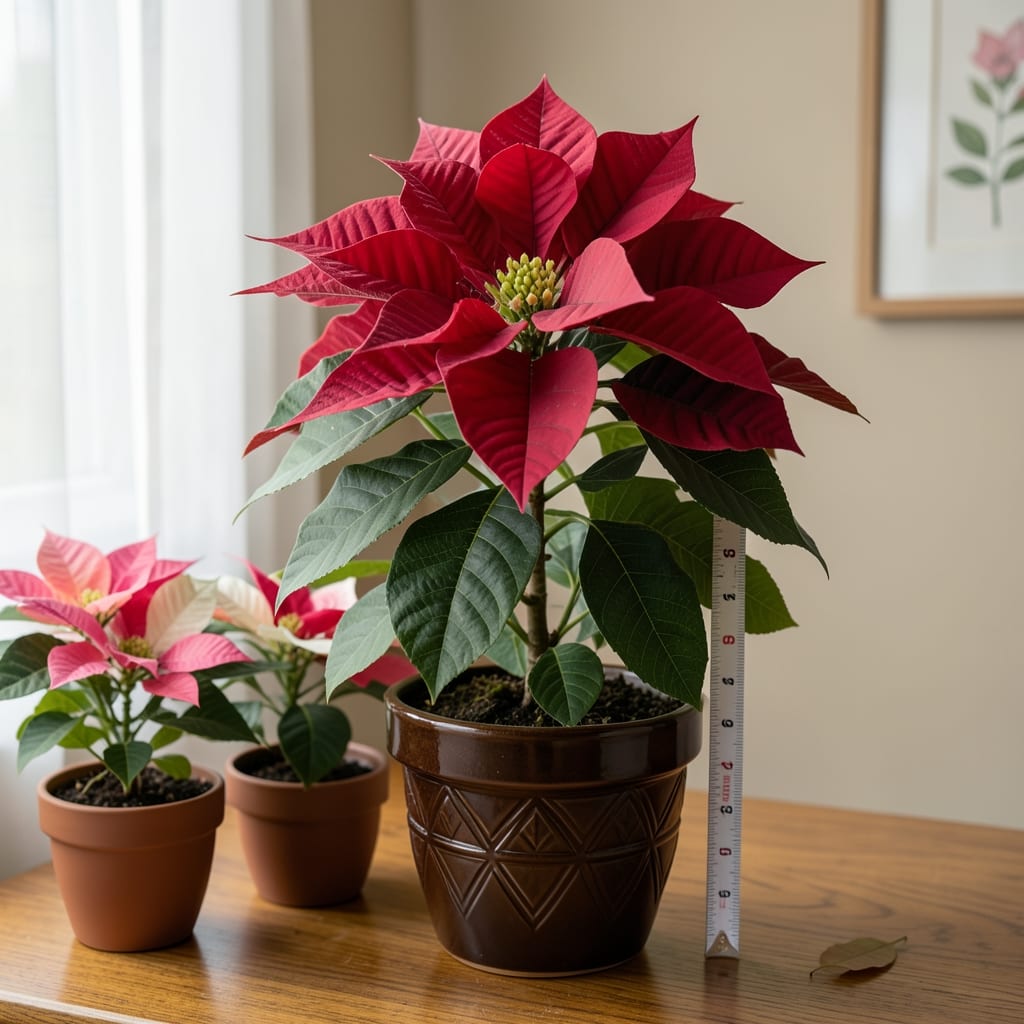
If you’ve ever wondered how tall a poinsettia can grow, you’re not alone. The answer depends on the variety you’ve got—and how you’ve cared for it. Some poinsettias stay compact and manageable, while others can stretch toward the ceiling if left unchecked.
Understanding the typical height range helps you set realistic expectations and avoid surprises. Whether you’re growing a dwarf variety for a small space or a tall standard type as a statement piece, knowing what to expect is key. I’ll break down the differences so you can choose the perfect poinsettia for your home.
But here’s the thing: even the same variety can vary in height based on care. Light, pruning, and pot size all play a role in whether your poinsettia stays short or shoots up like a holiday tree. Let’s explore how to keep it at your ideal height—or let it grow wild if that’s your style.
Ready to discover the secrets behind poinsettia growth? You’ll learn which varieties stay small, how to control height naturally, and why some plants seem to reach for the sky. Let’s get started!


Poinsettia height ranges by variety: from dwarf to giant
Poinsettias come in a stunning array of varieties, each with its own height potential. The difference between a dwarf poinsettia and a standard variety can be dramatic—sometimes over 2 feet! Choosing the right type for your space ensures your plant thrives without becoming a ceiling hazard. Let’s explore the most popular varieties and their mature sizes.
Most gardeners assume all poinsettias reach 3-4 feet tall, but that’s only true for standard varieties. Dwarf and semi-dwarf types are specifically bred to stay shorter, making them ideal for apartments, offices, or small tables. Even within the same variety, height can vary based on growing conditions and care routines.
Here’s what you need to know about the most common poinsettia varieties and their typical heights. Whether you’re decorating a mantel or filling a large room, there’s a poinsettia perfect for your needs.
| Variety | Mature Height | Growth Habit | Best For |
|---|---|---|---|
| Premium Red | 3-4 ft | Tall, bushy | Holiday centerpieces |
| Glory Glow | 2-3 ft | Compact, rounded | Tables, small spaces |
| Winter Rose | 1.5-2.5 ft | Dwarf, multi-branched | Desk plants, gifts |
| Easy Care | 2-3 ft | Medium, upright | Beginner growers |
| Jingle Bells | 2-3 ft | Semi-dwarf, bushy | Holiday displays |
The Winter Rose variety is a favorite for gardeners with limited space, often staying under 2 feet tall while still producing vibrant bracts. In contrast, the Premium Red variety can easily reach 4 feet or more, making it a statement plant for large rooms or outdoor displays during the holidays.
If you’re growing poinsettias for commercial purposes or large events, standard varieties like Premium Red or Easy Care are the way to go. But for home decor or gifting, dwarf varieties like Winter Rose or Glory Glow offer the perfect balance of beauty and manageable size.
One common misconception is that all poinsettias grow tall naturally. In reality, many varieties are bred to stay compact if given the right care. The key is understanding how light exposure, pruning, and container size influence height. For example, a Winter Rose left in a small pot with minimal pruning might stay under 2 feet, while the same variety in a large container with regular pruning could stretch toward 3 feet.
For gardeners who love variety, consider mixing different poinsettia types in your holiday decor. A tall standard variety as a backdrop with dwarf types on tables creates a stunning visual effect. Just remember: the height you achieve depends as much on your care routine as it does on the variety you choose.
Next, we’ll dive into the key factors that can limit or boost your poinsettia’s growth—and how to control them to get the height you want. Whether you’re aiming for a compact tabletop plant or a towering holiday centerpiece, you’ll have all the tools to succeed.
🌱
Factors that limit or boost poinsettia growth (and how to control them)
You’ve picked your poinsettia variety, but its final height depends on factors you might not realize you control. Light exposure, pruning habits, and even pot size can turn a 2-foot dwarf into a 4-foot giant—or keep it perfectly compact. Understanding these variables lets you shape your poinsettia’s growth to fit your space and style.
The biggest surprise for many growers? Poinsettias stretch toward light. Place yours in a north-facing window, and it’ll grow leggy and tall. Move it to a south-facing spot (with indirect light), and it’ll stay bushy and proportionate. Even a grow light 12-14 inches away can prevent that "holiday tree" look while keeping bracts vibrant.
Here’s the truth about what really controls your poinsettia’s height—and how to adjust it. Whether you’re dealing with a sprawling standard variety or a compact dwarf, these factors are your tools for success.
🌱 Growth Boosters vs. Growth Limiters
✅ Growth Boosters
- Bright indirect light (6+ hours/day)
- Large pots (2+ gallons for standards)
- Minimal pruning (let it grow naturally)
- Warmth (70-75°F during growth)
- Balanced fertilizer (5-10-5, every 4-6 weeks)
❌ Growth Limiters
- Low light (causes leggy, tall growth)
- Small pots (roots bound = stunted growth)
- Over-pruning (reduces branching)
- Cold drafts (slows growth, weak stems)
- No fertilizer (nutrient deficiency)
*Note: Dwarf varieties naturally stay short even with boosters, while standard types will grow tall unless limited.
Did you know your poinsettia’s pot size can add or subtract up to 12 inches from its height? A Winter Rose in a 5-gallon pot might reach 3 feet, while the same plant in a 1-gallon pot stays under 2 feet. The rule? Standard varieties need at least 2-gallon pots to reach their full height potential, while dwarf types thrive in 1-gallon containers or smaller.
Pruning is another game-changer. If you pinch back new growth every 6-8 weeks, your poinsettia will branch out instead of shooting upward. But skip pruning, and even a Winter Rose can stretch to 3 feet tall. The key is timing: prune in late spring or early summer to encourage bushiness before the fall flowering period.
One factor many gardeners overlook? Dormancy periods. Poinsettias naturally slow growth in late fall and winter. If you keep yours in warm, bright conditions year-round, it may continue growing—sometimes too tall for its variety. For compact growth, mimic its natural cycle: reduce water and light in winter months, then resume care in early spring.
Want to keep your poinsettia at a specific height? Combine these strategies: use a smaller pot, prune regularly, and place it in moderate light. Need it taller? Give it bright light, a large pot, and minimal pruning. The control is in your hands—and your holiday decor possibilities are endless!
🪴