
Size
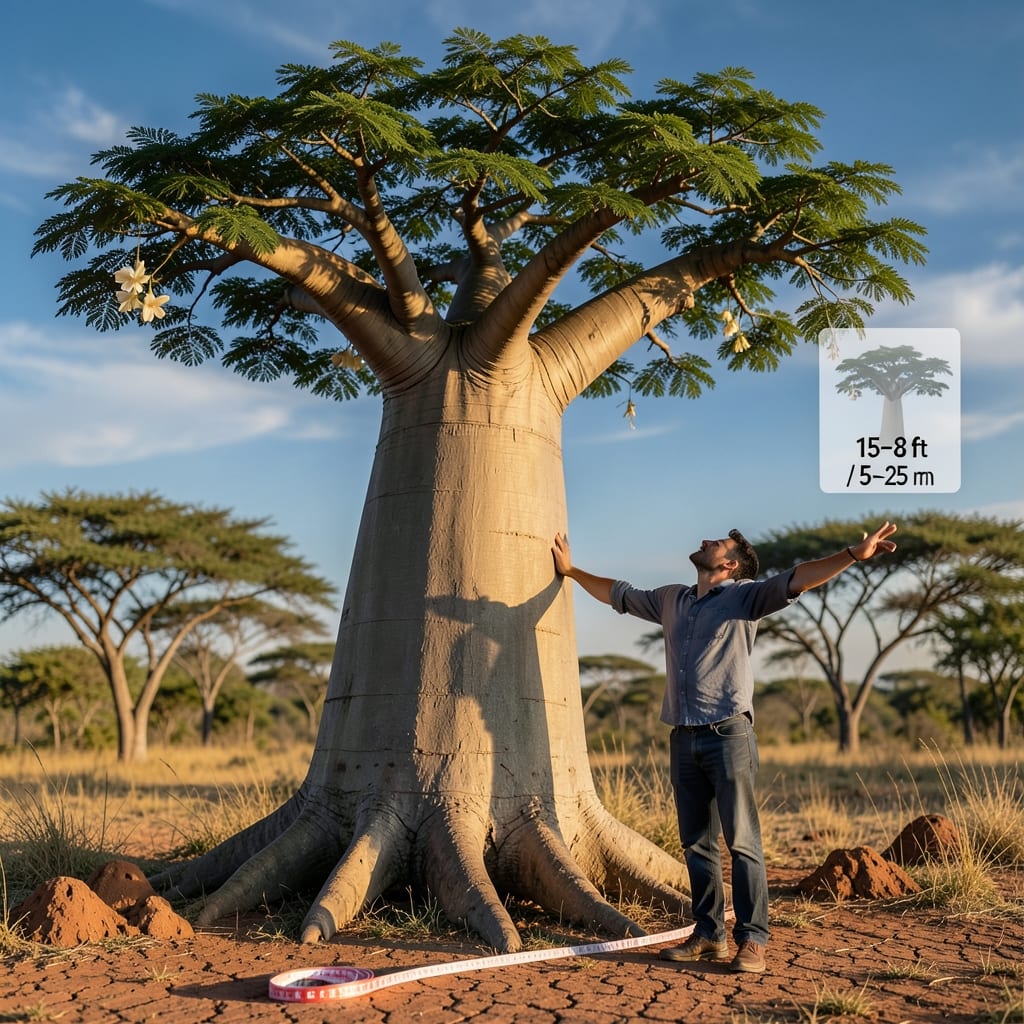
How tall can a baobab tree grow? If you’ve ever stood in awe of these ancient giants—like the legendary Sunland Baobab in South Africa—you already know the answer is mind-blowing. These 🌳 living skyscrapers can stretch up to 80 feet (or even taller in rare cases), rivaling a 10-story building in their prime. But their height isn’t just about genetics; climate, soil, and even human care play a surprising role in shaping their towering stature.
Native to Madagascar, Africa, and Australia, baobabs thrive in arid regions where few trees dare to grow. Their massive trunks store water like natural reservoirs, allowing them to reach staggering heights in USDA zones 9b-11, where frost is a death sentence. Yet, even in ideal conditions, growth is slow—a baobab might take decades to mature. For those dreaming of cultivating one, understanding these factors is the key to unlocking their full potential.
What’s even more fascinating is how species variations influence height. The Adansonia digitata, for example, often dwarfs its Australian cousins, while Madagascar’s baobabs sometimes defy expectations with their gnarled, ancient forms. Whether you’re a gardener, a nature enthusiast, or just curious about the world’s most iconic trees, this is your guide to the secrets behind their sky-piercing growth.
From record-breaking specimens to practical tips for growing your own (yes, it’s possible!), we’ll break down everything you need to know. Ready to discover how these desert titans reach for the heavens—and what it takes to nurture one of your own?


Baobab tree height records: tallest species compared by climate zones
Baobab trees aren’t just tall—they’re architectural marvels of nature, with some species reaching heights that defy imagination. The Adansonia digitata, or African baobab, holds the record for the tallest baobab ever measured at a staggering 82 feet, though most mature between 50–70 feet. These giants thrive in Africa’s arid savannas, where their massive trunks store water like natural reservoirs.
In contrast, Madagascar’s baobabs—like the Adansonia grandidieri—often grow wider rather than taller, with heights typically ranging from 40–60 feet. Their bottle-shaped trunks can span 30 feet in diameter, making them more about sheer volume than vertical dominance. Meanwhile, Australia’s Adansonia gregorii (also called the boab) tends to stay shorter, maxing out around 50 feet but with equally impressive girth.
Climate plays a critical role in determining height. African baobabs flourish in USDA zones 10–11, where year-round warmth and minimal frost allow them to grow taller. Madagascar’s species, however, often face seasonal droughts that limit their vertical growth, while Australian boabs adapt to semiarid conditions with slightly shorter stature. Soil depth also matters—deep, well-draining soil encourages taller growth, whereas shallow or rocky terrain stunts their potential.
Here’s how the top baobab species stack up in terms of height, climate preferences, and native regions:
The Sunland Baobab in South Africa is the most famous example of an African baobab’s height potential, standing at 82 feet with a trunk circumference of 150 feet. This tree isn’t just tall—it’s a living monument, with an estimated age of over 1,000 years. Its height is a testament to the perfect storm of deep soil, abundant sunlight, and minimal frost in its native habitat.
For those in USDA zones 9b–11, cultivating a baobab with similar height potential is possible, but it requires ideal conditions. Shallow soil or urban pollution can stunt growth, while consistent watering (even in drought-tolerant species) can encourage taller, straighter trunks. The key is mimicking their natural arid environments as closely as possible.
Even in botanical gardens, baobabs rarely reach their wild counterparts’ heights due to space limitations and soil constraints. However, with deep planting holes (at least 3–4 feet deep) and well-draining soil mixes, you can maximize their vertical growth. Patience is crucial—baobabs grow at a painfully slow pace, often taking 50+ years to reach maturity.
If you’re dreaming of a baobab skyline in your landscape, focus on the Adansonia digitata for the tallest results. Just remember: these giants need space, sun, and time to reach their full potential. For most home gardeners, a 40
Key factors that determine baobab tree height growth
Understanding how tall can a baobab tree grow starts with recognizing that their height isn’t just about time—it’s a complex interplay of nature’s building blocks. The most critical factor is soil depth and composition. Baobabs need deep, well-draining soil to support their massive root systems, which can extend 100 feet wide for every 1 foot of trunk height. In shallow soils, like those found in rocky African savannas, their growth is stunted, often resulting in shorter, wider trunks rather than towering heights.
Next, climate and rainfall patterns play a starring role. These trees thrive in arid regions with 12–25 inches of annual rainfall, where they’ve evolved to store water in their trunks like natural reservoirs. In areas with consistent droughts, baobabs grow taller to access deeper moisture, while regions with seasonal flooding can limit their height by suffocating their roots. For example, Madagascar’s baobabs often reach 60–80 feet in dry highlands, while Australian species in wetter coastal zones rarely exceed 40 feet.
Genetics and species variations also dictate height potential. The Adansonia digitata, native to Africa, holds the record for the tallest specimens, with some exceeding 100 feet in ideal conditions. Meanwhile, the Adansonia gregorii from Australia typically maxes out at 50–60 feet due to its adaptation to less extreme climates. Even within a species, individual genetics can influence growth rates—some baobabs grow 1–2 feet per year, while others add just 6 inches annually.
Critical for root expansion
Deeper soils = taller growth; shallow soils stunt height.
Droughts fuel height; flooding limits it
12–25" annual rain = optimal growth zone.
African baobabs outgrow Australian cousins
Adansonia digitata can exceed 100 ft; others max at 60 ft.
Frost kills; heat accelerates growth
USDA zones 9b–11 only—frost stunts or kills.
Deforestation vs. conservation
Protected trees grow 30% taller than logged counterparts.
Don’t overlook the role of temperature and frost sensitivity. Baobabs are frost-intolerant, thriving only in USDA zones 9b–11 where winter temperatures stay above 25°F. A single frost can kill young trees or stunt their growth, while consistent warmth in subtropical climates allows them to grow 2–3 feet per year during their prime. This is why the Sunland Baobab in South Africa—one of the tallest at 80 feet—flourishes in its near-tropical climate.
Finally, human activity can’t be ignored. Deforestation and logging have dramatically reduced baobab populations, with protected trees growing 30% taller than those in logged areas. In conservation zones like Botswana’s Moremi Reserve, baobabs reach their full height potential because they’re shielded from human interference. Even in cultivation, proper spacing and care can influence height—crowded baobabs grow wider but shorter, while isolated trees stretch skyward for sunlight.
For those dreaming of growing a baobab, remember: patience is key. These giants take decades to mature, but with the right soil, climate, and care, you can nurture a tree that rivals the legendary heights of Africa’s ancient forests. The secret? Mimic their natural habitat as closely as possible—deep soil, full sun, and drought-like conditions—and watch your baobab reach for the sky.