
Plants
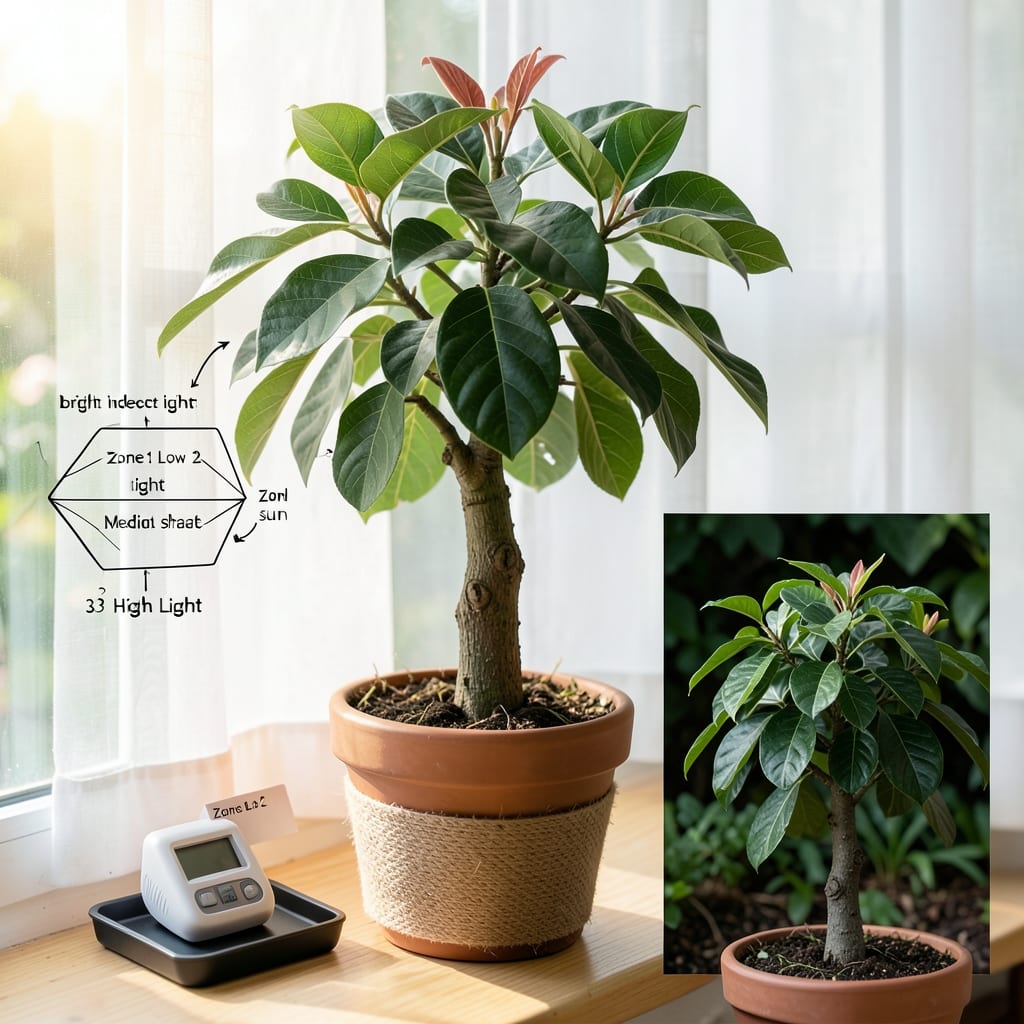
If you’re wondering how much light does an avocado plant need, the answer might be simpler than you think—it’s likely getting the wrong amount. Understanding how much light an avocado plant needs is the key to transforming a struggling seedling into a thriving, leafy green beauty.
Avocado plants are sun-worshippers, but they’re not as forgiving as some houseplants. Too little light, and you’ll see weak, leggy stems and pale leaves. Too much, and those beautiful leaves might start crisping at the edges. The sweet spot? At least 6 to 8 hours of bright, indirect sunlight daily—whether you’re growing it indoors by a sunny window or outdoors in your garden.
Don’t worry if your space isn’t naturally bright. I’ll show you how to mimic ideal conditions with grow lights, window placement tricks, and even seasonal adjustments to keep your plant happy year-round. With the right light strategy, you’ll be well on your way to a healthy avocado plant that could even produce fruit someday.
Ready to fix those yellowing leaves and give your plant the energy it craves? Let’s dive into the exact light requirements your avocado plant needs to thrive at every stage of growth.


Avocado plant light requirements by growth stage: seedling to fruit production
Avocado plants are sun-worshippers—they crave bright, direct light to grow strong and produce fruit. But their needs change dramatically from seedling to mature tree. As a gardener who’s nursed multiple avocado plants from seed, I’ve learned that 6+ hours of sunlight daily is non-negotiable, but the intensity and duration must shift with each growth phase. Let’s break it down by stage so you can give your plant exactly what it needs.
For seedlings (first 6 months), 4-6 hours of bright, indirect light is ideal. This prevents scorching while encouraging sturdy growth. Place them near an east-facing window or under a sheer curtain on a south-facing window. I once killed a seedling by placing it in direct midday sun—yellowing leaves and crispy edges were my first warning signs. Seedlings are delicate, so gradual acclimation is key.
Here’s where the summary-table comes in—it’s your quick-reference guide for adjusting light at every stage:
🌱 Avocado Plant Light Requirements by Growth Stage
| Growth Stage | Minimum Sunlight | Ideal Sunlight | Indoor Solution | Outdoor Placement |
|---|---|---|---|---|
| Seedling (0-6 months) | 4 hours | 4-6 hours (bright indirect) | East window or grow light 6 hrs/day | Partial shade (morning sun) |
| Juvenile (6-24 months) | 6 hours | 6-8 hours (direct) | South window + grow light 12 hrs/day | Full sun (afternoon shade in summer) |
| Mature (2+ years) | 8 hours | 8-10 hours (full sun) | Grow light 14 hrs/day + south window | Full sun year-round (USDA Zone 10+) |
| Fruiting Stage | 10+ hours | 10-12 hours (intense light) | High-output LED grow lights + supplemental light | Tropical climate or greenhouse |
When your avocado reaches the juvenile stage (6-24 months), it’s ready for 6-8 hours of direct sunlight. This is when you’ll see rapid growth—leaves darken, stems thicken, and roots expand. If growing indoors, a south-facing window paired with a grow light is your best bet. I use a 15W LED grow bulb on a timer for 12 hours daily during winter months when natural light drops. Without this, my plants stretch toward the light (etiolation) and become weak.
For mature avocado plants (2+ years), the stakes are higher—8+ hours of full sun is essential to support fruit production. Outdoors, this means planting in USDA Zones 9-11 where temperatures stay above 30°F. In cooler zones, a greenhouse or indoor grow room with supplemental lighting becomes a necessity. I’ve seen avocados produce fruit indoors with 14 hours of light daily, but the fruit is smaller and less flavorful than outdoor-grown varieties.
One critical mistake I’ve seen gardeners make is assuming more light is always better. Avocados in direct afternoon sun (12-4 PM) can suffer from leaf scorch, especially in hot climates. If you’re in a Zone 10+ area, provide afternoon shade during peak summer months. A simple 50% shade cloth can save your plant from irreversible damage. Even outdoor plants need protection during their most vulnerable stages.
If you’re growing your avocado from seed, be patient—it may take 3-5 years to reach fruiting stage. During this time, gradually increase sunlight exposure to avoid shocking the plant. Start with 2 hours of morning sun and slowly extend to full sun over 4-6 weeks. This hardening process mimics natural conditions and prevents leaf drop or stunted growth. I’ve had seedsling failures because I rushed this process—patience is key when nurturing an avocado from the ground up.
For those in indoor-only environments, don’t despair. With the right setup, you can still achieve fruit-bearing maturity. The trick is mimicking natural light cycles using a combination of south-facing windows and grow lights. Rotate your plant quarter-turns weekly to ensure even growth, and
Signs your avocado plant isn’t getting enough (or too much) light
Your avocado plant’s leaves tell a story—yellowing, browning, or stretching are all visual cues about its light struggles. As someone who’s revived multiple struggling avocado plants, I’ve learned to read these signs like a pro. Leggy stems and pale leaves scream "not enough light," while crispy edges and bleached spots mean "too much sun." Let’s decode these warning signals so you can fix them before permanent damage occurs.
When an avocado plant gets insufficient light, it stretches toward any available source—a condition called etiolation. You’ll notice long, weak stems with small, widely spaced leaves. This isn’t just unsightly; it weakens the plant’s structure, making it prone to falling over or breaking under its own weight. I once had a seedling that grew 3 feet tall but had leaves only 1 inch wide—a classic case of light deprivation. The fix? Move it to a brighter spot immediately and supplement with a grow light if natural light is limited.
Here’s a quick pros-cons-box to help you spot the difference between light deficiency and excessive light, plus how to correct each issue:
🌱 Light Stress Symptoms & Fixes
⚠️ Light Deficiency
- 🟡 Pale yellow leaves
- 🌿 Long, weak stems
- 🍃 Small, sparse leaves
- 📏 Slow growth
⚠️ Excessive Light
- 🔥 Brown, crispy edges
- 🌡️ Bleached or white patches
- 💧 Wilting despite watering
- 🌞 Leaf drop in extreme cases
If your avocado’s leaves are yellowing but staying green, it’s often a nutrient deficiency (like nitrogen or magnesium), but if they’re pale and thin, it’s almost always light starvation. I’ve seen gardeners confuse this with overwatering, but the key difference is that waterlogged soil causes drooping leaves, while light deprivation causes stretching. To test, gently tug on a leaf—if it feels soft and weak, it’s a light issue; if it’s crispy, it’s too much sun.
On the flip side, too much light causes oxidative stress, leading to leaf scorch. You’ll spot brown, papery edges first on older leaves, followed by yellowing between veins. This is your plant’s way of saying, "I’m getting sunburned!" The fix? Move your plant to a shadier spot or use a 50% shade cloth during peak afternoon sun (12-4 PM). I learned this the hard way when my outdoor avocado in Zone 10 lost half its leaves in one summer—now, I always keep a removable shade screen on hand.
One common misdiagnosis is blaming pests or diseases for leaf issues when light is the real culprit. For example, aphids might cluster on weak, leggy stems caused by low light, creating a vicious cycle. Always check light conditions first before reaching for pesticides. If you’ve ruled out pests, diseases, and over/under-watering, light is likely the root cause. A quick 180-degree rotation of your plant can also reveal uneven light exposure—if one side is darker or more stretched, it’s getting less light.
Pro tip: Monitor your avocado’s leaves weekly for early signs of stress. A healthy leaf should be deep green, firm, and glossy. If you catch light-related issues early, your plant can bounce back in 2-4 weeks with the right adjustments. For persistent problems, consider a light meter (around $20) to measure foot-candles—avocados thrive at 2,000-5,000 foot-candles of light.