
Plants
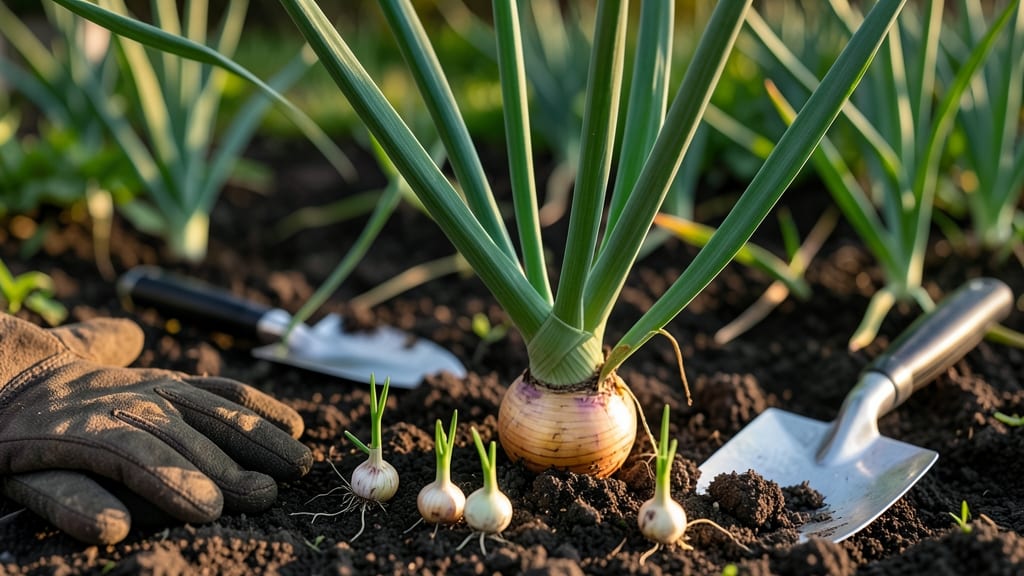
West Virginia onion planting calendar by hardiness Zone (5b-7a)
West Virginia’s diverse hardiness zones (5b-7a) create unique challenges for onion growers. In Zone 5b, where winters are colder, you’ll need to adjust planting dates to avoid late frosts, while Zone 7a gardeners can push boundaries with extended fall planting.
Understanding these zones helps you align your planting with soil temperatures and daylight hours for success.
Onions thrive when soil temperatures reach 40°F (4°C)—the magic number for germination. In WV, this typically happens in early March for Zone 7a and mid-April for Zone 5b.
Using seedlings or sets instead of seeds gives you more flexibility to time planting with these conditions, especially in cooler zones.
Spring planting is the most common approach, but fall planting can extend your harvest season. For fall, aim to plant 8-10 weeks before the first frost (typically August-September in WV). This timing ensures bulbs mature before winter sets in, giving you a second harvest opportunity.
| Zone | Spring Planting Window | Fall Planting Window | Soil Temp Requirement | Notes |
|---|---|---|---|---|
| 5b | April 1-15 | August 20-Sept 5 | 45°F (7°C) | Use mulch for frost protection |
| 6a | March 20-April 10 | August 15-Sept 1 | 40°F (4°C) | Ideal for short-day varieties |
| 7a | March 10-April 5 | August 10-Sept 15 | 38°F (3°C) | Extended growing season possible |
Daylight length plays a crucial role in onion bulb formation. Short-day varieties (like ‘Texas Early White’) perform best in WV’s 10-12 hour daylight windows, while intermediate-day varieties (like ‘Candy’) adapt well to the region’s transitions.
Always check seed packets for day-length requirements—this determines whether your onions will form bulbs or go to seed.
For Zone 5b gardeners, consider using a cold frame or row covers to extend your planting window by 2-3 weeks. This simple trick can mean the difference between a failed crop and a thriving harvest.
In Zone 7a, you might even squeeze in a late spring planting (May) for green onions or scallions, though bulbs won’t fully develop.
Soil preparation is just as critical as timing. Onions prefer well-draining, slightly acidic soil (pH 6.0-7.0). Work in compost or aged manure 2-3 weeks before planting to improve fertility.
In WV’s heavy clay soils (common in the northern panhandle), amending with sand or peat moss can prevent waterlogging, which onions hate.
Pro tip: Plant onions in succession every 2 weeks to ensure a continuous harvest. This staggered approach works especially well for green onions or scallions, which mature faster than bulb onions. For bulb onions, focus on 3-4 plantings spaced 3 weeks apart in spring for a steady supply.
Monitor your local frost dates using resources like the West Virginia State Climate Office. Their frost prediction maps can help you fine-tune your planting schedule year after year. Remember, onions are hardy to 20°F (-7°C), but young seedlings won’t tolerate prolonged freezing.
Finally, keep an eye on soil moisture after planting. Consistent watering (about 1 inch per week) prevents bolting—the process where onions flower instead of bulbing. Mulching with straw or grass clippings helps retain moisture and regulate soil temperature, which is especially helpful in WV’s unpredictable spring rains.
How to adjust onion planting dates for WV’s microclimates
West Virginia’s diverse geography—from the Allegheny Mountains to the Ohio River Valley—creates microclimates where last frost dates can vary by weeks. High-elevation areas like Lewisburg (Zone 5b) often see frost until May 10, while lower valleys like Charleston (Zone 7a) may skip frost entirely.
Adjust your planting dates accordingly to avoid frost damage or bolting.
Urban gardeners in Charleston or Huntington can push spring planting to mid-April, but mountain gardeners should wait until late April or early May. For fall planting, urban areas can start as early as mid-August, while high-elevation zones should delay until early September.
🌱 Pro Tip: Use frost cloth for early spring starts in cooler microclimates. This extends your planting window by 2-3 weeks without risking frost damage.
- High Elevation (Zones 5b-6a): Wait until after April 20 for spring sets. Fall planting should start no earlier than September 1.
- River Valleys (Zones 6b-7a): Plant spring sets by March 25 and fall sets by August 15.
- Urban Gardens (Zones 6a-7a): Start spring sets indoors by February 15 or direct-sow by March 10.
- Late Starts: If frost delays planting, use 6-week-old seedlings instead of sets for a 2-week earlier harvest.
- Extending Harvests: Succession plant every 2 weeks in spring for a continuous supply until July.
For container gardening in cities, choose short-day varieties like ‘Candy’ or ‘Texas Early White’—they mature 10-14 days faster than long-day types. Containers also warm up faster, letting you plant 1-2 weeks earlier than ground gardens.
🌿 Warning: Avoid planting onions in low-lying areas where cold air pools. These spots can see frost 2-3 weeks later than surrounding regions, risking stunted growth or rot.
Monitor local Almanac frost predictions and adjust your schedule. In 2023, Charleston’s last frost was April 5, while Beckley’s was May 12—a 27-day difference. Use this data to fine-tune your planting for maximum bulb size and flavor intensity.