
Plants
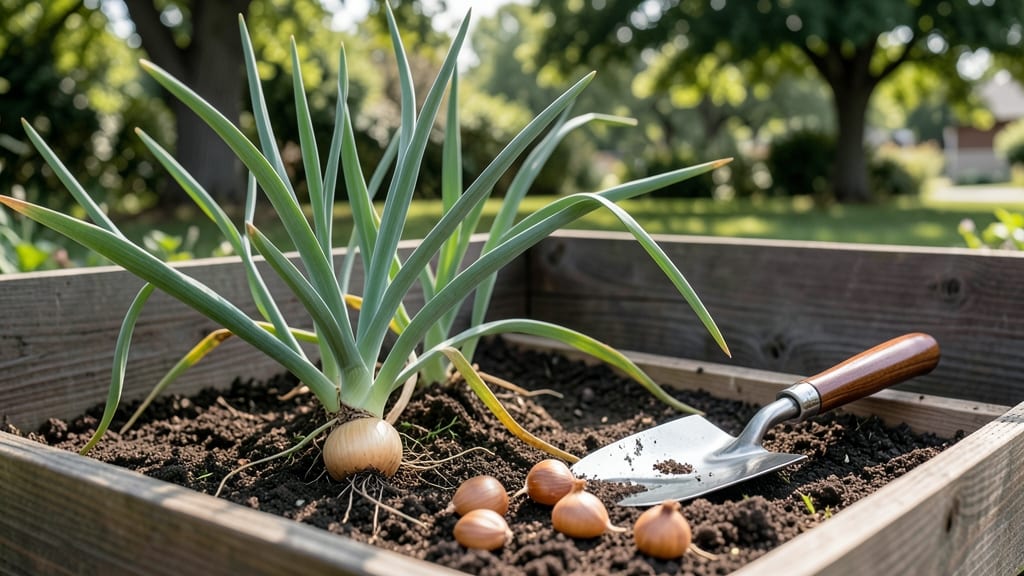
Montana’s onion planting calendar: frost dates by region (with zero-bolt guarantees)
Montana’s diverse climate—from the frigid Rockies to the warmer valleys—means your onion planting timing should match your USDA zone and microclimate. In Zone 3a (northern MT), you’ll plant later than in Zone 7a (southern MT), but both regions risk bolting if you’re off by even a week.
The key? Plant sets or transplants 4–6 weeks before your last frost date—or in late summer for a fall harvest.
Bolting (premature flowering) is your worst enemy in Montana. Short-day onions (like ‘Evergreen Hardy White’) bolt when daylight stretches too long, while long-day varieties (like ‘Red Baron’) need 14+ hours of daylight to form bulbs. Montana’s summer days are long—so timing is everything.
Here’s how to avoid bolting: Start spring onions in early March to mid-April (before daylight exceeds 14 hours), and plant fall onions in late July to early August for a harvest before the first frost. Use local frost data from the Montana State University Extension to fine-tune your schedule.
🌱
| Region | USDA Zone | Last Frost | Spring Planting Window | Fall Planting Window | Best Varieties |
|---|---|---|---|---|---|
| Northern MT (e.g., Glacier NP, Missoula) | 3a–5a | May 1–15 | March 15–April 15 | July 20–August 10 | ‘Evergreen Hardy White’, ‘Sweet Sandwich’ |
| Western MT (e.g., Bozeman, Butte) | 4a–6a | April 15–May 1 | March 1–April 1 | July 10–July 30 | ‘Red Baron’, ‘Candy’ |
| Southern MT (e.g., Billings, Miles City) | 6a–7a | April 1–April 15 | February 28–March 31 | July 1–July 20 | ‘Texas Early White’, ‘1015Y Yellow’ |
| High-Altitude (e.g., 5,000+ ft) | 2b–4a | May 15–June 1 | April 1–April 30 | August 1–August 15 | ‘Sweet Sandwich’, ‘Yellow Granex’ |
For high-altitude areas (like Big Sky or Whitefish), delay planting until soil temps hit 40–50°F. Use a soil thermometer to confirm—cold soil slows germination and invites rot. In Zone 7a, you can even start onions indoors in February for an early transplant.
Pro tip: If you’re in a microclimate (like a south-facing slope or urban heat island), push your planting dates 1–2 weeks earlier. These pockets can add 5–10°F warmth and extend your growing season.
Always plant sets (small bulbs) rather than seeds in Montana—seeds take too long to mature before frost. Sets sprout faster and give you a 60–90-day harvest instead of the 120+ days seeds require.
For green onions, you can plant them anytime soil is workable (even in late fall for a spring harvest).
🌿
To maximize your harvest, pair onions with companion plants like carrots or lettuce, which deter pests and improve soil structure. Avoid planting near beans or peas—they compete for nutrients and stunt onion growth.
Bolting is preventable in Montana if you respect the 14-hour daylight rule. For spring plantings, aim to harvest before June 21 (the summer solstice). For fall plantings, harvest before the first frost—usually by mid-September in southern MT or late September in western MT.
🧅
3 Critical factors that determine your onion planting success in Montana (and how to control them)
Montana’s unpredictable frost dates and cool soil temperatures can derail even the most eager gardener’s onion plans. But by mastering these three critical factors, you’ll outsmart Mother Nature and grow bolting-free onions every season. Let’s dig in!
First, soil temperature is your #1 enemy—or ally. Onions need 40–50°F soil to germinate, but if it’s too cold, they’ll rot. Too warm? They’ll bolt before bulbing. Use a soil thermometer to check depth—plant only when temps hit that sweet spot.
🌱 Did You Know? You can warm cold soil faster by covering beds with black plastic mulch 1–2 weeks before planting. This trick adds 5–10°F to soil temps overnight, giving you an earlier start.
Next, frost prediction isn’t just about last-frost dates—it’s about microclimates. A south-facing slope might be 2–3 weeks earlier than your neighbor’s flat yard. Check NOAA’s frost maps and cross-reference with your local Montana State University Extension office for hyper-local data.
Here’s how to control microclimates for onions:
- Plant near stone walls or buildings to trap heat
- Avoid low-lying areas where cold air pools
- Use row covers to push spring planting 2–3 weeks earlier
💡 Pro Tip: For fall-planted onions, aim to harvest before first hard frost (below 25°F). In USDA Zone 4 (northern MT), that’s usually late September—so plant sets by July 15 for a reliable crop.
Finally, organic mulching is your secret weapon. A 4-inch layer of straw or leaves after planting:
- Keeps soil temps stable (no more bolting from heat spikes)
- Retains moisture during Montana’s dry spells
- Suppresses weeds that compete with onions
Remove mulch 2 weeks before harvest to let bulbs dry and cure properly.
With these three factors locked in—soil temp, microclimate, and mulching—your Montana onion garden will be bolting-proof and ready for harvest. Now go plant with confidence!
✂️