
Plants
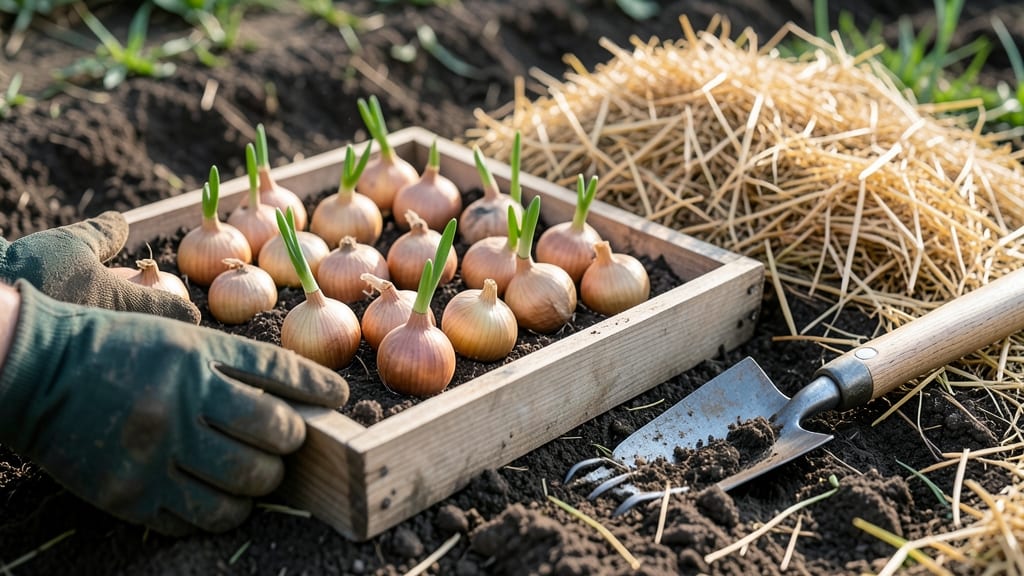
Timing your 🧅 onion sets just right in Colorado can make or break your harvest—plant too early, and you risk bolting; too late, and your crop suffers.
With frost dates shifting from Zone 5 to Zone 7 and high-altitude areas playing by their own rules, knowing the exact window is the key to success.
Most Colorado gardeners swear by early spring planting (March-April), but late summer options (August-September) work too—especially for overwintering varieties. The trick? Avoiding soil temperatures below 40°F while giving your onions enough time to mature before the first frost hits.
I’ll break down the perfect planting windows for your specific frost zone, plus how to adjust for Colorado’s unpredictable weather. Whether you’re on the Front Range or Western Slope, these tips will help you dodge common pitfalls and grow onions that rival the grocery store—without the chemicals.
Ready to master the art of onion planting? Let’s dive into the frost-date cheat sheet that’ll save you time, money, and a whole lot of frustration.
Colorado onion set planting dates by frost Zone (with exact months)
Colorado’s diverse USDA zones (4-8) create unique challenges for onion set planting. Unlike flatter states, our elevation shifts dramatically—even within a single county—meaning frost dates can vary by weeks.
For example, Denver (Zone 5b) might see its last frost around April 15, while Grand Junction (Zone 7a) could be frost-free by March 15. Understanding these differences is key to avoiding bolting (when onions flower prematurely) or stunted growth.
Onion sets thrive when planted 4-6 weeks before your last frost date for spring harvests or 8-10 weeks before your first frost for fall plantings. In Colorado, this typically translates to March-April for spring and August-September for fall.
However, high-altitude areas (6,000+ ft) like the Rocky Mountain foothills often need adjustments—planting 2-3 weeks later to account for lingering cold snaps.
Use this frost-date cheat sheet to pinpoint your exact planting window. For instance, if you’re in Zone 5 (Front Range), aim for March 20-April 10 for spring plantings, while Zone 7 (Western Slope) gardeners can start as early as March 1-15.
Fall plantings should align with your first frost date, typically October 15-November 1 across most zones.
If you’re unsure about your last frost date, err on the side of caution. Onion sets are hardy to 20°F, but prolonged cold below 10°F can damage them.
For high-altitude gardeners (e.g., Telluride or Leadville), consider using black plastic mulch or row covers to warm the soil and extend your planting window by 1-2 weeks.
For fall plantings, aim to get seeds in the ground 8-10 weeks before your first frost. This gives onions enough time to establish roots before winter dormancy.
In Zone 5-6, this usually means mid-August to early September. Fall-planted onions often produce larger bulbs because they grow undisturbed through winter and into spring.
Colorado’s unpredictable weather can throw off even the best-laid plans. For example, a late April frost in Zone 5 might delay planting until May 1, while an early heatwave in Zone 7 could push gardeners to plant as early as February.
Always have a backup planting date in mind—typically 2-3 weeks later than your ideal window.
One common mistake is planting too early in Zone 4-5 areas. Onion sets planted in February may bolt by May due to long daylight hours. To prevent this, use shade cloth or plant bolting-resistant varieties like ‘Texas Early White’ or ‘Sweet Sandwich.’
For Zone 7-8, early planting is less risky, but avoid planting before February 15 to give bulbs time to mature before summer heat
How to adjust onion set planting for Colorado’s unpredictable weather patterns
Colorado’s weather can throw a wrench into even the best-laid gardening plans. One day it’s 50°F and sunny, the next it’s 20°F with hail. For onion sets, these swings mean the difference between a thriving crop and wasted sets.
The key? Flexibility. I’ve planted onions in Denver’s Zone 5 and Grand Junction’s Zone 6, and I’ve learned to adjust my timing based on real-time conditions—not just the calendar.
Start by monitoring soil temperatures. Onion sets need soil that’s at least 40°F to thrive. Use a soil thermometer to check—if it’s colder, wait.
In high-altitude areas like Fort Collins or Boulder, soil warms slower, so you may need to delay planting by 1-2 weeks compared to lower elevations. Pro tip: Lay down black plastic mulch a week before planting to warm the soil faster.
Row covers are my secret weapon against late frosts. If a 28°F freeze is forecasted after planting, throw a lightweight row cover over your onions. It adds just 2-4°F of protection and can save your crop when the forecast turns icy.
I’ve used them in April and October to extend the growing season for fall-planted onions.
🌱 5 Pro Tips for Colorado’s Wild Weather
- Wait for consistent 50°F+ soil temps—cold soil = stunted growth.
- Plant in raised beds—warms faster than ground soil in spring.
- Use row covers for early/late season protection (remove when blooming).
- Adjust for altitude—add 1 week delay per 1,000 ft elevation.
- Have backup dates—if spring planting fails, try August-September.
If you’re in Zone 5 or 6, consider a backup planting. Early spring might fail due to frost, but late summer (August) can still yield a harvest before winter.
Choose short-day varieties like ‘Texas Early White’ for fall plantings—they mature faster in Colorado’s short season. Just plant them 8-10 weeks before your first frost.
Drought is another Colorado wildcard. Onions need consistent moisture, but too much water causes rot. In dry years, mulch heavily with straw to retain moisture. I’ve seen onions bolt from stress—either too dry or too wet.
Aim for 1 inch of water per week, adjusting for rainfall. A drip irrigation system on a timer works best to avoid overhead watering.
Finally, keep an eye on the weather forecast and your onions’ progress. If they start bolting (sending up a flower stalk), it’s too late to save that batch—but you’ll learn for next year.
For me, the sweet spot in Colorado is planting mid-April to early May in most zones, with a fall backup in August. Adjust based on your microclimate, and don’t be afraid to experiment!