
Plants
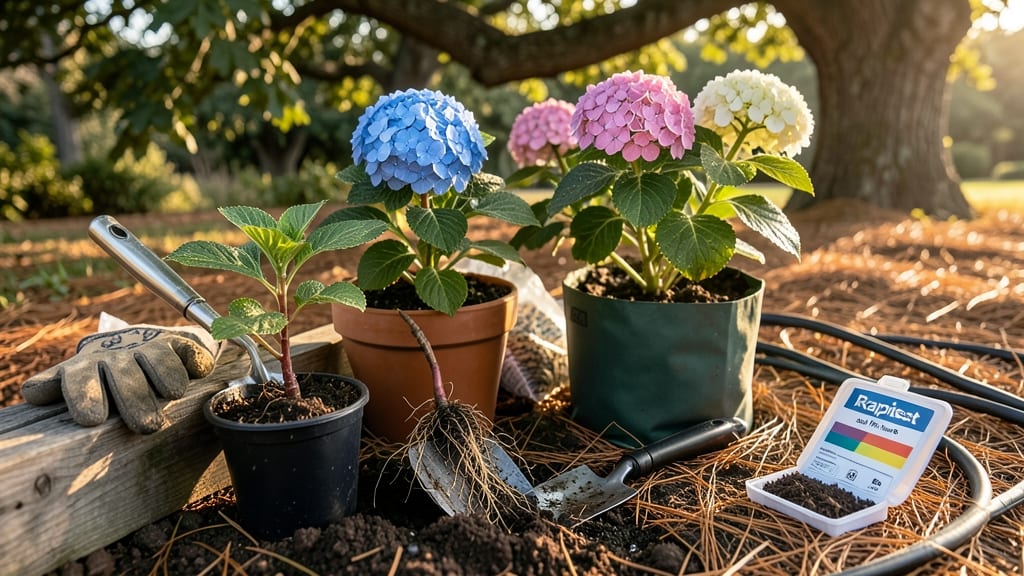
Timing your hydrangea planting in Arkansas could mean the difference between vibrant blooms all summer and struggling shrubs that never reach their potential. The key isn't just picking a random month—it's understanding your specific zone's frost dates and how they impact your 🌸 hydrangea's growth cycle.
In zones 7a-8b, you've got two prime windows: early spring (March-May) when the soil warms up, or fall (September-November) when summer heat has passed. But here's the catch: planting too early risks frost damage, while waiting too late might stunt your plant's root development before winter hits.
I'll walk you through exactly when to plant based on Arkansas's microclimates, how to prepare your soil for maximum success, and which hydrangea varieties handle our heat and humidity best. Let's get those roots established just right so you can enjoy show-stopping flowers from season to season.
The secret to thriving hydrangeas in Arkansas isn't complicated—it's about working with your climate, not against it. You'll learn how to read your local frost patterns, adjust for container vs. in-ground planting, and even find the best local nurseries for zone-specific varieties that will flourish in your backyard.
Arkansas hydrangea planting deadlines by hardiness Zone (7a, 7b, 8a)
Arkansas spans USDA Hardiness Zones 7a through 8b, meaning your last frost date can vary by 2-3 weeks depending on where you live. In Zone 7a (northern Arkansas), frosts linger until mid-April, while Zone 8a (southern Arkansas) typically sees its last frost by early March.
Timing your hydrangea planting after these dates ensures your plants establish roots before summer heat arrives.
Most Arkansas gardeners plant hydrangeas in two ideal windows: early spring (March-April) and early fall (September-October). Spring planting gives roots 4-6 months to establish before winter, while fall planting lets them settle in before dormancy.
Container-grown hydrangeas have flexible timing—you can plant them up to 2 weeks later than in-ground varieties since their roots are already established.
🌱 Arkansas Hydrangea Planting Timeline by Zone
| Zone | Last Frost Date | Spring Planting Window | Fall Planting Window | Container Flexibility |
|---|---|---|---|---|
| 7a (N. AR) | Mid-April | April 15 - May 15 | Sept 15 - Oct 15 | +2 weeks |
| 7b (Central AR) | Late March | March 30 - April 30 | Sept 1 - Oct 10 | +2 weeks |
| 8a (S. AR) | Early March | March 1 - April 15 | Sept 1 - Oct 5 | +3 weeks |
🌡️ Adjust for microclimates—valleys frost later, hillsides earlier!
If you’re in Zone 7a, avoid planting before April 15—late frosts can still occur. In Zone 8a, you can push spring planting to mid-April since the risk of frost is minimal.
For fall planting, aim to finish by October 15 in northern Arkansas to allow roots to establish before winter chill sets in.
Microclimates play a huge role in Arkansas. If you’re in a valley or low-lying area, expect later frosts and plant 2 weeks later than the zone average. Conversely, hilltops or urban areas (like Little Rock) warm up faster, so you can plant earlier.
Always check your local Cooperative Extension Service for hyper-local frost data—they track real-time conditions.
For container-grown hydrangeas, the rules are more flexible. Since their roots are already established, you can plant them up to 2-3 weeks later than bare-root plants. This is especially useful if you’re waiting for the perfect spot or dealing with unpredictable spring weather.
Just ensure your container has drainage holes and use a well-draining potting mix to prevent root rot.
One common mistake Arkansas gardeners make is planting hydrangeas too early in February. While it might seem like a good idea to get a head start, cool soil temperatures slow root growth, and late frosts can damage tender new shoots.
Wait until the soil temperature reaches at least 50°F—use a soil thermometer to check if you’re unsure.
If you miss the spring window, don’t panic—fall planting is just as effective. Hydrangeas planted in September or early October will have 6-8 weeks to establish roots before winter dormancy.
Just avoid planting in late October or November, as the ground freezes too quickly for roots to settle in.
Pro tip: If you’re planting in clay-heavy soil (common in the Arkansas Delta), amend the soil with compost or peat moss to improve drainage. Hydrangeas hate waterlogged roots, and Arkansas’s humid summers can turn soil soggy quickly.
A 50/50 mix of native soil and organic matter works wonders for root health.
Finally, always water deeply after planting—hyd
Signs your Arkansas soil is ready for hydrangeas (and how to fix common issues)
Hydrangeas thrive in well-draining, slightly acidic soil with a pH between 5.2 and 6.0. In Arkansas, many regions—especially the Delta and Ouachita Mountains—have heavy clay soil that can suffocate roots. Before planting, test your soil to avoid common pitfalls like root rot or stunted growth.
Start by checking your soil’s drainage test: Dig a 12-inch hole, fill it with water, and time how long it takes to drain. If it takes longer than 4 hours, your soil is too compacted.
Arkansas’s humid summers also mean soil can become waterlogged quickly, so improving drainage is critical.
🌱 Did You Know? Clay-heavy Arkansas soil holds moisture too long, causing hydrangea roots to suffocate. Amending with organic matter like compost or pine bark fines can transform your soil in just 3-4 months.
⚠️ Warning: Arkansas-Specific Soil Risks
- Clay soil (common in Delta regions) drains poorly → Root rot risk
- Alkaline soil (pH > 7.0) blocks nutrient uptake → Pale leaves
- Compacted soil (from heavy rainfall) restricts root growth → Stunted blooms
Test your soil with a DIY pH kit ($10 at garden centers) or send a sample to the University of Arkansas Extension Office for a free analysis.
To prepare your Arkansas soil, mix in 3-4 inches of compost or aged manure into the top 12 inches of soil. For clay-heavy areas, add sand or perlite (20% of the soil mix) to improve aeration.
If your soil is too alkaline, apply elemental sulfur (1 lb per 100 sq ft) and retest in 6 weeks.
Hydrangeas also need consistent moisture, but Arkansas’s hot, humid summers can lead to fungal issues if water pools around roots. Mulch with 3-4 inches of pine straw to retain moisture while preventing soil compaction. Reapply mulch annually in early spring.
For container-grown hydrangeas, use a well-draining potting mix with 20% perlite or vermiculite. Arkansas’s summer heat can dry out pots quickly, so water containers every 3-5 days during peak heat. Always check soil moisture by sticking your finger 1 inch deep—if it’s dry, water thoroughly.
Finally, avoid planting hydrangeas in low-lying areas where water collects after rain. Arkansas’s flash floods can drown roots overnight. Choose a spot with slightly elevated ground and partial shade (morning sun, afternoon shade) for optimal growth.