
Trees
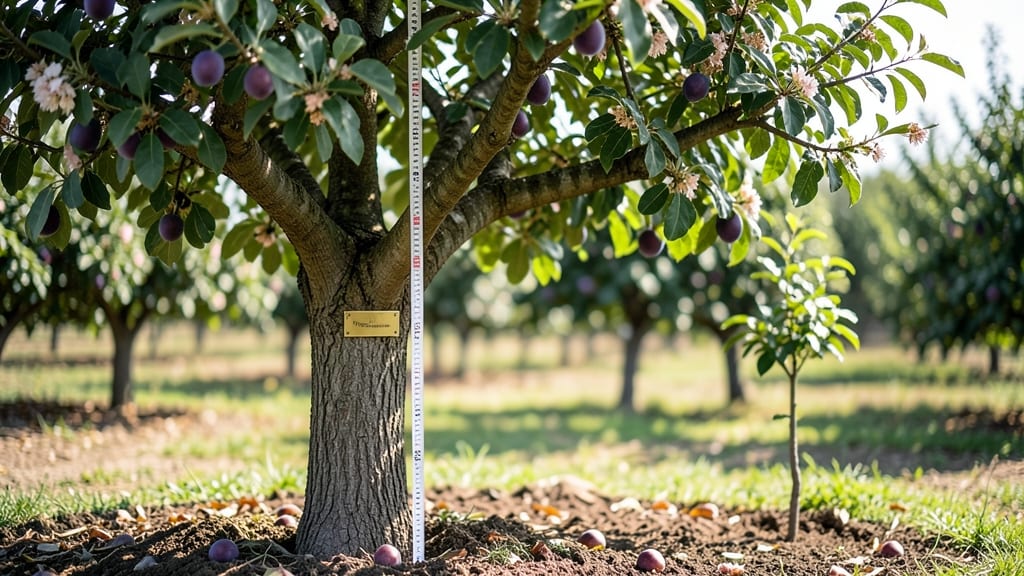
Have you ever wondered just how tall your plum tree could grow? The answer varies more than you might think—from a compact 8-foot dwarf variety that fits neatly in a backyard to towering 30-foot giants that need room to stretch their branches.
Knowing these differences is the key to picking the perfect plum tree for your space and ensuring it thrives for years to come.
Plum trees like the 🍑 Santa Rosa stay manageable, while others like Stanley reach impressive heights. But size isn’t just about the variety—soil, climate, and pruning all play a role in shaping your tree’s growth.
Whether you’re dreaming of a small orchard or a single statement tree, understanding these factors will help you plan for the future.
In this guide, I’ll break down the growth stages of plum trees, from sapling to maturity, and share tips for controlling their height. You’ll learn how to maximize fruit production while keeping your tree at the perfect size for your garden. Let’s get started!
Ready to make an informed choice? The right plum tree can transform your outdoor space—whether you want a low-maintenance dwarf or a sprawling centerpiece. Discover how to nurture it from the ground up for the best results.


Plum tree height by variety: dwarf to standard to giant sizes
Plum trees come in an incredible range of heights, from dwarf varieties that fit neatly in small yards to towering giants that dominate large landscapes. The right choice depends on your space, climate, and whether you prioritize fruit production or ornamental value.
Let’s break down the height spectrum so you can pick the perfect plum tree for your garden.
Most plum trees fall into four height categories: dwarf (6-12 ft), semi-dwarf (12-18 ft), standard (18-30 ft), and giant (30+ ft). Dwarf varieties are ideal for containers or urban gardens, while standard and giant types thrive in rural settings with ample space.
Your choice will also impact fruit yield, pruning needs, and even pollination requirements.
| Variety Type | Mature Height Range | Examples | Best For |
|---|---|---|---|
| Dwarf | 6–12 ft | Santa Rosa, Methley, Lapins | Containers, small yards, urban gardens |
| Semi-Dwarf | 12–18 ft | Stanley, Japanese Plums (e.g., 'Blackamber') | Backyards, mixed borders, moderate spaces |
| Standard | 18–30 ft | European Plums (e.g., 'President'), Wild Plums | Rural gardens, orchards, large properties |
| Giant | 30+ ft | Wild Plum Species (e.g., Prunus americana) | Natural landscapes, wildlife habitats |
🌱 Note: Height can vary by 20% based on growing conditions.
Dwarf plum trees, like the 'Santa Rosa', are grafted onto stunted rootstock to keep them compact. These varieties produce fruit just as abundantly as their taller counterparts but require less space and minimal pruning.
They’re perfect if you’re growing plums in containers or have limited yard space. Just ensure they get full sun exposure and well-draining soil to thrive.
Semi-dwarf varieties strike a balance, offering moderate height (12-18 ft) with manageable pruning needs. The 'Stanley' plum, for example, is a popular choice for home orchards because it produces large, flavorful fruit while staying small enough for suburban yards.
These trees often require annual pruning to maintain shape and encourage airflow, reducing disease risk.
Standard plum trees, like the 'President' variety, reach 20-30 feet at maturity, making them ideal for rural gardens or orchards. These trees produce heavy fruit loads and thrive in cooler climates, but they need ample space to avoid shading out nearby plants.
If you’re planting one in your yard, consider its root spread, which can extend 10-15 feet beyond the canopy.
Giant plum trees, often wild varieties like Prunus americana, can grow over 30 feet tall and are best suited for natural landscapes or wildlife-friendly gardens. These trees are low-maintenance but may produce smaller, less uniform fruit.
They’re excellent for ecological benefits, providing food for birds and other wildlife while adding dramatic height to your property.
When selecting a plum tree, also consider its growth habit. Some varieties grow upright and columnar, while others develop a spreading canopy. Upright types, like 'Methley', are great for tight spaces, whereas spreading varieties, like 'Blackamber', create a lush, ornamental look.
Always check the USDA hardiness zone for your region to ensure the variety will thrive in your climate.
For fruit production, dwarf and semi-dwarf trees often yield fruit 1-2 years earlier than standard varieties due to their smaller size and focused energy. However, standard and giant trees can produce larger quantities of fruit over time.
If you’re growing plums for commercial purposes, a mix of dwarf and standard trees can optimize both space efficiency and harvest volume.
Finally, remember that soil quality, watering practices, and pruning techniques can influence how close your plum tree stays to its expected height. Poor soil or over-pruning can stunt growth, while rich compost and proper training can encourage healthier, fuller trees.
With the right care, even a dwarf plum tree can reach the upper limits of its height range.
How fast plum trees grow: annual height increases by age
Plum trees grow at different rates depending on their age and variety. In their first year, expect a sapling to reach 2-4 feet with ideal care. This rapid growth continues in year two, where most varieties shoot up another 4-6 feet, often reaching 6-10 feet total.
By year three, your plum tree will likely hit 12-18 feet, especially if planted as a semi-dwarf variety.
The growth slows as trees mature, with standard varieties adding only 1-2 feet per year after their first decade. Dwarf types like 'Santa Rosa' may plateau earlier, while giant varieties like 'Stanley' continue climbing for years.
Understanding these stages helps you plan for space and pruning needs before your tree outgrows its spot.
🌱
📏 Plum Tree Growth by Age
- 🌱 Year 1: 2-4 ft (rapid root/shoot development)
- 🌳 Year 2-3: 4-6 ft/year (peak growth phase)
- 🍑 Years 4-10: 2-3 ft/year (fruit production begins)
- 🌿 Mature (10+ years): 1-2 ft/year (slower, steady growth)
Climate plays a huge role in growth speed. Trees in USDA Zones 6-9 with full sun exposure (6+ hours daily) grow faster than those in cooler or shaded areas.
For example, a 'Methley' plum in Zone 7 might reach 15 feet by year 5, while the same tree in Zone 5 could take 7 years. Soil quality matters too—well-draining, slightly acidic soil (pH 6.0-6.5) fuels faster growth.
Watering habits also impact height. Deep watering 2-3 times per week during dry spells helps young trees grow taller, while overwatering can stunt roots and reduce vertical growth.
I once saw a 3-year-old 'Larry Kelley' plum tree in my neighbor's yard grow 8 feet in a single season thanks to consistent morning watering and weekly balanced fertilizer applications.
Pruning strategies can either accelerate or slow height growth. If you want your plum tree to stay compact, prune the topmost branches in late winter to redirect energy to lateral growth.
For taller varieties, avoid heavy pruning—they naturally grow 20+ feet without intervention. Always use sterilized pruners to prevent disease spread.
🌿