
How To
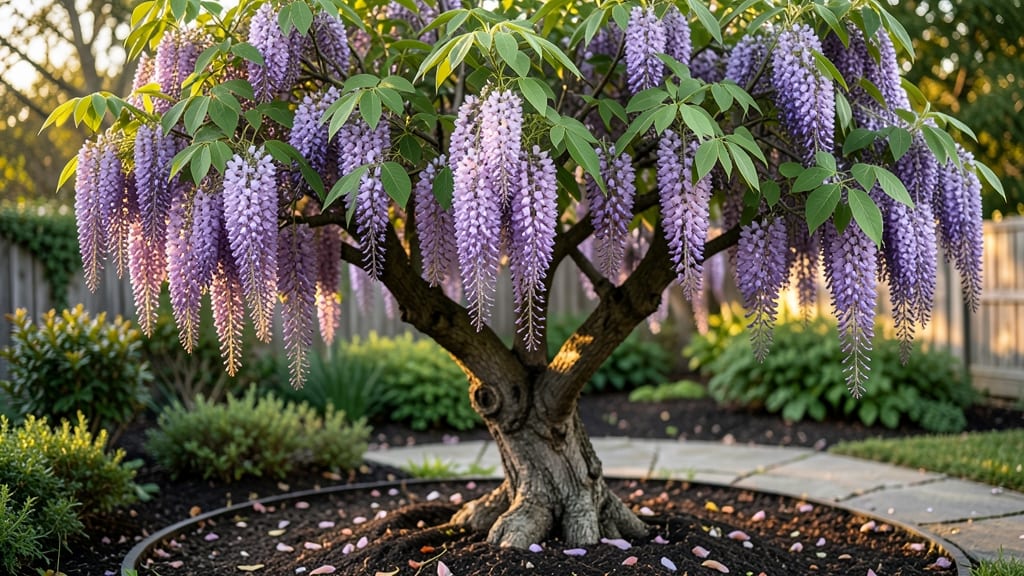
If you're wondering "how tall does a wisteria tree grow", you're not alone—this fast-growing vine can quickly become a garden's most dramatic (and potentially overwhelming) feature.
While some varieties like Japanese wisteria 🌸 can soar to 30 feet or more, others stay more manageable at 10-15 feet with proper care. The key difference? Variety, pruning, and where you live in USDA Zone 6a.
Planting wisteria in spring (April-May) sets the stage for its future height, but without guidance, even a 10-foot vine can spiral out of control. The good news? With strategic pruning and support, you can train this beauty to fit your space—whether that's a 15-foot trellis or a contained shrub.
Let's break down how to keep your wisteria's ambitions in check.
What most gardeners don't realize is that wisteria grows as a vine, not a traditional tree, which changes everything about its care. Without proper support, it'll climb anything—fences, roofs, or even your neighbor's property—reaching heights that make 20 feet look modest.
The secret to managing it lies in understanding its growth patterns and when to intervene.
In this guide, you'll discover the height ranges for common varieties, the best pruning techniques to control growth, and how to create a plan that keeps your wisteria stunning without taking over your yard. Ready to turn those sky-high ambitions into a well-behaved garden showstopper?


Wisteria tree height by variety: from compact shrubs to towering giants
If you're picturing wisteria as a delicate garden accent, think again—these vines grow with unmatched ambition. While some varieties stay manageable, others can dominate your landscape like a living jungle gym.
The key? Knowing your wisteria's genetic potential and how to guide its growth. Let’s break down the height ranges by variety so you can plan accordingly.
Wisteria doesn’t grow as a traditional tree but as a woody vine that clings to supports. Without pruning, it can climb 30+ feet in ideal conditions, smothering fences, pergolas, or even tree trunks.
But don’t panic—with the right variety and care, you can keep it tamer. Here’s what to expect from the most popular types.
🌱 Visual Guide: Wisteria Height by Variety
The Japanese wisteria is the heavyweight champion, capable of reaching 30 feet or more with aggressive growth. Its lavender-blue flowers are stunning but require serious pruning to prevent it from becoming a landscape monster. If you love drama, this is your plant—but only if you’re prepared for regular maintenance.
For smaller spaces, the American wisteria is your best bet. It tops out at 10–15 feet and grows more slowly, making it perfect for small gardens or containers.
Its purple blooms are equally fragrant and slightly easier to manage. If you’re in a cooler climate (Zones 4–6), this variety thrives where others might struggle.
Climate plays a huge role in how tall your wisteria grows. In warmer zones (7–10), Chinese wisteria can double in size compared to its growth in cooler regions.
Always check your USDA zone before planting—some varieties simply won’t reach their full potential if the winters are too harsh or summers too hot.
Pro tip: If you’re planting near a house or power lines, opt for a dwarf variety or plan to prune aggressively. Wisteria’s weight can damage structures, and its rapid growth can lead to unexpected surprises.
For example, a 10-foot vine can become a 20-foot beast in just 3–4 years if left unchecked.
🌿 Key Takeaway: Choose your wisteria variety based on your space and climate. Japanese wisteria = dramatic but high-maintenance; American wisteria = compact and low-maintenance. Always install a sturdy support system from day one—wisteria’s weight will test even the strongest trellis.
How to control wisteria growth: pruning techniques to manage height
Wisteria’s rapid growth is one of its most stunning—and challenging—traits. Without proper pruning techniques, even a small vine can become a 30-foot monster in just a few years. The good news?
With the right approach, you can shape your wisteria into a manageable trellis, arboreal canopy, or even a ground cover. Here’s how to tame its height while keeping those fragrant blooms intact.
First, understand that wisteria grows aggressively—up to 12 feet per year if left unchecked. The key to control lies in seasonal pruning, which not only limits height but also encourages flowering.
Flowers form on old wood, so avoid cutting back too aggressively in late winter. Instead, focus on structural pruning in late winter/early spring and maintenance pruning after flowering.
Tools you’ll need: sharp bypass pruners, loppers, gloves, and a sturdy ladder (for tall varieties). Always sterilize tools with rubbing alcohol to prevent disease spread. Start by removing dead or weak wood first—this opens up the vine for better airflow and light penetration, which reduces fungal risks and promotes healthier growth.
🌿 Step-by-Step Pruning Guide for Height Control
- Late Winter (Dormant Season): Prune to shape the vine and remove suckers at the base. Cut back overlong branches by 1/3 to 1/2 to encourage bushier growth.
- After Flowering (Summer): Trim new growth that’s longer than desired. Focus on removing lateral shoots to redirect energy to flowering branches.
- Fall (Light Pruning): Remove weak or crossing branches to prevent tangling. Avoid heavy pruning, as new growth won’t harden off before winter.
- Year-Round Maintenance: Regularly check for shoots growing away from support and redirect them. Use soft ties to guide vines along trellises or arbors.
For aggressive height control, consider the "renewal pruning" method: In late winter, cut back all branches to 2-3 buds from the main stem. This forces the plant to regrow from the base, resulting in a shorter, bushier plant—though it may take 1-2 years to recover.
This works best for smaller varieties like Wisteria floribunda (Japanese wisteria) but can stunt larger types like Wisteria sinensis (Chinese wisteria).
Never skip annual pruning, even if your wisteria seems well-behaved. Unpruned vines can weigh hundreds of pounds when mature, risking support structure failure. If you’re growing wisteria on a trellis or arbor, inspect the structure seasonally to ensure it can support the weight.
For container-grown wisteria, prune more aggressively to prevent root-bound stress.
Pro tip: Train young vines early by guiding them along a strong support system. Use soft garden twine to loosely tie vines to trellises, adjusting as they grow.
This prevents aggressive lateral growth and keeps the plant upright and manageable. With consistent care, you’ll enjoy lush blooms without the wisteria wilderness.