
How To
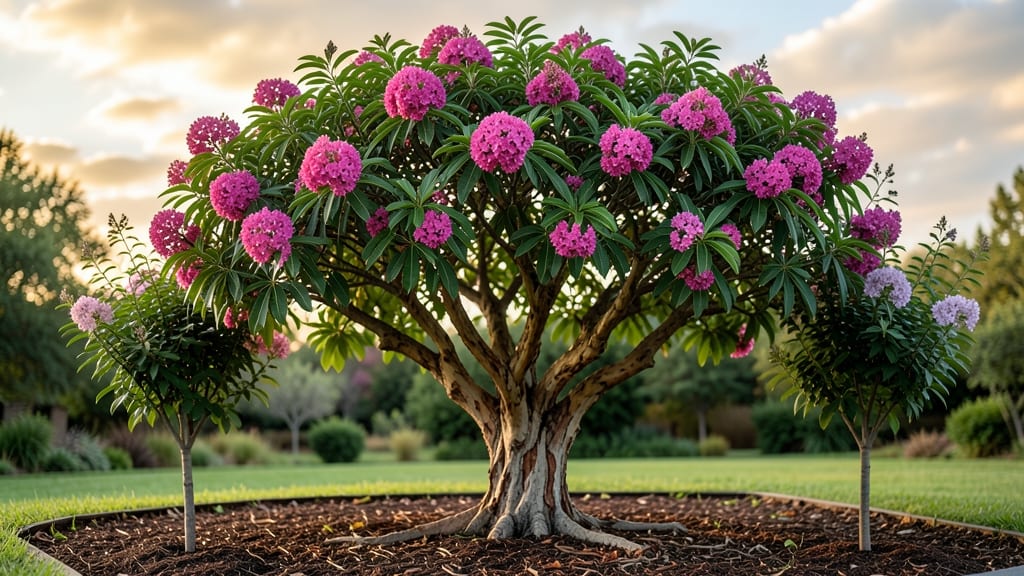
Crepe myrtle tree height by variety: from dwarf to giant sizes
Crepe myrtles are famous for their vibrant blooms and low-maintenance nature, but their mature heights vary wildly—from compact dwarf varieties to towering giants. Choosing the right size depends on your yard space, landscape goals, and even your climate zone.
Let’s explore the most popular varieties and their mature height ranges so you can pick the perfect fit.
The smallest crepe myrtles stay under 12 feet tall, making them ideal for small yards or container gardening. On the other end, standard varieties can reach 30 feet, providing shade and drama for large properties.
Your choice will also influence how often you’ll need to prune for height control and whether you’ll need to plant near power lines.
🌱 Pro Tip: Always check the mature height label when buying crepe myrtles—nurseries often sell dwarf varieties as "standard" by mistake. Measure your space first to avoid regrets!
| Variety | Mature Height | Best For | Bloom Color |
|---|---|---|---|
| 'Dwarf Natchez' | 6–10 ft | Small yards, containers | White |
| 'Tonto' | 8–12 ft | Patio trees, urban gardens | Lavender |
| 'Arapaho' | 12–15 ft | Medium landscapes, shade | Pink |
| 'Muskogee' | 15–20 ft | Large yards, privacy screens | Purple |
| 'Natchez' | 20–30 ft | Shade trees, large properties | White |
🌳 Note: Heights can vary by 1–2 feet based on soil quality and pruning habits.
If you’re in a warmer climate (Zones 7–9), crepe myrtles grow faster and taller than in cooler zones (6–7). For example, a 'Natchez' in Georgia might hit 30 feet, while the same tree in Zone 6 might max out at 20 feet.
Always check your USDA Hardiness Zone before planting.
For container growing, stick to dwarf varieties like 'Tonto' or 'Dwarf Natchez'. Use a large pot (20+ gallons) with drainage holes and prune aggressively in early spring to keep them under 10 feet. Containers dry out faster, so water deeply 2–3 times per week in summer.
💡 Height Hack: Plant multiple dwarf varieties in a row for a living hedge effect. Space them 8–10 feet apart to allow airflow and reduce disease risk. This creates a privacy screen without the height of a single giant tree.
Now that you know the height ranges, the next step is understanding how pruning can shape your crepe myrtle’s growth. Over-pruning can stunt blooms, while under-pruning lets it grow unchecked. Stay tuned for my next section on pruning secrets to control height without sacrificing those stunning flowers!
How pruning affects crepe myrtle height: secrets to control growth
Pruning isn’t just about shaping your crepe myrtle—it’s the secret weapon for controlling its height. If you skip pruning, that 6-foot dwarf could easily stretch to 20 feet or more. The good news?
With the right techniques, you can keep your tree at your desired height while still enjoying those vibrant summer blooms. Let’s dive into how pruning works and what to avoid.
Timing is everything. The best time to prune is late winter or early spring, just before new growth begins. This gives you a clean slate to shape the tree and remove any dead or weak branches.
Avoid pruning in fall—it can stimulate new growth that won’t harden off before winter, leaving your tree vulnerable to frost damage.
Now, let’s talk about the biggest pruning mistake I see: topping. You might think cutting the top off your tree will keep it short, but this ruins the structure and encourages weak, bushy growth.
Instead, focus on selective pruning—removing branches at their point of origin to maintain a natural shape and encourage strong, upright growth.
Avoid These Pruning Mistakes
Never top your crepe myrtle—cutting the top flat creates weak, sprawling growth. Instead, prune selectively to maintain shape and encourage strong branches. Over-pruning can stress the tree, while under-pruning leads to uncontrolled height growth.
For dwarf varieties, you can prune more aggressively to keep them compact, even trimming back up to 1/3 of the growth in spring. For standard varieties, focus on removing only the lowest branches to maintain an open, airy canopy.
This not only controls height but also improves airflow, reducing the risk of pests and diseases.
Don’t forget to sterilize your pruners between cuts to prevent the spread of disease. Use a solution of 70% alcohol or a bleach-water mix (1 part bleach to 9 parts water) to clean them before and after pruning.
This small step can make a huge difference in keeping your tree healthy and thriving.
With consistent pruning, you’ll see your crepe myrtle grow stronger and more controlled each year. The key is patience—don’t rush the process, and always prune with intention. Your tree will reward you with beautiful blooms and a perfectly managed height for years to come. ✂️