How To
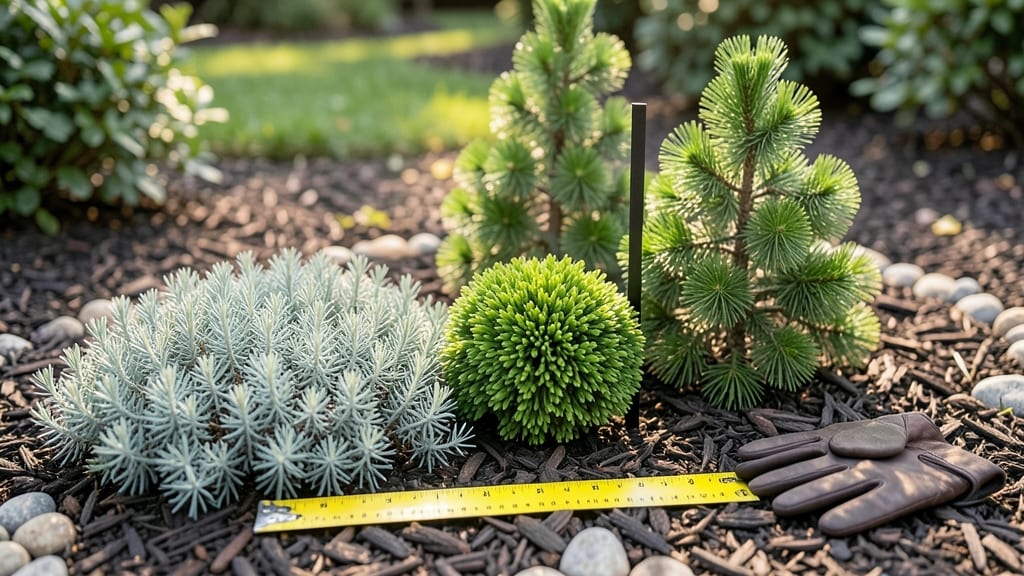
Exact height ranges of popular dwarf conifers for small gardens
Dwarf conifers are the perfect solution for small gardens, patios, or even container gardening. Unlike their towering cousins, these compact evergreens maintain their size while offering year-round structure and color. But how tall will they grow?
The answer varies wildly—some stay under a foot tall, while others reach 5 feet at maturity. Understanding these differences helps you plan spacing and avoid overcrowding.
Most dwarf conifers fall into three height categories: under 1 foot, 1–3 feet, and 3–5 feet.
The key to predicting growth lies in the variety, as some (like 'Blue Rug' juniper) grow just 1–2 feet tall, while others (like 'Mops' thuja) can stretch to 3–4 feet.
Growth rates also play a role—some varieties add only 1–2 inches per year, while faster growers may reach maturity in a decade.
Here’s a quick reference to help you visualize popular dwarf conifers at maturity. This table includes 15+ varieties, their mature heights, and growth habits to guide your selection:
When planning your garden, consider not just the mature height but also the spread of each variety. For example, 'Blue Rug' juniper spreads 4–6 feet wide while staying low, making it ideal for slopes or borders.
Meanwhile, 'Emerald Sentinel' arborvitae stays narrow (just 1–2 feet wide), perfect for tight spaces between walkways or patios.
Growth rates also matter. Slow-growing varieties like 'Prostrata' pine may take 10+ years to reach maturity, while faster growers like 'Little Giant' arborvitae can hit their height in 5–7 years. If you’re impatient, opt for a faster variety—but be prepared for more frequent pruning to maintain shape.
For container gardening, choose varieties under 3 feet tall, like 'Golden Globe' spruce or 'Blue Star' juniper. These thrive in 15–20 gallon pots with well-draining soil.
Larger dwarf conifers (like 'Dwarf Alberta Spruce') need 25+ gallon containers to prevent root binding, which can stunt growth or even kill the plant.
One common misconception is that all dwarf conifers stay small forever. In reality, some (like 'Teddy Bear' juniper) may outgrow their containers if not pruned annually.
Always check the mature height on the tag or from a reputable nursery—this ensures your tiny tree doesn’t become a space hog in a few years.
Pro tip: If you’re unsure about spacing, err on the side of caution. Dwarf conifers rarely shrink—they only grow larger over time. Planting them 6–12 inches farther apart than their mature width gives them room to breathe and reduces the need for aggressive pruning later.
Finally, remember that light and soil conditions can influence height. Dwarf conifers grown in partial shade may stay slightly smaller than those basking in full sun. Amending your soil with organic matter (like compost or pine bark) also promotes healthier, more compact growth.
With the right variety and care, your dwarf conifers will stay perfectly sized for years—adding texture, color, and structure to your garden without the commitment of a full-sized tree. Happy planting! 🌲
How to choose dwarf conifers based on garden size and growth habits
Selecting the right dwarf conifer depends on your garden space and growth preferences. For containers or small borders, opt for varieties under 1 foot tall, like 'Blue Rug' juniper or 'Little Giant' spruce. These stay compact and thrive in 5-gallon pots with minimal fuss.
If you have medium garden beds, aim for 1–3 foot varieties such as 'Mops' thuja or 'Pumilio' pine. These provide year-round structure without overwhelming your space. Always check mature height labels—some "dwarf" varieties can stretch to 4 feet over time.
For larger landscapes or focal points, consider 3–5 foot conifers like 'Prostrata' pine or 'Glauca Globosa' spruce. These offer bold visual impact while still fitting in small to medium gardens. Group them with perennials or shrubs to soften their edges.
Growth rate matters too! Slow growers like 'Blue Star' juniper add just 1–2 inches per year, making them ideal for long-term planning. Faster growers, such as 'Teddy Bear' spruce, reach maturity in 5–7 years—perfect if you want quicker results.
Sunlight needs vary too. Most dwarf conifers thrive in full sun (6+ hours), but some, like 'Emerald Sentinel' arborvitae, tolerate partial shade. Always match your garden’s light conditions to the plant’s needs to avoid stunted growth or leggy stems.
Spacing is key! Proper airflow prevents disease, so leave 1–2 feet between plants in beds. In containers, ensure pots are 2–3 inches larger than the root ball to prevent root-bound stress, which can stunt growth.
My top tip? Start small—buy 1-gallon plants instead of larger ones. They establish faster, grow slower initially, and let you test varieties before committing to bigger specimens. Happy planting! 🌲