
Size
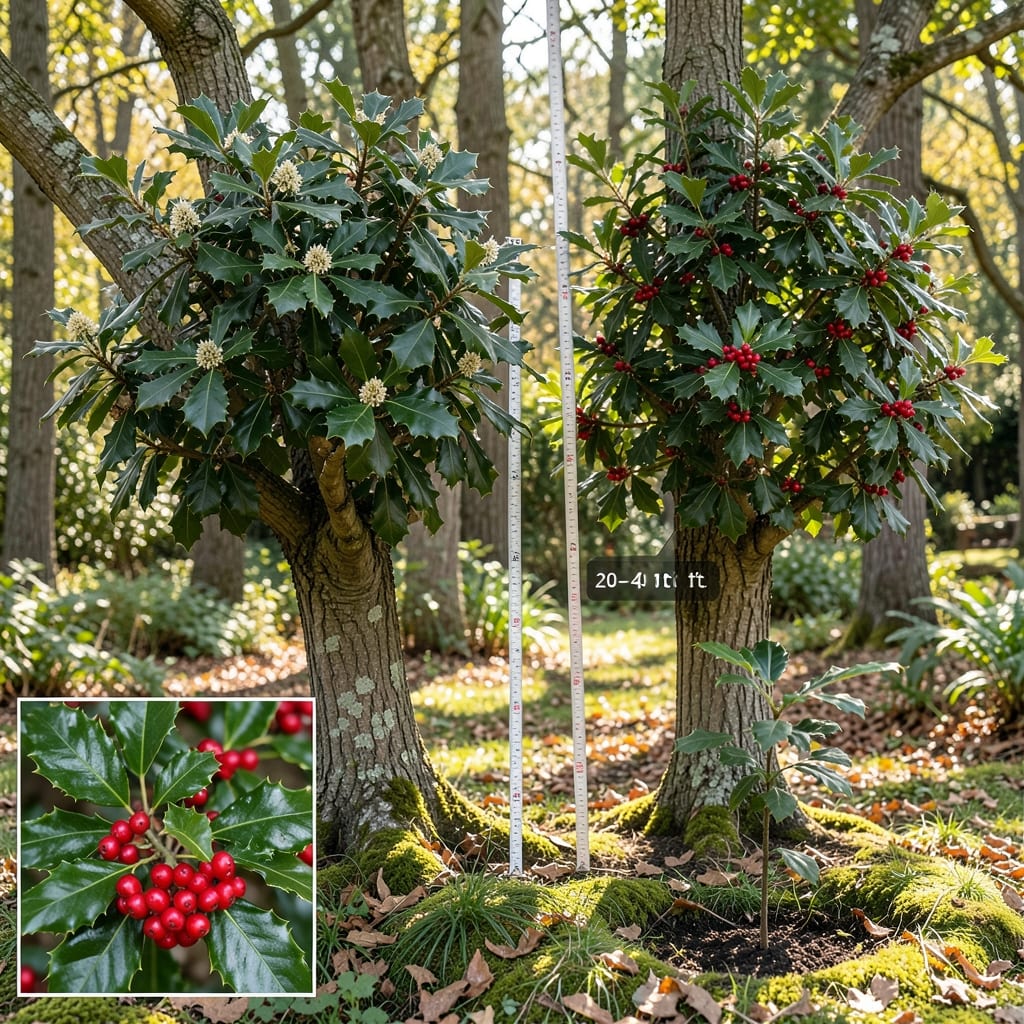
Holly tree height ranges: from dwarf to towering giants
Holly trees are stunning year-round with their glossy leaves and vibrant berries, but their mature height can vary dramatically—from compact shrubs to towering giants. If you're planning your landscape, knowing these height differences will help you choose the perfect variety for your space. Some holly trees stay under 5 feet tall, while others can reach over 50 feet, making them unsuitable for small yards.
The American Holly (Ilex opaca) is one of the most common species in North America, typically growing 30 to 40 feet tall with a spread of 20 to 30 feet. Meanwhile, the English Holly (Ilex aquifolium) often stays smaller, usually between 15 to 30 feet, but some varieties can grow even taller. Hybrid varieties, like 'Blue Prince' or 'Sky Pencil', offer more controlled growth options, making them ideal for smaller spaces.
Here’s a quick breakdown of what to expect from different holly tree varieties, including their average mature heights and growth rates. This will help you visualize how they’ll fit into your landscape design.
| Variety | Mature Height | Growth Rate | Best For |
|---|---|---|---|
| American Holly | 30–40 ft | Moderate (1–2 ft/year) | Large landscapes, privacy screens |
| English Holly | 15–30 ft | Slow to moderate | Medium yards, hedges |
| 'Blue Prince' Holly | 10–15 ft | Slow (6 in/year) | Small yards, containers |
| 'Sky Pencil' Holly | 4–6 ft | Very slow | Urban gardens, patios |
| 'Dwarf Burford' Holly | 5–8 ft | Slow | Foundation plantings |
The American Holly is the tallest of the bunch, often reaching heights that make it a statement tree in large properties. Its glossy leaves and bright red berries add winter interest, but its size means it’s best suited for rural or suburban landscapes where space isn’t an issue. If you’re working with a smaller yard, consider the 'Blue Prince' or 'Sky Pencil' varieties, which stay compact while still delivering the classic holly look.
For gardeners in urban areas, dwarf holly varieties are a game-changer. These trees thrive in containers or foundation plantings, offering all the beauty of a holly without the space requirements. They’re also easier to maintain, as their smaller size means less pruning and more manageable berry harvests (if you’re lucky enough to attract birds!).
If you’re unsure which variety to choose, consider your yard’s layout and the mature height of surrounding trees. A 30-foot holly planted too close to a house or driveway could become a nuisance over time. Always measure the space you have and plan for the tree’s full-grown size, not just its current height.
Another factor to consider is the growth rate. Some holly varieties grow just 6 inches per year, while others can shoot up 2 feet annually. If you’re impatient, slower-growing varieties might feel like a wait, but they’re often easier to manage in the long run. For faster results, opt for a standard American Holly, but be prepared for more frequent pruning.
Finally, don’t forget that holly trees can live for decades, so their height and spread will be a permanent feature in your landscape. Take the time to research varieties, visit local nurseries to see them in person, and even consult with a landscape designer if you’re unsure. With the right choice, your holly tree will be a year-round focal point for years to come.
🌲
Holly tree height ranges: from dwarf to towering giants
Holly trees are incredibly versatile, with some varieties staying small enough for containers while others grow into towering giants. The American Holly (Ilex opaca) typically reaches 30 to 60 feet at maturity, making it a statement tree for large landscapes. Meanwhile, English Holly (Ilex aquifolium) often stays between 20 to 40 feet, offering a more compact option for mid-sized yards.
Even within these species, growth habits vary dramatically. For example, the Sky Pencil Holly remains under 5 feet tall but can spread up to 10 feet wide, perfect for narrow spaces. On the other end, the Burford Holly can soar to 40 feet with a spread of 15 to 20 feet, demanding ample space.
Growth rates also differ: slower-growing varieties like Dwarf Burford Holly add only 6 to 12 inches per year, while faster growers like Nellie R. Stevens Holly can gain 1 to 2 feet annually. Understanding these differences helps you choose the right holly for your space and timeline.
| Variety | Mature Height | Growth Rate | Best For |
|---|---|---|---|
| Sky Pencil Holly | 4-5 ft | Slow (6 in/year) | Containers, narrow spaces |
| Dwarf Burford Holly | 8-12 ft | Moderate (12 in/year) | Small yards, hedges |
| Nellie R. Stevens Holly | 30-40 ft | Fast (1-2 ft/year) | Large landscapes, privacy screens |
| American Holly | 30-60 ft | Moderate (12-24 in/year) | Wildlife gardens, large properties |
| Burford Holly | 20-40 ft | Moderate (12-18 in/year) | Foundation plantings, hedges |
Environmental factors like sunlight exposure, soil quality, and water availability also influence height. Holly trees planted in well-draining soil with partial shade tend to grow more slowly but develop denser foliage. In contrast, those in full sun may grow taller but require more frequent watering to prevent stress.
When selecting a holly, consider both its mature height and spread. A 10-foot-tall holly with a 15-foot spread (like Blue Princess Holly) will dwarf a 10-foot-tall holly with a 5-foot spread (like Sky Pencil Holly). Always measure your space before planting to avoid overcrowding.
For those with limited space, container-growing dwarf hollies are an excellent solution. These varieties thrive in pots for years, allowing you to enjoy their glossy leaves and holly berries without sacrificing yard space. Just ensure your container has adequate drainage and is at least 12 inches wide for small varieties.