
Size
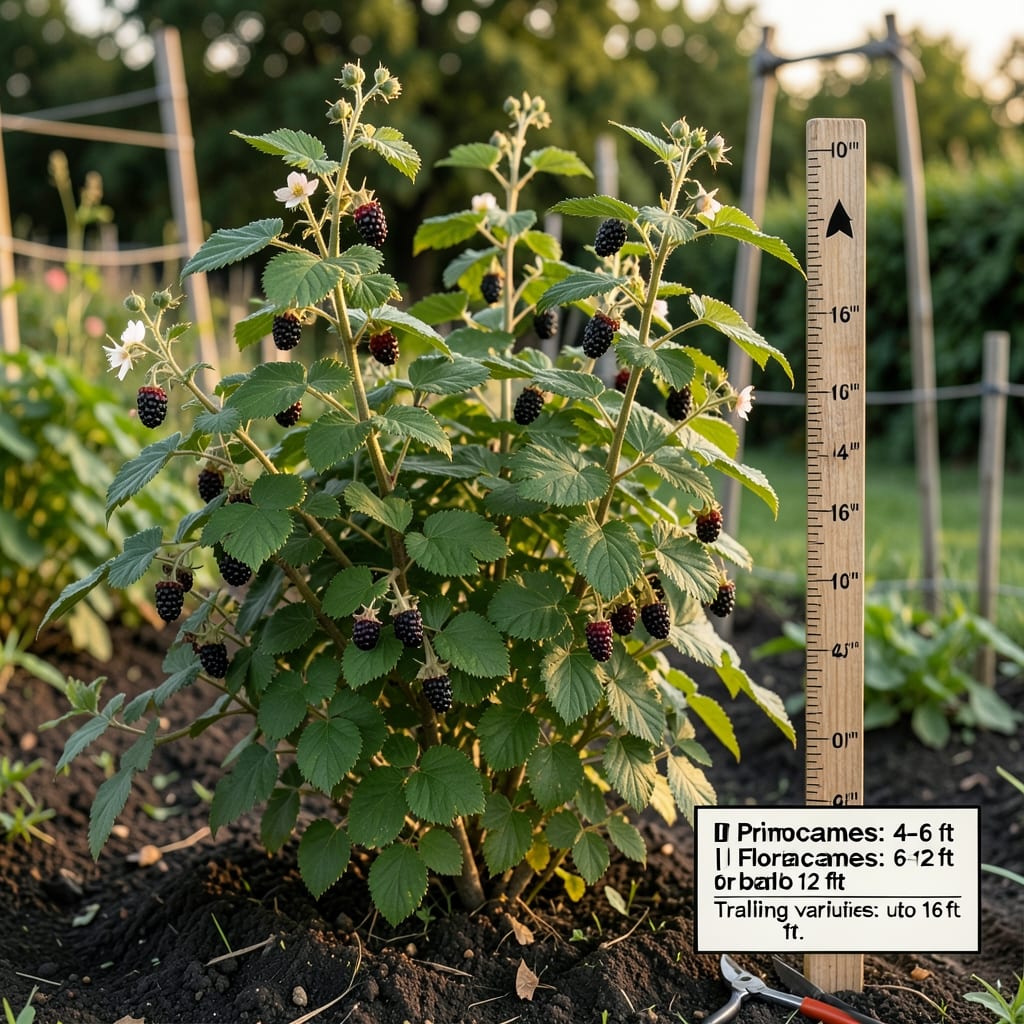
If you’ve ever stared at your 🍇 blackberry bushes and wondered how tall blackberry bushes can grow, you’re not alone. Some varieties reach heights that make even basketball hoops look modest, while others stay neatly contained—if you know how to guide them. The truth is, blackberry bush height isn’t just about genetics; it’s a mix of variety, pruning, and where you live.
From 3-foot dwarf varieties perfect for small gardens to 12-foot giants that need serious support, the range is wider than you might think. Whether you’re dealing with trailing canes that sprawl like vines or upright bushes that grow straight up, understanding their growth habits is the key to managing them—without sacrificing those juicy berries. Let’s break down what determines their height and how you can shape them to fit your space.
Pruning isn’t just about keeping your blackberries in line; it’s about boosting fruit production and making sure your bushes stay healthy. A little strategic trimming can turn a wild, unruly plant into a well-behaved, berry-producing machine. And if you’re working with limited space, there are compact varieties that won’t overwhelm your backyard—or your to-do list.
Ready to find out which blackberries stay short and which ones need a trellis? I’ll walk you through the best varieties for your garden size, plus the pruning secrets that’ll keep your bushes at the perfect height—no matter how ambitious they might be. Let’s get growing!

Blackberry bush height by variety: from dwarf to giant-growing types
Blackberry bushes can transform your garden from a cozy corner to a sprawling jungle if left unchecked—but their maximum height depends entirely on the variety you choose. Some stay compact enough for containers, while others reach towering heights that require serious trellising. Let’s break down the height ranges of popular blackberry types so you can pick the perfect fit for your space.
First, understand that blackberries fall into three main growth habit categories: trailing (arching vines), semi-erect (slightly upright but still sprawling), and erect (upright canes). The trailing types often grow the tallest, while erect varieties stay more manageable. Your climate zone also plays a role—warmer regions encourage faster, taller growth.
Here’s the key: thornless varieties tend to grow slightly taller than their thorny cousins because gardeners are more likely to let them sprawl for easier harvesting. But don’t let that deter you—some thornless types, like ‘Natchez’, stay under 6 feet while producing abundant fruit. The trade-off? Thorny varieties like ‘Cheyenne’ can reach 10+ feet but may need more aggressive pruning.
🍇
| Variety | Type | Height Range | Growth Habit | Best For |
|---|---|---|---|---|
| ‘Arapaho’ | Thornless | 5–8 ft | Semi-erect | Small gardens |
| ‘Natchez’ | Thornless | 6–10 ft | Trailing | Trellises |
| ‘Cheyenne’ | Thorny | 8–12 ft | Erect | Large spaces |
| ‘Triple Crown’ | Thornless | 4–6 ft | Compact | Containers |
| ‘Ouachita’ | Thorny | 10–15 ft | Trailing | Wild areas |
If you’re working with a small garden, prioritize dwarf varieties like ‘Triple Crown’ or ‘Chester’, which max out at 5–6 feet. These are perfect for container growing or tight spaces near fences. For large properties, let ‘Ouachita’ or ‘Black Satin’ spread their wings—they’ll reach 12+ feet and thrive in wild or rural settings.
One pro tip: Erect varieties (like ‘Chester’) grow upright naturally, so they need less support than trailing types. But even these can get top-heavy with fruit, so install a trellis or stakes early to prevent flopping. For trailing types, a 5–6 foot trellis is ideal—it keeps canes off the ground, reduces disease risk, and makes harvesting easier.
Regional differences matter too. In warmer climates (Zones 8–10), blackberries grow faster and taller
Blackberry bush height by variety: from dwarf to giant-growing types
Blackberry bushes don’t follow a one-size-fits-all rule when it comes to height. Some varieties stay as short as 3 feet, making them perfect for small gardens or containers, while others can stretch up to 15 feet if left unchecked. The key difference lies in their growth habits—whether they trail, stand upright, or grow semi-erect—and their genetic makeup. Thornless varieties, for example, often grow taller because they’re bred for easier harvesting, while traditional thorny types might stay more compact.
Choosing the right variety for your space isn’t just about height—it’s also about how they spread. Trailing varieties like 'Apache' or 'Natchez' can sprawl 10+ feet wide if not contained, while upright types like 'Chester' or 'Triple Crown' grow vertically but still need support. If you’re working with limited space, dwarf varieties like 'Arapaho' (thornless) or 'Oregon Evergreen' (thorny) are excellent choices, staying between 3 and 5 feet tall.
Regional climate also plays a role. In warmer zones (like USDA Zone 8+), blackberries often grow taller and more vigorously due to longer growing seasons. In cooler climates (like Zone 5-6), growth might be slower, but varieties like 'Black Satin' or 'Ouachita' still reach 6-8 feet with proper care. Always check your local nursery for varieties adapted to your hardiness zone to avoid disappointment.
🍇 Blackberry Variety Height Guide
| Variety | Height Range | Growth Habit | Best For |
|---|---|---|---|
| Arapaho | 3-5 ft | Semi-erect | Small gardens, containers |
| Natchez | 5-8 ft | Trailing | Trellises, fences |
| Chester | 6-10 ft | Upright | Large gardens, trellises |
| Triple Crown | 8-12 ft | Semi-erect | Commercial growers |
| Apache | 10-15 ft | Trailing | Large spaces, wild growth |
✂️ Note: Heights vary with pruning and support.
If you’re torn between varieties, consider your harvest goals. Thornless types like 'Arapaho' or 'Chester' are easier to pick but may grow taller, while thorny varieties like 'Ouachita' stay shorter but require gloves. For small spaces, focus on semi-erect or compact types, while large gardens can handle trailing giants like 'Apache' with proper trellising.
Pro tip: If you love the idea of tall blackberries but lack space, try vertical training. Even trailing varieties can be guided upward with a sturdy trellis, turning their sprawling habit into a space-saving vertical garden. Just be prepared to prune regularly to keep them in check—otherwise, they’ll take over your yard faster than weeds in a summer storm!
Ready to pick the perfect variety for your garden? Once you’ve chosen, the next step is mastering pruning techniques to control their height naturally. That’s where the real magic happens—turning unruly growth into a well-behaved, berry-producing powerhouse. 🌱