
Size
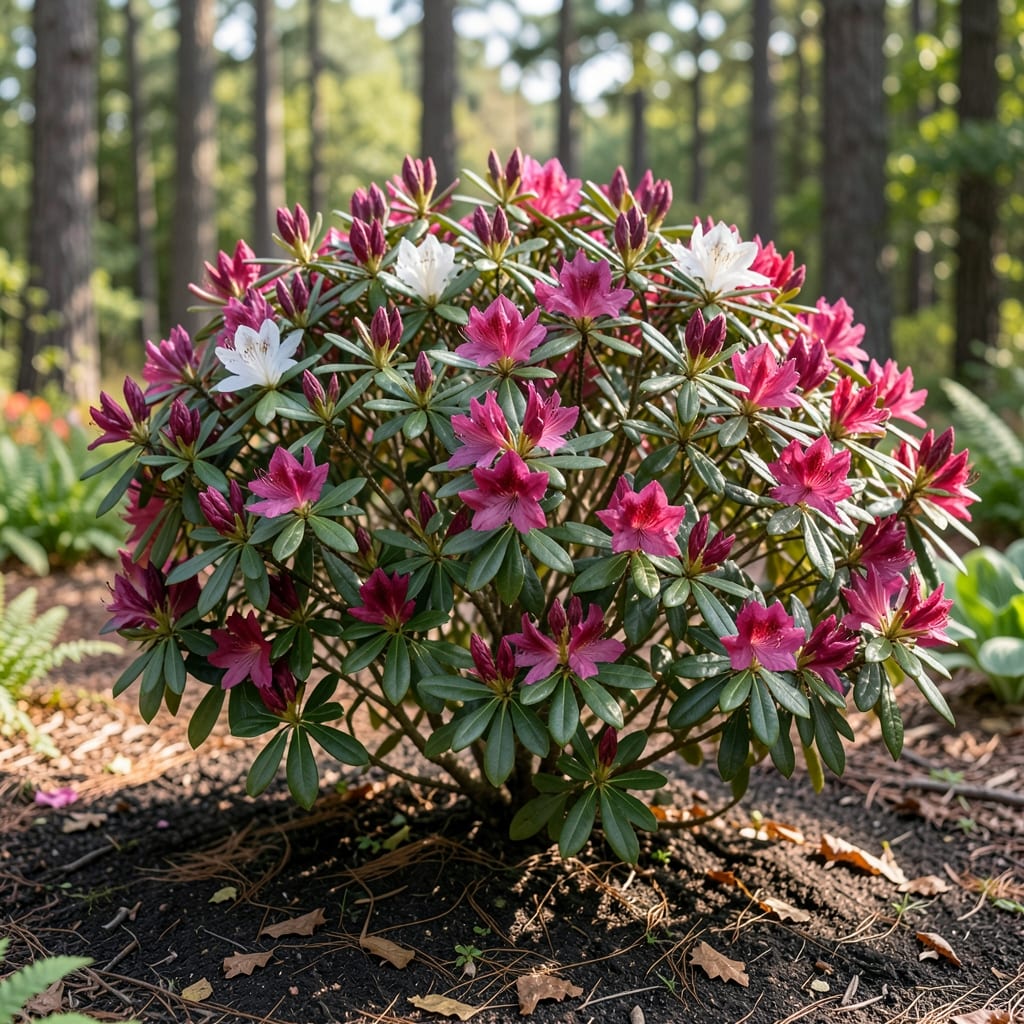
Azalea height ranges by variety: from dwarf to giant
Azaleas are one of the most versatile shrubs for gardeners, offering heights from just 1 foot to towering 12-foot giants. The key to controlling their size lies in choosing the right variety and understanding their growth habits. Evergreen azaleas like Rhododendron simsii often stay compact, while deciduous types like Rhododendron catawbiense can reach impressive heights with proper care.
For container gardening, dwarf azaleas are ideal—they thrive in pots and rarely exceed 3 feet tall. These compact varieties, such as 'Little Jim' or 'Girard's Pink', bring vibrant color to patios and balconies without overwhelming small spaces. Their manageable size makes them perfect for urban gardens where space is limited.
If you're planning a landscape backdrop, taller azaleas like 'Heritage' or 'Boughton White' can reach 8 to 12 feet at maturity. These varieties create stunning focal points and provide year-round interest with their glossy foliage and seasonal blooms. Their height makes them ideal for hedges or privacy screens in larger gardens.
🌸
Understanding the growth patterns of azaleas helps you plan your garden layout effectively. Dwarf varieties like 'Little Jim' grow slowly, making them ideal for annual replanting in containers. Meanwhile, standard varieties like 'Boughton White' develop deep root systems early on, allowing them to reach their full height within 5 to 7 years with proper care.
For gardeners in USDA Zones 6-9, azaleas thrive in acidic, well-draining soil with partial shade. Their height potential is influenced by these conditions—too much sun can stunt growth, while overly rich soil may encourage excessive foliage over blooms. Balancing these factors ensures your azaleas reach their ideal height without becoming leggy or top-heavy.
When selecting azaleas for your garden, consider both their mature height and their growth rate. Some varieties, like 'Coral Bells', grow 1 to 2 feet per year initially, while others may take longer to establish. This knowledge helps you create a timeline for garden expansion or maintenance planning.
🌿
If you're unsure about which variety to choose, start with a mix of dwarf and semi-dwarf azaleas to create visual interest. Place taller varieties at the back of borders and shorter ones in the front. This layering technique not only maximizes space but also enhances the overall aesthetic of your garden by creating depth and dimension.
Remember, the height of your azaleas isn't set in stone—pruning and care play significant roles in shaping their growth. With the right techniques, you can encourage compact growth in tall varieties or maintain smaller sizes in larger plants. We'll explore these methods in the next section to help you achieve your desired garden look.
How pruning and care affect azalea height growth
If you’re wondering how to control your azalea’s height, pruning and care play starring roles. Unlike some shrubs, azaleas respond beautifully to strategic pruning, allowing you to shape them for your garden’s needs—whether you want a compact bush or a taller specimen. The key is timing and technique, as improper pruning can stunt growth or damage blooms.
Seasonal pruning is critical. For most azaleas, the best time to prune is right after flowering (late spring to early summer). This encourages new growth for next year’s blooms while keeping the shrub at your desired height. Avoid heavy pruning in fall or winter, as this can leave your plant vulnerable to cold damage.
Here’s how pruning impacts height: Light pruning (removing only dead or crossing branches) maintains natural shape without stunting growth. Moderate pruning (cutting back 1/3 of the plant) encourages bushier growth but may reduce height slightly. Hard pruning (cutting back by half or more) can drastically reduce height but should only be done every few years.
Another factor is soil and sunlight. Azaleas thrive in acidic, well-draining soil with partial shade (4-6 hours of sunlight). Poor soil or excessive sun can stress the plant, leading to slower growth or leggy, weak stems. Amending your soil with peat moss or pine needles keeps the pH optimal (around 5.0-6.0) for healthy growth.
Fertilizer choices also influence height. A balanced, slow-release fertilizer (like 10-10-10) applied in early spring and after flowering promotes steady growth. Over-fertilizing with high-nitrogen formulas can lead to rapid but weak growth, making the plant more susceptible to pests or disease.
For container-grown azaleas, root pruning (gently trimming roots when repotting) encourages a denser, more compact growth habit. This is especially useful for dwarf varieties, where you want to keep the plant under 3 feet tall. Always use a pot with drainage holes to prevent root rot, which can halt growth entirely.
Finally, patience is key. Azaleas grow at different rates depending on the variety. Dwarf types may reach maturity in 2-3 years, while standard varieties can take 5-7 years to reach their full 6-12 foot height. Regular monitoring and adjustments to your care routine will help you achieve the perfect height for your garden vision.
🌿 Pro Tip: Pruning Secrets for Azaleas
- Shape naturally: Prune to maintain the plant’s natural vase shape—never cut into old wood.
- Use sharp tools: Clean pruners prevent jagged cuts that invite disease.
- Avoid over-pruning: Never remove more than 1/3 of the plant in a single session.
- Mulch after pruning: Apply 2-3 inches of mulch to retain moisture and protect roots.