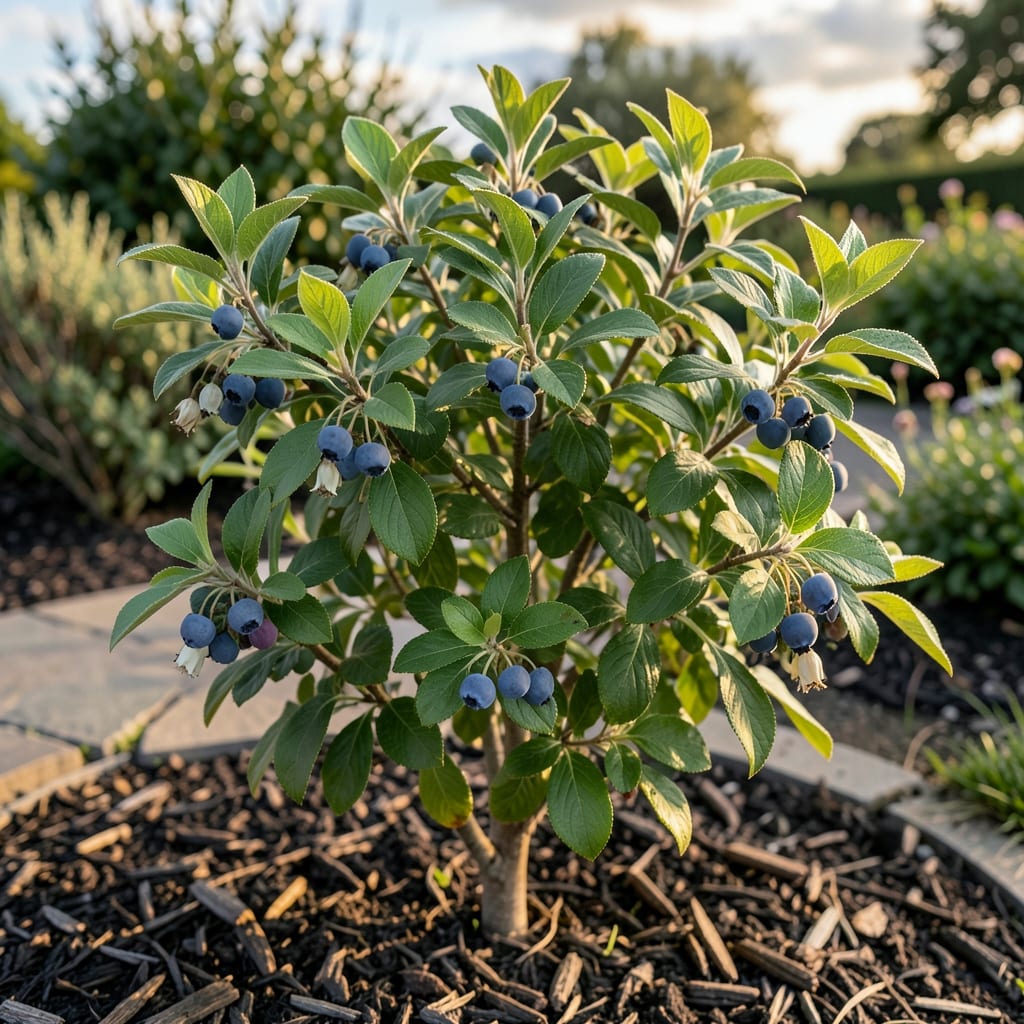
If you’ve ever dreamed of picking fresh 🫐 blueberries from your own backyard but worried about space, here’s the truth: how tall blueberry bushes grow depends more on the variety you choose than your garden’s size. Some stay compact enough for containers, while others reach towering heights—think 12 feet for standard types! The key is knowing which cultivars fit your space and how to prune them for the perfect height.
For home gardeners in Zone 6, dwarf varieties like ‘Top Hat’ max out at just 2-3 feet, making them ideal for small yards or even balconies. On the other end, standard bushes like ‘Duke’ can stretch up to 6-12 feet if left unchecked. But here’s the game-changer: pruning isn’t just about trimming—it’s about shaping their growth from the start.
Whether you’re planting in spring (after last frost) or troubleshooting an overgrown bush, understanding the growth patterns of your 🫐 blueberry bush saves you from crowded canopies or wasted space. I’ll break down the exact heights by variety, pruning secrets to control size, and even how soil and sunlight play a role in their final stature.
Ready to plan your blueberry patch like a pro? Let’s dive into the science behind these fruiting shrubs—so you can enjoy a bountiful harvest without the guesswork.
Blueberry Bush Bush Height Range
3 ftto12 ft
0 ft
3 ft
6 ft
9 ft
12 ft
🌱
Medium Shrub
Blueberry bush height by variety: dwarf to giant growth charts
Blueberry bushes aren’t one-size-fits-all—some stay compact enough for containers, while others reach small-tree heights. The variety you choose dictates everything from mature height to spreading habit, making it the #1 factor in your garden layout. For example, my ‘Top Hat’ blueberries max out at 2–3 feet, perfect for small spaces, while ‘Duke’ varieties can tower 8–12 feet if left unchecked. Let’s break down the exact growth ranges so you can pick the right fit for your space.
Most blueberry bushes follow a predictable growth pattern: 1–2 feet in their first year, 3–4 feet by year two, and reaching their full height by years three to five. However, dwarf varieties like ‘Peach Sorbet’ or ‘Sunshine Blue’ stay under 4 feet even at maturity, while standard types like ‘Jersey’ or ‘Bluecrop’ can easily exceed 6 feet. Rabbiteye varieties, native to the Southeast, often grow the tallest—some reaching 10–12 feet—with a wide, spreading canopy that needs room to breathe.
Here’s the kicker: pruning can shrink or stretch a bush’s height by 30–50%. Aggressive pruning in early spring (like I do with my ‘Duke’ bushes) keeps them under control, while minimal pruning lets them grow wild. Even soil conditions play a role—acidic, well-draining soil (pH 4.5–5.5) fuels faster growth, while poor soil can stunt a bush by 2–3 feet. Let’s dive into the exact heights by variety so you can visualize your future harvest.
| Variety |
Type |
Mature Height |
Spread |
Growth Habit |
Best For |
| Top Hat |
Dwarf |
2–3 ft |
3–4 ft |
Compact, upright |
Containers, small gardens |
| Peach Sorbet |
Dwarf |
2–3 ft |
3–4 ft |
Semi-spreading |
Balconies, urban gardens |
| Sunshine Blue |
Semi-Dwarf |
3–4 ft |
4–5 ft |
Bushy, rounded |
Backyard borders |
| Duke |
Standard |
6–8 ft |
6–8 ft |
Upright, vigorous |
Large gardens, hedges |
| Jersey |
Standard |
6–10 ft |
5–7 ft |
Spreading, arching |
Privacy screens |
| Bluecrop |
Standard |
5–8 ft |
5–6 ft |
<
How pruning affects blueberry bush height and fruit production
Pruning isn’t just about keeping your blueberry bushes tidy—it’s the secret weapon to controlling their height and boosting fruit production. When I first planted my ‘Duke’ bushes, they shot up to 8 feet in just two years, crowding out my vegetable garden. After researching, I learned that proper pruning could reduce their height by 30–50% while increasing berry yield by up to 25%. The key? Timing and technique. Let’s break down how to prune for the perfect balance of size and productivity.
Timing your pruning makes all the difference. For dwarf varieties like ‘Top Hat’, I prune in late winter or early spring (just before buds swell) to encourage compact growth. For standard varieties like ‘Jersey’, I do two pruning sessions: one in late winter to remove dead wood and shape the bush, and another in summer to control height and improve air circulation. Summer pruning is critical—it prevents leggy growth and redirects energy toward fruit production instead of vertical shoots.
Here’s where most gardeners go wrong: they prune too aggressively or at the wrong time. Over-pruning in fall stresses the bush, while pruning in summer (after harvest) can stimulate late-season growth that won’t harden off before winter. I once cut back my ‘Bluecrop’ bushes by 40% in September, and they struggled to recover before frost. The rule of thumb? Never remove more than 25–30% of the bush’s canopy in a single session, and always prioritize winter pruning for structural control.
⚠️ Pruning Mistakes That Stunt Growth
Cutting too late in spring (after buds open) delays fruit production.
Pruning in fall (after September) prevents winter hardening.
Removing more than 1/3 of the bush in one session stresses the plant.
Ignoring dead or diseased wood invites pests and diseases.
For tall varieties, I use a technique called selective heading: I trim the topmost growth of the tallest branches to encourage bushier, lower branches that produce more fruit. This method worked wonders with my ‘Jersey’ bushes—after a year of heading, they produced 20% more berries while staying under 7 feet. For dwarf varieties, I focus on light shaping to maintain their compact form without sacrificing fruit-bearing wood. The goal is to keep the bush’s center open for airflow and sunlight penetration, which reduces disease risk and improves fruit quality.
Don’t forget about renewal pruning—this is how you keep older bushes productive. Every 3–5 years, I remove 10–20% of the oldest canes at the base to make room for new, vigorous growth. This keeps the bush youthful and prevents the height creep that comes with age. For example, my 10-year-old ‘Bluecrop’ bush was starting to sag and produce fewer berries until I did a full renewal prune. Within a year, it was back to producing 5 gallons of berries annually while maintaining a manageable 6-foot height.
If you’re growing blueberries in containers, pruning takes on even more importance. Without proper pruning, container-grown bushes can become top-heavy and unstable. I prune my ‘Peach Sorbet’ bushes in containers twice a year: once in spring to shape them and again in summer to control height. Since container roots are limited, I avoid heavy pruning—just enough to keep them under 3 feet and encourage bushier growth. The result? More berries per square foot of container space.
★★★★★5.0(1 review)