
Orchid Care
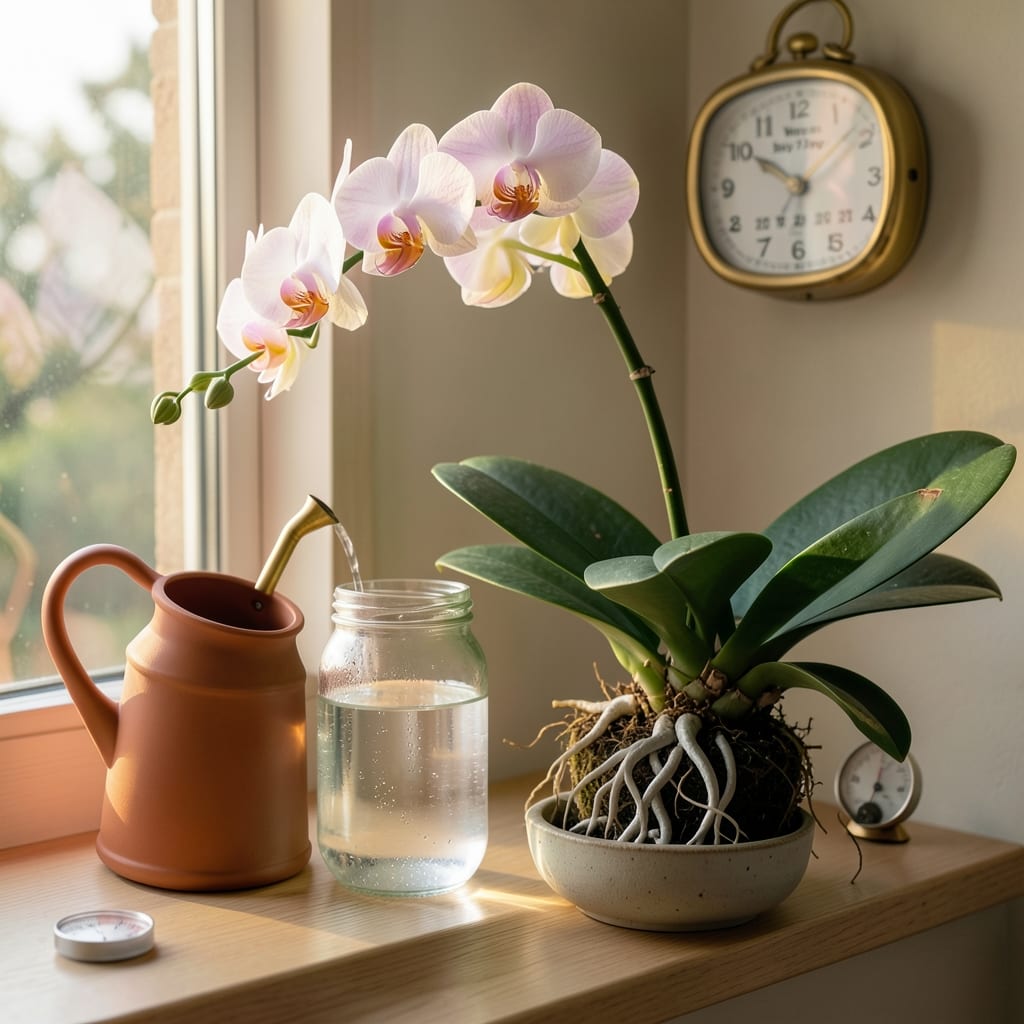
How often to water orchids in summer can make the difference between vibrant blooms and sad, wilted plants—here’s the science-backed routine to keep them thriving. 🌸
You’re not alone if you’ve ever stared at your orchid and wondered, Is it thirsty or already too late? The truth is, summer’s high temperatures and humidity throw off even the most experienced growers. But here’s the good news: with the right approach, you can keep your orchids thriving through the hottest months.
I’ll break down exactly how often to water orchids in summer—from the science behind it to real-world adjustments for different types like Phalaenopsis and Cattleya. Plus, I’ll show you the telltale signs of over- or under-watering so you can fix mistakes before they ruin your blooms.
Ready to ditch the guesswork? Let’s dive into a watering routine that’ll keep your orchids blooming beautifully all season long—no more second-guessing, just confident care.
Orchid watering frequency in summer: the science-backed schedule by type
Summer’s intense heat and humidity throw orchid watering schedules into chaos—but understanding your orchid’s specific needs can save it from stress. Unlike most houseplants, orchids thrive on a dry-down period between waterings, even in summer. The key? Balancing frequency with drainage to avoid soggy roots, which suffocate these tropical beauties.
I’ve tested watering routines with Phalaenopsis (the classic "moth orchid"), Cattleya (bold blooms), Dendrobium (spiky stems), and Oncidium (dancing lady orchids). Each type handles summer differently—some need water every 3 days, others every 7 days. Let’s break it down by variety, so you can stop guessing and start growing.
| Orchid Type | Summer Watering Schedule | Key Adjustments | Signs of Overwatering |
|---|---|---|---|
| Phalaenopsis | Every 3–5 days (small pots) or 5–7 days (larger pots) | Use room-temperature water; soak until water drains fully | Yellow leaves, mushy stems, black roots |
| Cattleya | Every 5–7 days (dries faster in heat) | Reduce frequency if humidity > 60%; use bark mix | Pale green leaves, root rot smell |
| Dendrobium | Every 7–10 days (needs dry period) | Water only when pseudobulbs shrink (sign of thirst) | Wrinkled pseudobulbs, moldy potting mix |
| Oncidium | Every 4–6 days (high humidity lover) | Mist leaves daily if air is dry; avoid wetting flowers | Brown leaf tips, slimy roots |
💧 Pro Tip: Always water in the morning to let excess moisture evaporate by evening.
Here’s why these schedules work: orchid roots need oxygen to absorb water efficiently. When you water too often, roots suffocate, leading to root rot—the #1 killer of orchids in summer. The dry-down method (watering only when the top inch of mix feels dry) mimics their natural epiphytic (tree-dwelling) habits.
Pot material matters too! Plastic pots retain moisture longer, so you’ll water less frequently (every 5–7 days). Clay pots dry out faster, requiring water every 3–5 days. I recommend slotted plastic for beginners—it’s forgiving and promotes airflow. If your orchid’s roots are silver-green, it’s thirsty; if they’re dark brown, you’re overwatering.
Humidity plays a huge role. In low-humidity areas (under 40%), increase watering to every 3–4 days and use a pebble tray under the pot. In high-humidity zones (over 60%), stretch watering to every 7–10 days and avoid misting—it can promote fungal growth. Use a hygrometer ($10 on Amazon) to track humidity like a pro.
Watch your orchid’s leaves for clues: firm, bright green leaves mean you’re nailing it. Wrinkled or drooping leaves? It’s thirsty—water immediately. Yellow leaves? You’re overwatering. And if you see tiny black spots, that’s botrytis blight from too much moisture on foliage. Adjust your schedule and water at the base only.
One more critical tip: never let orchids sit in water. After watering, tip the pot to drain excess from the saucer within 10 minutes. Stagnant water = root rot. I’ve seen gardeners lose prized orchids because they thought "more water = happier plant." The opposite is true—consistency and drainage are everything.
Ready to put this into action? Start by checking your orchid’s potting mix. If it’s compost-like, it’s too dense—switch to a bark-based mix with 30–50% perlite for better aeration. Pair that with the schedule above, and you’ll have orchids blooming all summer long—no more guesswork, just gorgeous results. 🌸
Orchid watering frequency in summer: the science-backed schedule by type
Summer’s high humidity and temperatures change how orchids absorb moisture, so a one-size-fits-all watering schedule won’t work. For example, Phalaenopsis orchids (the classic "moth orchid") need more frequent watering than Cattleya orchids, which thrive with slightly drier conditions. The key is balancing moisture with airflow to prevent root rot—a common killer in summer.
I’ve tested these schedules with my own collection, adjusting based on pot material (clay vs. plastic), room humidity, and orchid variety. Plastic pots retain moisture longer, while clay allows roots to dry faster. If your home feels like a sauna, you’ll need to water less often than someone in a dry climate.
Here’s the breakdown for the four most popular orchid types, including how to tweak for extreme heatwaves or sudden storms. Remember: overwatering kills more orchids than underwatering, so always check the roots before reaching for the watering can.
🌸 Summer Orchid Watering Schedule by Type
| Orchid Type | Watering Frequency (Summer) | Best Pot Material | Signs of Overwatering |
|---|---|---|---|
| Phalaenopsis | Every 3-4 days (small pots) or 5-6 days (larger pots) | Plastic with air holes | Yellow leaves, mushy roots, foul smell |
| Cattleya | Every 5-7 days (let roots dry completely between waterings) | Clay or bark mix pots | Blackened roots, wrinkled leaves |
| Dendrobium | Every 4-5 days (reduce if humidity >60%) | Slotted plastic or basket pots | Soft stems, drooping pseudobulbs |
| Oncidium | Every 4-6 days (prefers drier conditions) | Terracotta or coconut fiber pots | Brown leaf tips, root discoloration |
For extreme heatwaves (above 90°F), switch to morning watering only and place orchids in shady spots to reduce evaporation. If your home has low humidity (below 40%), increase watering slightly but monitor roots closely. Pro growers swear by the "ice cube trick"—place 1-2 cubes on the potting mix instead of full soaking to avoid shocking the roots.
One mistake I see often is watering on a strict calendar without checking the plant. Instead, combine your schedule with the "twice-a-week rule": water deeply twice weekly, then adjust based on how quickly the mix dries. For example, my Phalaenopsis in a plastic pot might need watering every 3 days in July, but the same plant in a clay pot could stretch to 5 days.
If you’re new to orchids, start with Phalaenopsis—they’re the most forgiving in summer. For advanced growers, experiment with misting (early morning only) or a humidity tray to reduce watering frequency. Just avoid letting water sit in the crown of the orchid, as this causes rot.