
Light Requirements
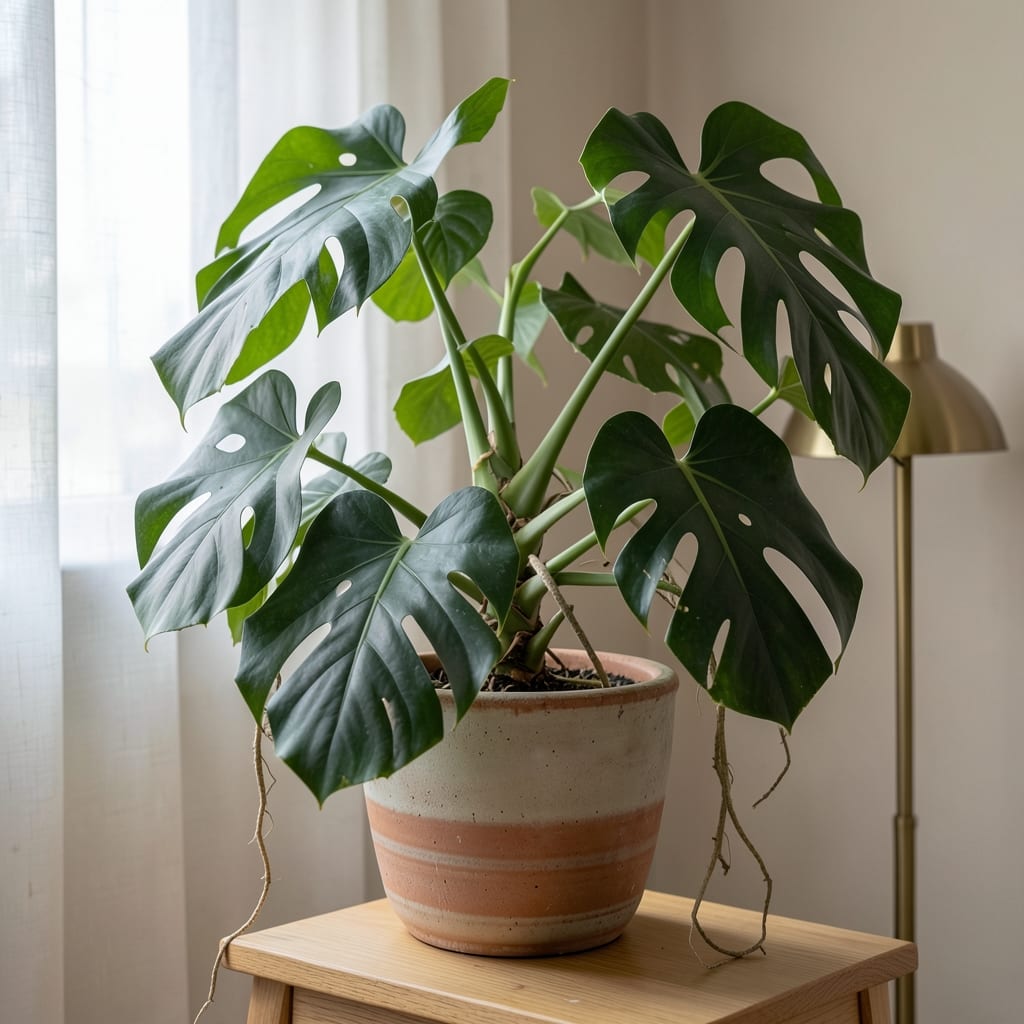
If your Swiss Cheese Plant 🌿 is growing tall and leggy with sparse leaves, you're not giving it the right light—and that’s the #1 mistake most plant parents make. The perfect balance of brightness and indirect rays determines whether your Monstera thrives or struggles, and the exact formula isn’t as obvious as you’d think.
Picture this: your plant basking in 6-8 hours of bright, filtered light daily, mimicking its natural jungle habitat. Too little, and it stretches desperately toward any light source; too much direct sun, and those stunning leaves start burning. I’ll break down the exact light levels your Swiss Cheese Plant craves—from natural windows to grow lights—so you can finally stop guessing and start growing.
You’ll also discover how to spot the subtle signs of light deprivation—yellowing leaves, slow growth, or those telltale elongated stems—and the simple fixes that turn a struggling plant into a lush, leafy masterpiece. Whether you’re dealing with a dim office corner or a sun-drenched living room, we’ve got the solutions.
Let’s cut through the confusion and get your Swiss Cheese Plant the light it truly needs—so you can enjoy its dramatic foliage year-round. Ready to transform your plant’s future? Let’s dive in.

Ideal light requirements for Swiss cheese plant growth (hours & intensity)
The Swiss Cheese Plant (Monstera deliciosa) thrives in bright, indirect light that mimics its jungle origins. Aim for 4-6 hours of sunlight daily, but never direct midday rays that can scorch those stunning leaves. Think of it like a dappled forest floor—bright but filtered through leaves above.
Indoors, an east-facing window is ideal, providing gentle morning light without harsh afternoon sun. South-facing windows work too, but use a sheer curtain to diffuse intensity. Outdoor plants? Place them under partial shade—think 50% sun coverage—especially in hot climates where UV rays can damage foliage.
Here’s the light intensity your plant craves: 1,000-2,000 foot-candles (measured 2-3 feet from the plant). For reference, a typical office gets about 500 foot-candles, while a sunny windowsill hits 2,000-3,000. Too little light? Your plant will stretch toward any source, creating long, weak stems with sparse leaves.
Seasonal adjustments matter too. In winter, when sunlight weakens, supplement with a grow light 12 inches away for 6-8 hours daily. Even in summer, avoid placing your plant in direct afternoon sun—those leaves will crisp like toast.
Pro tip: Rotate your plant quarter-turn weekly to ensure even growth. Uneven light exposure causes lopsided foliage, and nobody wants a crooked Swiss Cheese Plant! Balance is key—just like in a well-designed garden, harmony in light prevents stress.
🌱 Swiss Cheese Plant Light Requirements Summary
| Requirement | Specification |
|---|---|
| Daily Light Hours | 4-6 hours (bright indirect) |
| Intensity (Foot-Candles) | 1,000-2,000 |
| Best Window Placement | East or North-facing (2-3 ft away) |
| Direct Sun Tolerance | Morning only (avoid afternoon) |
| Grow Light Supplement | 12" away, 6-8 hrs/day (winter) |
| Rotation Frequency | Quarter-turn weekly |
Outdoor growers can push the envelope slightly. In USDA Zone 9-11, your Swiss Cheese Plant can handle 3-4 hours of morning sun paired with afternoon shade. Just watch for brown leaf tips—a classic sign of too much direct sun. Mulch the soil to retain moisture, as dry conditions amplify sun stress.
Remember, light quality matters more than quantity. A dim corner with cool, soft light (like a north window) is better than harsh overhead bulbs. Your plant’s leaves will thank you with bold variegation and healthy fenestrations—those iconic "Swiss cheese" holes that make this plant a showstopper.
Still unsure about your space? Test it with a light meter app (like "Light Meter" for iOS). Aim for 1,500 foot-candles as your sweet spot. If you’re below 1,000, it’s time to move closer to a window or invest in a grow light. Your plant’s future depends on it!
Next, we’ll tackle the telltale signs your Swiss Cheese Plant is crying out for more light—and how to fix it fast. Trust me, you’ll spot these red flags before you know it.
Ideal light requirements for Swiss cheese plant growth (hours & intensity)
Your Swiss Cheese Plant 🌿 thrives under 6-8 hours of bright, indirect sunlight daily, mimicking its natural jungle canopy. This tropical beauty needs 1,000-2,000 foot-candles of light intensity—think dappled shade through tree leaves. Too little light causes leggy growth, while too much direct sun burns those iconic split leaves.
Indoors, position it near an east-facing window where morning sun is gentle. South-facing windows work too, but use a sheer curtain to filter harsh afternoon rays. Outdoors, place it under 50% shade cloth or beneath larger plants that provide natural filtration.
Here’s the exact breakdown of what your Swiss Cheese Plant needs to flourish:
| Light Requirement | Specification |
|---|---|
| Daily Light Hours | 6-8 hours |
| Light Type | Bright, indirect |
| Intensity (Foot-Candles) | 1,000-2,000 |
| Best Window Placement | East or north-facing |
| Distance from Window | 2-3 feet |
If your home lacks natural light, supplement with a 10,000-lumen LED grow light placed 12-18 inches above the plant. Run it for 12-14 hours daily to replicate daylight cycles. Rotate the plant weekly so all sides receive even light exposure—this prevents lopsided growth and ensures those stunning fenestrated leaves develop properly.
Pro tip: Use a light meter app to check your space’s foot-candle rating. If it reads below 1,000, invest in a grow light or relocate your plant to a brighter spot. Even a 10% increase in light exposure can double your plant’s growth rate during spring and summer.
Remember, your Swiss Cheese Plant will tolerate lower light conditions than many houseplants, but it’ll never reach its full potential. The key is finding that sweet spot where it gets enough brightness to thrive without scorching. Start with these guidelines, and you’ll see dramatic improvements in just a few weeks.