
Light Requirements
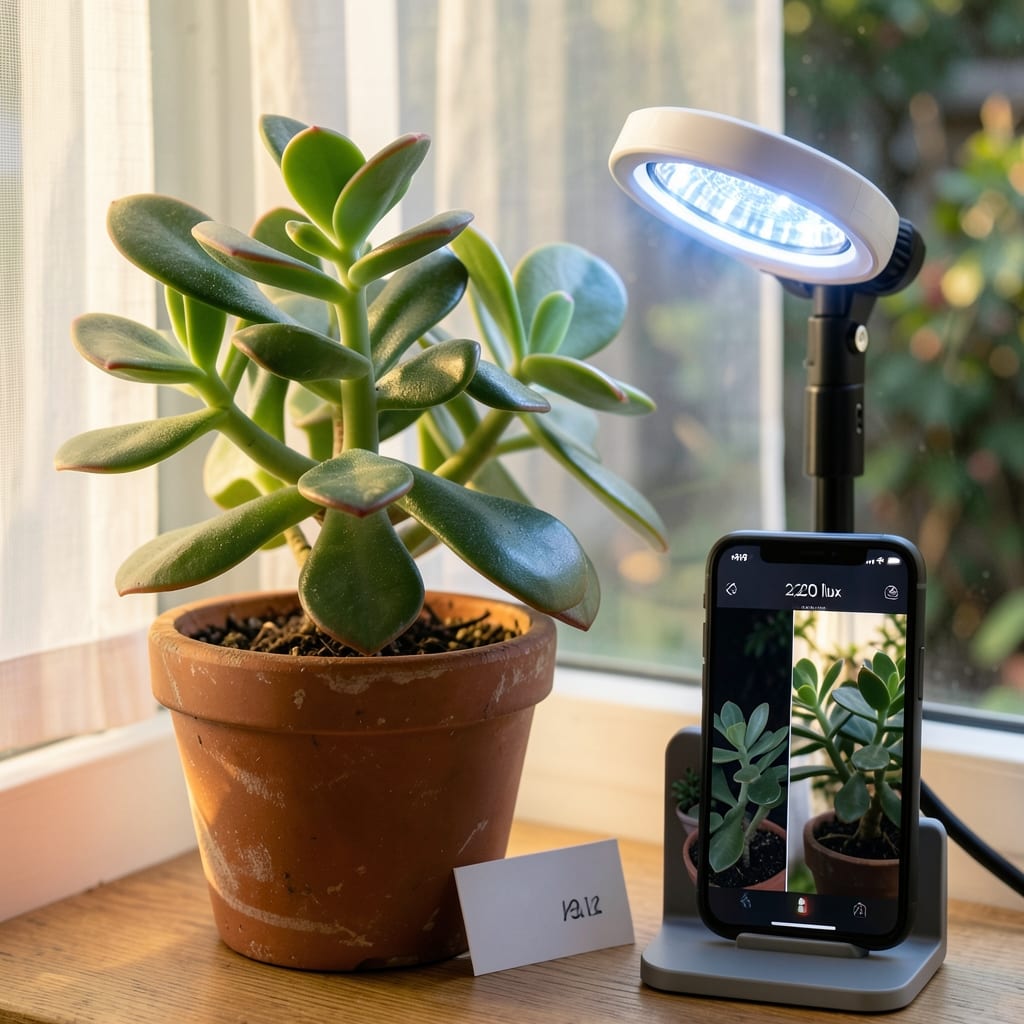
If your Jade Plant 🌿 is looking sad—stretched, pale, or crispy—you’re probably guessing wrong about its light needs. The truth is, this hardy succulent thrives in bright indirect light, and getting it right is the key to keeping it lush and healthy for years.
Too little light, and your Jade Plant will stretch toward the window like a sleepy cat reaching for sunlight. Too much direct sun, and those pretty leaves will turn brown or crispy at the edges. The good news? With just a few simple adjustments, you can create the perfect spot for your plant to flourish.
In this guide, I’ll break down exactly how much light your Jade Plant needs—whether you’re placing it by a sunny window, supplementing with grow lights, or troubleshooting why it’s not looking its best. No more guesswork, just a foolproof plan for happy, thriving Jade Plants.
Ready to transform your plant’s health? Let’s dive into the ideal light conditions and how to spot when your Jade Plant is getting just the right amount—or when it’s time to move it to a better spot.

Ideal light conditions for jade plants: bright indirect sun explained
Your jade plant (Crassula ovata) craves bright indirect light—think of it as a sunbather who loves a beach chair with a big umbrella. This means it needs plenty of light, but not the harsh, direct rays that can scorch its leaves. The perfect spot mimics the dappled sunlight of its natural habitat in South Africa, where it grows under trees or on rocky outcrops.
For most indoor setups, aim for 4-6 hours of bright indirect light daily. This could be a south-facing window with sheer curtains, an east-facing window without obstructions, or even a well-lit west-facing spot during the cooler afternoon hours. If your home lacks natural light, don’t worry—we’ll cover artificial lighting solutions later in this guide.
Jade plants are surprisingly adaptable, but pushing their limits can lead to problems. Too little light causes etiolation—those sad, stretched stems reaching desperately for more sun. Too much direct sun, especially in the afternoon, can cause leaf burn, turning the edges brown and crispy. The key is balance, and I’ll show you exactly how to achieve it.
Here’s a quick breakdown of what your jade plant needs: Morning sun (up to 2 hours of direct light) is ideal, especially in summer. Afternoon light should always be indirect—move your plant away from harsh windows if you notice browning. Winter months may require supplementing with grow lights, as natural light weakens.
| Light Condition | Daily Duration | Best Window | Seasonal Notes |
|---|---|---|---|
| Bright Indirect | 4-6 hours | East or South | Ideal year-round |
| Direct Morning Sun | Up to 2 hours | South or West | Summer only |
| Low Light | 2-3 hours | North-facing | Use grow lights |
| Harsh Afternoon Sun | Avoid | South or West | Risk of burn |
The east-facing window is often the gold standard for jade plants. It provides gentle morning sunlight that’s perfect for their needs, without the intense heat of afternoon rays. If you only have a south-facing window, place your plant 2-3 feet back from the glass and use a sheer curtain to diffuse the light. For west-facing windows, limit exposure to early morning hours only.
Seasonal changes also play a role. In summer, your jade plant can handle slightly more light, but always monitor for signs of stress. In winter, when natural light is weaker, you might need to rotate your plant every few weeks to ensure even growth. A slow turn of ¼ to ½ turn every 2-3 weeks keeps your plant balanced and prevents it from leaning toward the light source.
Pro tip: If you’re unsure whether your spot is too bright or not bright enough, observe your jade plant’s leaves. Healthy leaves should be thick, glossy, and a vibrant green. If they’re turning red or purple, it’s a sign of too much direct sun. If they’re pale or stretching, it’s time to move your plant closer to a brighter spot—or add a grow light.
Remember, jade plants are resilient, but they won’t thrive if pushed too far. Start with bright indirect light, and adjust based on how your plant responds. With the right light, your jade plant will reward you with thick, lush growth and those coveted pink-tinged leaves that make it so popular.
Ideal light conditions for jade plants: bright indirect sun explained
A Jade Plant 🌿 needs 4-6 hours of bright indirect sunlight daily to stay healthy and vibrant. This means placing it near a window where it gets plenty of light but isn’t scorched by direct rays—especially during peak afternoon hours when the sun is strongest.
Think of it like giving your plant a sunbath—just enough to keep it happy, but not a full-on tan that leads to burns. The best spots are east-facing windows, where morning sunlight is gentle, or west-facing windows with a sheer curtain to filter the light.
| Light Requirement | Specification |
|---|---|
| Daily Sunlight | 4-6 hours of bright indirect light |
| Best Window Placement | East or north-facing windows |
| Direct Sun Tolerance | Morning sun only (avoid afternoon sun) |
| Artificial Light Alternative | Grow lights (12-14 hours/day, 6-12 inches away) |
If you notice your Jade Plant starting to stretch toward the light, it’s begging for more brightness. This condition, called etiolation, happens when the plant isn’t getting enough light and grows leggy in search of sun. Rotate your plant occasionally so all sides get even exposure.
In summer, when the sun is intense, move your Jade Plant a few feet away from the window or use a sheer curtain to diffuse the light. Jade Plants can handle some direct morning sun, but afternoon rays are too harsh and can cause leaf burn.
For indoor growers without ideal windows, grow lights are a game-changer. A simple LED grow light placed 6-12 inches away for 12-14 hours a day mimics natural sunlight perfectly. Just avoid keeping the light on 24/7—your Jade Plant needs rest too!
Seasonal adjustments are key: In winter, when natural light is dimmer, supplement with a grow light or move your plant closer to the brightest window. The goal is to keep it in consistent bright indirect light year-round for steady growth.