
Light Requirements
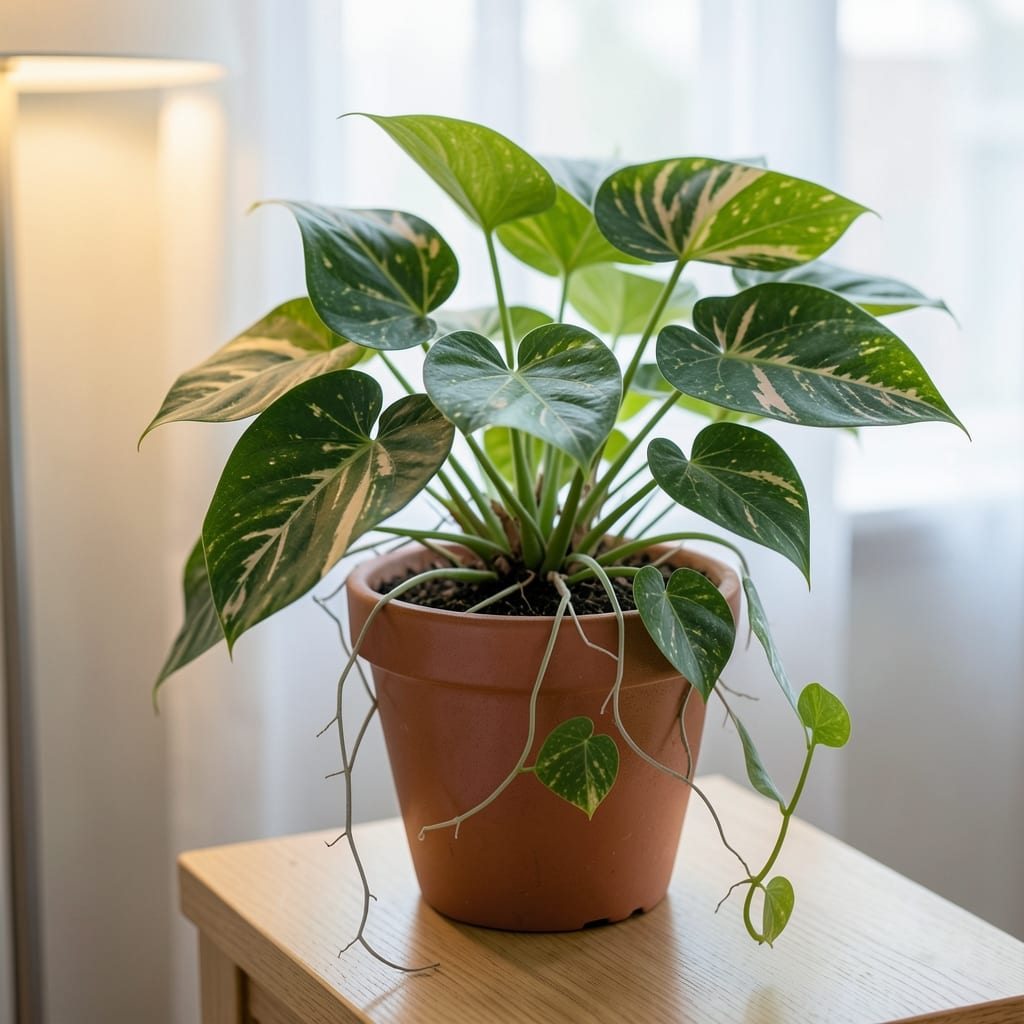
Arrowhead plant light requirements: ideal brightness levels explained
The arrowhead plant (Syngonium podophyllum) thrives in bright indirect light, but its flexibility makes it perfect for beginners. Unlike sun-loving plants, it can't handle harsh direct rays—especially those midday south-facing windows that burn delicate leaves. Think of it as a plant that enjoys morning sun with afternoon shade, similar to a dappled forest floor.
In nature, arrowheads grow under tropical canopy cover, receiving filtered sunlight. Recreating this indoors means placing your plant near east or west-facing windows, where light is gentler. A 3-foot distance from a south window is ideal—any closer risks leaf scorch, while too far leads to leggy, sparse growth.
🌿
Your arrowhead plant will show you exactly what it needs through its leaf color and shape. In perfect conditions, expect deep green arrowhead-shaped leaves with occasional white or pink variegation. When light is insufficient, leaves shrink and lose their vibrant hue, while too much sun causes bleached or crispy edges.
Seasonal adjustments are key—during summer months, move your plant farther from windows to avoid overheating. In winter, supplement with a 12-hour grow light if natural light drops below 4 hours daily. This mimics the plant's natural photoperiod and prevents dormancy.
Outdoor cultivation requires even more caution. While arrowheads can thrive in shady garden spots, avoid placing them under trees with dense canopies that block all light. Instead, opt for partial shade with dappled sunlight—like under a pergola or near a north-facing fence. Container growing offers flexibility to move plants as light conditions change.
Pro tip: Rotate your plant quarter-turn weekly to ensure even growth. Arrowheads grow toward light sources, so consistent rotation prevents lopsided foliage. This simple habit keeps your plant symmetrical and robust.
🪴
Arrowhead plant light requirements: ideal brightness levels explained
Your arrowhead plant (Syngonium podophyllum) thrives in bright indirect light, but understanding the nuances makes all the difference. Too little light leads to leggy growth and pale leaves, while direct sun causes brown patches or crispy edges. The key is finding that golden balance—where your plant gets enough light to stay vibrant but avoids the harsh rays that stress its foliage.
Indoor environments often struggle with this balance, especially in north-facing rooms or deep shade. Your arrowhead plant can adapt to low-light conditions, but it won’t reach its full potential. Think of it like a sunbathing teen: it needs enough light to grow but will burn if left out too long. Outdoor growers face the opposite challenge—afternoon sun can be too intense, even in partial shade.
Here’s the breakdown: 4-6 hours of bright, filtered light daily is ideal. This mimics the dappled sunlight of its native tropical understory. For example, a spot near an east-facing window gives gentle morning light, while a west-facing window offers afternoon warmth without the harshness of south-facing glare. Seasonal shifts matter too—winter’s weaker light may require adjustments, while summer’s intensity demands extra caution.
Notice how bright indirect light delivers the best results—your plant’s leaves will stay rich and glossy, with arrowhead-shaped foliage that’s the hallmark of healthy growth. In contrast, low-light conditions trigger survival mode, stretching stems toward any available light source. This is why your plant might look lanky and weak if placed too far from a window. Even worse, direct sun causes oxidative stress, leading to those unsightly brown patches that ruin the plant’s tropical charm.
Pro tip: Rotate your arrowhead plant quarter-turns every 2 weeks to ensure even light exposure. This prevents one-sided growth and keeps those stunning variegated leaves facing outward. If you’re unsure about your space’s light levels, use a light meter app (like "Light Meter" for iOS) to measure foot-candles. Aim for 500-1,000 foot-candles—this range mirrors the ideal tropical understory conditions your arrowhead plant craves.
Seasonal changes also demand attention. During winter’s shorter days, supplement with a 12-hour LED grow light (like the Sollum LED) to maintain growth. In summer’s peak sun, move your plant 5 feet back from south-facing windows to avoid leaf scorch. These small tweaks make a world of difference in keeping your arrowhead plant thriving year-round.