
Light Requirements
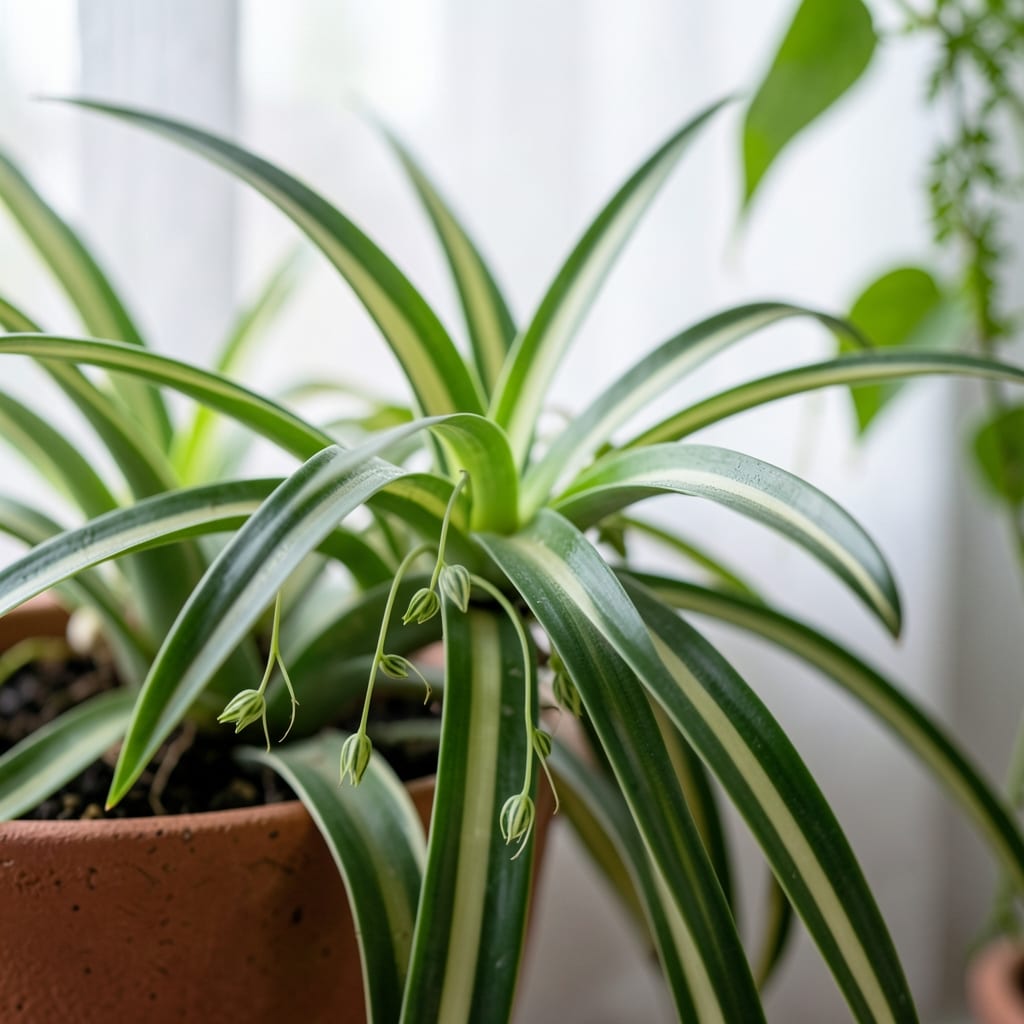
If your Spider Plant 🕷️ is struggling with leggy growth or brown tips, you’re probably dealing with how much light does a spider plant need indoors—and it’s easier to fix than you think. These hardy plants thrive in bright indirect light, but too much direct sun or dim corners can turn your green thumb into a guessing game.
The ideal spot for your Spider Plant is near an east or west-facing window, where it gets 4-6 hours of filtered sunlight daily. This mimics their natural habitat under dappled forest light, preventing those pesky yellow leaves while keeping the foliage vibrant. Think of it like a Goldilocks scenario: not too harsh, not too dim.
Don’t worry if your home lacks perfect lighting—adjustments like rotating the pot or using sheer curtains can make all the difference. I’ll walk you through how to spot over- or under-lighting and tweak your setup for lush, year-round growth, even in USDA Zone 6a climates.
Ready to transform your Spider Plant from struggling to stunning? Let’s dive into the light secrets that’ll have it thriving in no time—no green thumb required!

Ideal light requirements for spider plants: bright indirect sun explained
Spider plants thrive in bright indirect light, which mimics their natural habitat under dappled forest sunlight. This means placing them near windows—but not directly in the sun. The ideal light range is between 4,000-10,000 lux, which translates to 4-6 hours of filtered light daily. Think of it as the perfect balance: enough light for vibrant growth, but not so intense it scorches those delicate leaves.
If you’ve ever wondered why some spider plants look leggy or pale, it’s often a sign of under-lighting. These plants are adaptable, but they’ll stretch toward light sources if they’re not getting enough. On the flip side, direct afternoon sun can cause brown tips and crispy edges, which is a clear sign of over-exposure. The key is to find that sweet spot where your plant feels like it’s basking in just the right amount of glow.
Here’s a quick way to test your plant’s light conditions: Hold your hand near the leaves. If you can comfortably read a book with the light filtering through, it’s likely the perfect spot. If the light feels harsh or shadows are too sharp, it’s time to adjust. Remember, east-facing windows are ideal because they offer gentle morning light, while west-facing windows can still work if you use a sheer curtain to diffuse the intensity.
Now, let’s break down what your spider plant’s light needs look like in real terms. Below is a summary table to help you visualize the ideal conditions, including what to watch for and how to adjust your setup.
| Light Condition | Ideal Light Source | Signs of Perfect Light | Signs of Too Much Light | Signs of Too Little Light |
|---|---|---|---|---|
| Bright Indirect Light | East/West Window, 2-3 ft away | Deep green leaves, bushy growth, variegation | Brown tips, crispy edges, sunburn spots | Leggy stems, pale leaves, slow growth |
| Medium Indirect Light | North Window or 4-5 ft from East/West | Healthy growth, fewer offsets, slower but steady | Minimal risk, but may develop pale leaves | Very leggy, sparse foliage, weak stems |
| Low Light | Corner away from windows, artificial light only | Survival mode only | None (but risk of fungal issues) | Extremely leggy, yellowing leaves, no offsets |
Understanding these light conditions will help you diagnose why your spider plant might be struggling. For example, if you notice brown tips, it’s often a sign of too much direct light combined with underwatering. Move the plant back from the window or add a sheer curtain to diffuse the light. If the leaves are pale or stretched out, it’s a clear signal that your plant needs more light—consider rotating it toward a brighter spot or supplementing with a grow light.
One of the most common misconceptions about spider plants is that they can thrive in any low-light corner. While they are more forgiving than many houseplants, they’ll still reward you with lush growth when given the right conditions. Think of it like a low-maintenance investment: a little effort in placing them correctly will pay off with vibrant foliage and those adorable offsets that make spider plants so popular.
Pro tip: Rotate your spider plant quarter-turn every 2-3 weeks. This ensures even growth and prevents the plant from leaning toward one light source. It’s a small habit that makes a huge difference in keeping your plant balanced and healthy. Plus, it’s a great excuse to check in on your plant’s overall health while you’re at it!
If you’re still unsure about your home’s lighting, here’s a quick trick: Use a light meter app (many are free) to measure the lux levels near your plant. Aim for 10,000 lux or less for bright indirect light. If you’re below 5,000 lux, it’s time to find a brighter spot or consider supplemental lighting. Don’t worry—modern LED grow lights are affordable and can make all the difference in keeping your spider plant thriving year-round.
Remember, the goal is to create an environment where your spider plant feels comfortable and encouraged to grow. With the right light, you’ll see those iconic variegated leaves and a bushy, happy plant that’s the envy of every plant lover. Now that you know the ideal light conditions, let’s talk about how to adapt your home’s lighting to meet those needs—even if your space isn’t perfectly sunny!
How to adjust your home’s lighting for maximum spider plant growth
Your Spider Plant 🕷️ may be getting the right light intensity, but your home’s layout can still throw a wrench in its growth. If your plant’s leaves are stretching toward the window or turning pale, it’s time to tweak your setup. The key is creating a consistent light environment that mimics its natural dappled shade habitat.
Start by evaluating your window placement. East-facing windows offer gentle morning light, while west-facing windows provide afternoon warmth without harsh rays. South-facing windows can be too intense, especially in summer, so position your plant 3-4 feet away to diffuse the light. North-facing rooms? No problem—just supplement with a grow light for 6-8 hours daily.
🌱 Adjusting Light for Different Windows
| Window Type | Ideal Distance | Adjustments Needed |
|---|---|---|
| East-Facing | 2-3 feet | None—perfect natural light |
| West-Facing | 3-4 feet | Use sheer curtains to soften afternoon sun |
| South-Facing | 4-5 feet | Add a sheer curtain or rotate plant weekly |
| North-Facing | 1-2 feet | Supplement with grow light (6-8 hrs/day) |
Sheer curtains are your best friend for diffusing harsh light. If your plant’s leaves are crispy or bleached, it’s getting too much direct sun. Hang curtains to filter the light while still allowing brightness. For offices or rooms without windows, a LED grow light (10,000-15,000K color temperature) placed 6-12 inches above the plant works wonders. Run it for 12-14 hours daily to mimic daylight.
Seasonal changes also affect light exposure. In winter, shorter days mean your plant may need extra light. Rotate your plant quarter-turns weekly to ensure even growth and prevent it from leaning toward the light source. This simple habit keeps the foliage symmetrical and vibrant year-round.
For offices or dimly lit spaces, consider a south-facing bookshelf or a reflective surface like a white wall to bounce light onto the plant. Even a mirror placed strategically can double the light exposure without extra equipment. The goal? Keep your Spider Plant in a stable light environment where it feels secure and thriving.
Pro tip: If your plant starts looking leggy or pale, it’s begging for more light. Move it closer to the window or add a grow light immediately. Conversely, if the tips are browning, it’s getting too much sun—adjust the curtains or move it back. With these tweaks, your Spider Plant will reward you with lush, variegated leaves in no time! 🌿