
Light Requirements
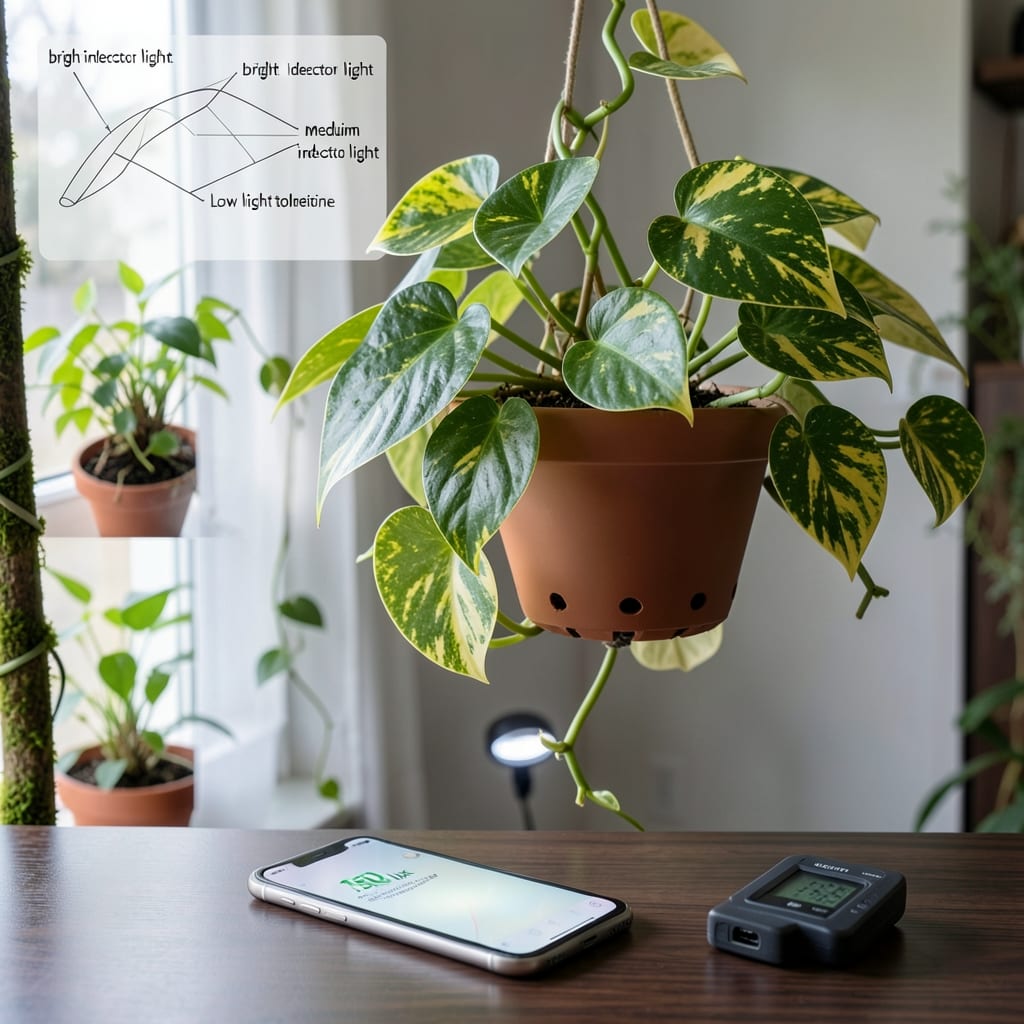
Pothos light requirements: ideal hours and intensity for healthy growth
Pothos plants thrive in bright indirect light, but they’re famously adaptable—even surviving in low-light offices. The key is hitting the 4–6 hour daily minimum of filtered sunlight while avoiding harsh direct rays that cause leaf burn. Think of it like a north-facing window with sheer curtains: enough light to fuel growth without scorching delicate foliage.
Most pothos varieties—like Golden Pothos or Marble Queen—do best with 1,000–2,000 foot-candles of light intensity. That’s roughly the glow of a fluorescent office bulb or dappled sunlight through a tree canopy. Too little light leads to leggy, sparse growth, while too much triggers brown leaf tips or crispy edges.
Here’s the light spectrum breakdown for pothos:
- Low light (100–500 fc): Survives but grows slowly (e.g., bathrooms or closed offices).
- Medium light (500–1,000 fc): Ideal for north or east windows—perfect for most homes.
- Bright indirect (1,000–2,000 fc): Best for south or west windows with curtains or grow lights.
Pro tip: Rotate your pothos quarter-turn weekly to ensure even light exposure. This prevents one-sided growth and keeps those heart-shaped leaves symmetrical and vibrant. If you notice yellowing leaves, it’s often a sign of overwatering in low light—pothos roots struggle to absorb excess moisture when starved for light.
Visual light guide: Hold your hand near your pothos. If you can’t read a book comfortably, it’s too dim. If your skin feels warm, it’s too intense. The perfect spot should feel cool but well-lit, like a shady patio on a sunny day.
| Light Condition | Foot-Candles (fc) | Ideal Placement | Growth Result |
|---|---|---|---|
| Low Light | 100–500 | Bathrooms, offices, north corners | Slow growth, leggy stems |
| Medium Light | 500–1,000 | East/west windows, 3–6 ft from south window | Healthy, balanced growth |
| Bright Indirect | 1,000–2,000 | South window with sheer curtain, grow lights | Vibrant leaves, faster growth |
| Direct Sun | >2,000 | South window without curtain | Brown tips, leaf burn |
For variegated pothos (like Marble Queen), aim for the higher end of the spectrum (1,500–2,000 fc). These varieties need more light to maintain their striking patterns. If you spot pale or all-green leaves, it’s a cry for more light—your pothos is drowning its variegation in the shadows.
Real-world example: My Golden Pothos on the office bookshelf (under fluorescent lights) gets 6 hours of medium light daily and thrives. Meanwhile, the one in my bathroom (low light) grows slower but stays alive with occasional misting to boost humidity. The difference? Leaf size and color intensity—proof that light directly impacts vibrancy.
If you’re unsure about your space’s light levels, grab a light meter app (many are free) or use the shadow test: Place a small object near your pothos. If the shadow is sharp and dark, it’s direct sun—move it back. If the shadow is fuzzy and light, you’re in the safe zone.
Remember: Pothos are survivors, but they’ll always reward you with healthier growth when given the right light. Start with medium light, monitor for color and growth changes, and adjust as needed. Your pothos will thank you with glossy, lush leaves for years to come. 🌿
How to adjust light for different pothos growth stages (and fix common mistakes)
Pothos plants are famously adaptable, but their light needs change as they grow—especially when transitioning from baby cuttings to mature vines. A young pothos thrives in bright indirect light, while a mature plant can handle slightly dimmer conditions. The key is recognizing these stages and adjusting placement before problems like leggy growth or sunburned leaves appear.
Variegated varieties (like Marble Queen) need more light than solid-green types (like Golden Pothos) to maintain their striking patterns. If your variegated pothos looks dull or reverts to all-green leaves, it’s begging for 2–4 more hours of indirect light per day.
⚠️ Warning Signs of Light Mistakes
Too Little Light: Stems stretch 3x longer than leaves (leggy growth), leaves turn yellow or pale, and new growth is sparse.
Too Much Light: Leaves develop brown crispy edges, white/yellow patches (sunburn), or curled edges. Variegation may fade.
Solution: Move plants 6–12 inches closer (for low light) or add sheer curtains (for harsh sun). Rotate plants weekly to prevent uneven growth.
If your pothos is stretching toward the window, it’s a classic sign of etiolation—a desperate bid for light. To fix this, rotate the plant ¼ turn weekly so all sides grow evenly. For severely leggy stems, prune them back by ⅓ to encourage bushier, healthier growth. Place the cuttings in water to propagate new plants!
For mature pothos with long vines, you can reduce light slightly (e.g., move from a south-facing shelf to a north-facing corner). However, avoid placing them in complete darkness—even a fluorescent bulb (like a 60W equivalent LED) can keep them alive. If your pothos is in a windowless room, supplement with a grow light (12–14 hours/day) to prevent decline.