
Light Requirements
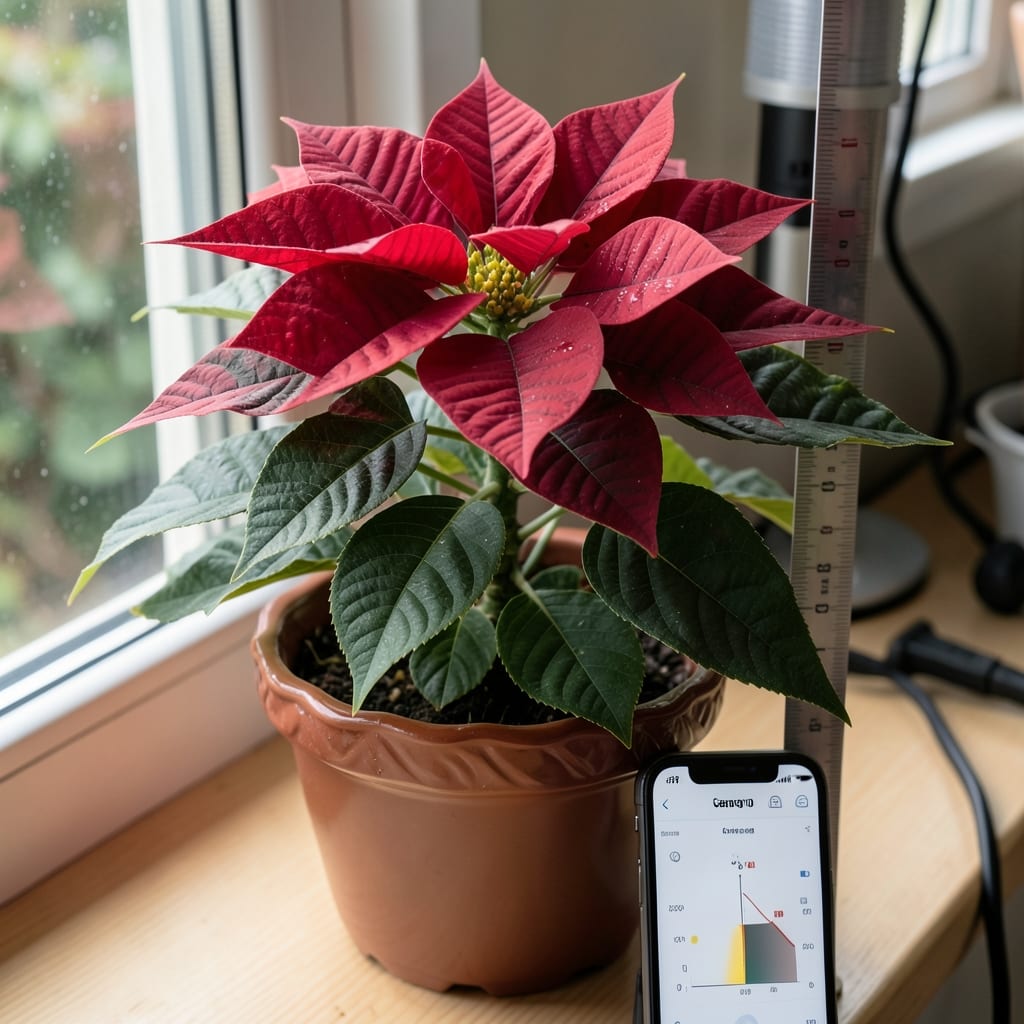
Ideal light requirements for poinsettias: bright indirect sun explained
Poinsettias thrive under bright indirect light, mimicking their natural tropical habitat. This means they need plenty of sunlight without the harsh rays that cause leaf burn. Think of it like a gentle morning sunbath—warm but not scorching. The goal is 6-8 hours daily, but the light must be diffused, not direct.
Direct sunlight through south-facing windows can be too intense, especially during summer months. Even just a few hours of direct sun can lead to yellowing leaves or crispy edges. Instead, position your poinsettia near an east or west-facing window, where sunlight is softer and spread out over more hours. If you only have south-facing windows, use a sheer curtain to filter the light.
Here’s how to visualize the perfect spot: Imagine standing 2-3 feet away from your window. If you can comfortably read a book with natural light illuminating the page without squinting, that’s the ideal distance for your poinsettia. This balance ensures your plant gets enough light to photosynthesize while avoiding stress from overheating.
| Light Requirement | Specification |
|---|---|
| Daily Light Hours | 6-8 hours of bright indirect light |
| Best Window Placement | East or west-facing windows, 2-3 feet away |
| Direct Sun Tolerance | None; causes leaf burn and discoloration |
| Seasonal Adjustments | Move closer to light in winter; increase distance in summer |
| Artificial Light Supplement | Use LED grow lights for 12-14 hours/day if natural light is insufficient |
Seasonal changes require adjustments to keep your poinsettia happy. During winter months, when natural light is weaker, you may need to move your plant closer to the window or supplement with artificial light. In contrast, summer’s intense rays can overpower even east or west windows, so rotate your poinsettia a quarter turn daily to ensure even growth and prevent it from leaning toward the light source.
If you notice your poinsettia stretching toward the light or developing long, leggy stems, it’s a clear sign it needs more light. This happens when the plant searches for sunlight, leading to weak stems and sparse foliage. To fix this, immediately relocate it to a brighter spot or introduce a grow light. The key is consistency—poinsettias respond best to stable light conditions rather than sudden changes.
For those living in apartments or homes with limited natural light, don’t despair. Modern LED grow lights designed for houseplants can provide the perfect spectrum of light for poinsettias. Place the light 6-12 inches above the plant and keep it on for 12-14 hours daily to mimic a natural day cycle. This setup works especially well during the shorter winter days when sunlight is scarce.
Pro tip: Rotate your poinsettia every few days to ensure all sides receive equal light exposure. This prevents uneven growth and keeps the plant compact and bushy. Think of it like giving your poinsettia a gentle massage—it encourages balanced development and helps the plant maintain its iconic full, rounded shape.
Remember, poinsettias are sensitive to light changes, especially during their flowering phase (typically November to December). If you’re aiming for vibrant holiday colors, maintain consistent light exposure and avoid moving the plant frequently. Sudden changes can stress the plant and delay or dull the color development of the bracts (the colorful leaves often mistaken for flowers).
By mastering the art of bright indirect light, you’ll set your poinsettia up for success. Whether it’s a sunny east window or a carefully placed grow light, the right conditions will reward you with a lush, colorful plant that steals the show every holiday season. 🎄
Ideal light requirements for poinsettias: bright indirect sun explained
Poinsettias thrive in bright indirect light, which mimics their natural understory habitat in Mexico. Unlike sun-loving plants, they can't handle harsh rays, but too little light causes them to stretch and lose their vibrant colors. The sweet spot is 6-8 hours daily of filtered sunlight—think of it as a gentle glow rather than a scorching afternoon sun.
For indoor growers, east or west-facing windows are ideal because they provide morning or late-afternoon light without the intense midday heat. South-facing windows can work too, but you'll need to use a sheer curtain to diffuse the light. North-facing windows often provide too little light, causing leggy growth and pale leaves.
Here’s how to visualize the perfect setup: Imagine placing your poinsettia 2-3 feet away from an east or west window. If you notice shadows cast by nearby objects, that’s a good sign—the light is soft enough. Direct sun through glass acts like a magnifying glass, burning leaves within hours.
| Light Requirement | Specification |
|---|---|
| Daily Duration | 6-8 hours |
| Light Type | Bright indirect |
| Best Windows | East or West |
| Distance from Window | 2-3 feet |
| Avoid | Direct sun, north windows |
Seasonal adjustments are key. During summer months, when sunlight is strongest, move your poinsettia slightly farther from the window or use a sheer curtain to filter the light. In winter, when natural light is scarce, supplement with a grow light for 12-14 hours daily to maintain health. This mimics the longer daylight hours poinsettias experience in their native tropical climate.
Pro tip: Rotate your plant quarter-turn weekly to ensure even light exposure. Poinsettias grow toward light sources, so uneven exposure causes lopsided growth. This simple habit keeps your plant compact and symmetrical, maximizing those show-stopping bracts.
If you’re unsure whether your space meets these light needs, start with a light meter app (many are free) to measure foot-candles. Aim for 1,000-2,000 foot-candles of light—this range is perfect for poinsettias without risking burn. Adjust placement based on the readings, and you’ll see a noticeable difference in just weeks.