
Plants
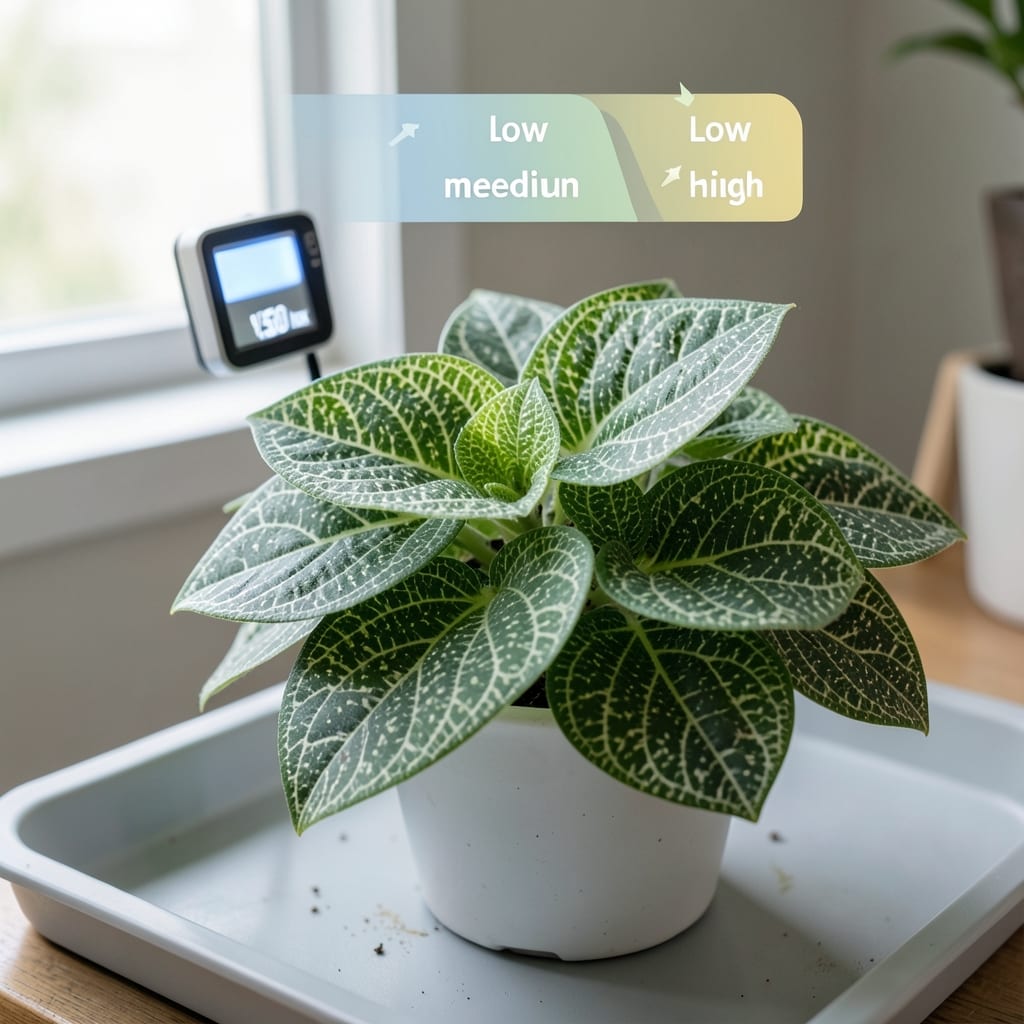
Nerve plant light requirements: the exact brightness spectrum for optimal growth
Your nerve plant (Fittonia) thrives on bright indirect light, but finding the perfect balance is key. Too little light fades those stunning veined patterns, while too much causes leaf scorch. Think of it like a sunbathing session—just enough to glow, not enough to burn.
The ideal spot mimics dappled forest light, where sunlight filters through leaves. For indoor growers, this means positioning your plant near an east or west-facing window, where morning or afternoon sun dominates. South-facing windows can work, but you’ll need to shield it from harsh midday rays.
Here’s how to visualize the perfect light spectrum for your nerve plant:
North-facing windows provide consistent indirect light, but your nerve plant may grow slower. If this is your only option, supplement with a grow light 6-12 inches away for 6-8 hours daily. Rotate the plant weekly to prevent uneven growth—think of it like giving your plant a gentle sun massage.
Seasonal shifts matter too. During winter’s shorter days, move your nerve plant closer to the window (within 1-2 feet) to maximize light exposure. In summer’s intense heat, create shade with a sheer curtain to prevent leaf burn. The goal? Keep those veins popping without causing stress.
Pro tip: Test your spot with the "shadow test". Hold a piece of paper where your plant will sit. If the shadow is crisp and dark, it’s too direct. If it’s barely visible, you’ve found perfect filtered light. Your nerve plant will thank you with lush, pattern-perfect leaves.
For apartment dwellers with limited window space, reflective surfaces like mirrors or white walls can bounce extra light onto your plant. Place your nerve plant on a elevated surface (like a plant stand) to catch light that might otherwise miss it. Even a 20% light boost can mean the difference between dull and dazzling foliage.
Remember, nerve plants are tropical understory dwellers, so they’re used to bright but diffused conditions. Recreate this environment, and you’ll reward yourself with a show-stopping houseplant that’s as easy to care for as it is stunning to behold.
🌿
Nerve plant light requirements: the exact brightness spectrum for optimal growth
Your nerve plant (Fittonia) thrives in bright indirect light, which is often misunderstood. Unlike sun-loving plants, nerve plants need gentle light that mimics their native understory habitat. Too much direct sun can scorch those delicate veined leaves, while too little light fades their signature patterns. Think of it as the goldilocks zone—not too hot, not too cold, but just right.
The ideal light intensity for a nerve plant falls between 500-1,000 foot-candles, which is roughly the light you’d find 3-6 feet from a north-facing window. South-facing windows can be too intense, while dim corners will leave your plant looking pale and stretched out. Understanding your home’s light map is key to positioning your plant perfectly.
East-facing windows provide the perfect morning light for nerve plants, offering gentle rays without the harsh afternoon sun. If you only have south-facing windows, position your plant 6-10 feet away or use a sheer curtain to diffuse the light. West-facing windows work well in the morning but may require afternoon shade during peak summer hours when the sun is most intense.
Seasonal adjustments are crucial. In winter, when natural light is weaker, supplement with a grow light for 4-6 hours daily to maintain those vibrant veins and patterns. Conversely, during summer, watch for sunburn signs like brown patches on leaves. Rotate your plant weekly to ensure even light exposure on all sides, preventing lopsided growth.
Pro tip: Use a light meter app on your phone to test your plant’s exact light levels. Aim for 500-1,000 foot-candles—any lower, and you’ll see leggy growth; any higher, and those beautiful veins will fade or burn. Most smartphones can download a free light meter app to make this easy!
Remember, nerve plants are not low-light plants—they need more than just ambient room light. If your home lacks natural light, invest in a full-spectrum LED grow light to bridge the gap. The goal is to mimic the dappled sunlight they’d receive under a forest canopy, where they naturally thrive.